Overview
Few sounds in the American countryside are as immediately recognizable and warmly welcomed as the clear, whistling call of the Northern bobwhite. That unmistakable two- or three-note song — a bright, upward-lilting bob-WHITE or bob-bob-WHITE — has echoed across fields, fence rows, and forest edges for countless generations. It is a sound that has inspired hunters, birdwatchers, naturalists, and farmers alike, serving as a kind of living soundtrack to rural life across a broad swath of North America.
The Northern bobwhite (Colinus virginianus) is one of the most iconic and culturally significant game birds on the continent. Known colloquially as the "bobwhite quail," this small but spirited bird holds a cherished place in American outdoor tradition. It is the subject of some of the oldest and most storied hunting traditions in the United States, pursued by generations of sportsmen and women with pointing dogs, side-by-side shotguns, and a deep appreciation for wild places. Beyond hunting, the Northern bobwhite is also a vital component of healthy grassland and agricultural ecosystems, playing important roles in insect control, seed dispersal, and serving as prey for a wide variety of native predators.
This article explores the biology, habitat, hunting traditions, and conservation considerations surrounding the Northern bobwhite — a bird that, despite facing significant challenges in many parts of its range, remains one of the most beloved wildlife species in North America.
Biological Traits
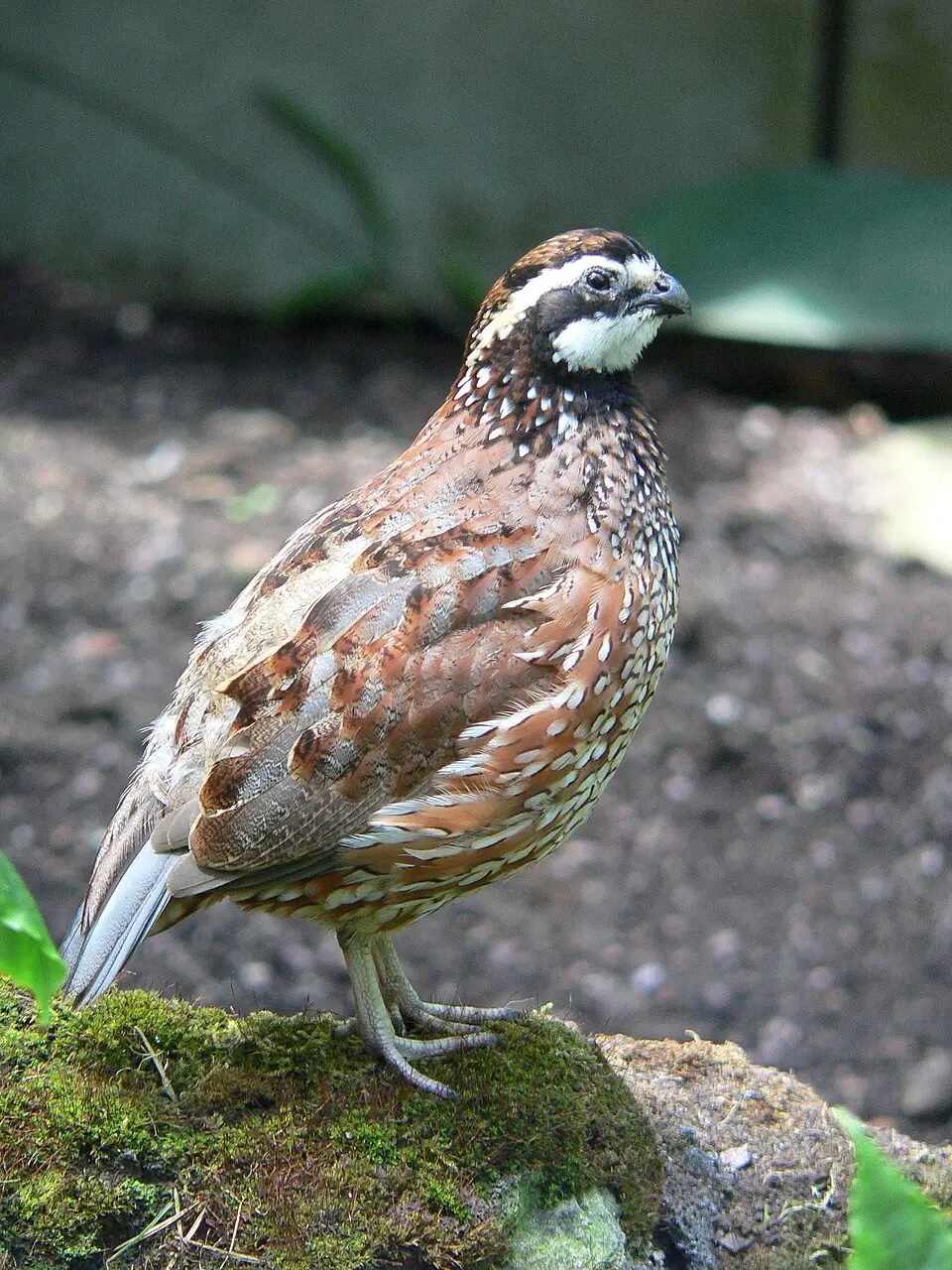
The Northern bobwhite is a member of the family Odontophoridae, the New World quail family, and is the only native quail species found in the eastern United States. It is a compact, rotund bird, well-adapted for life close to the ground. Adult bobwhites display a richly patterned plumage of reddish-brown, black, white, and buff tones that provide exceptional camouflage among grasses, leaf litter, and agricultural stubble.
Sexual dimorphism is clearly visible in this species. Male bobwhites sport a bold white supercilium (eyebrow stripe) and a white throat patch, both sharply outlined in black, giving them a crisp, distinctive facial pattern. Females, by contrast, display the same general body patterning but with buff or tan replacing the white facial markings of the male — a subtler but equally beautiful look. Both sexes have short, curved bills well-suited for cracking seeds and manipulating small invertebrates.
The Northern bobwhite is notable for its complex social behavior. During the non-breeding season, bobwhites gather in groups known as coveys, typically composed of anywhere from a handful to several dozen birds. These coveys roost together in a characteristic tight circle on the ground, with each bird facing outward — a behavior that provides warmth and allows every individual to watch for approaching predators simultaneously. When threatened, a covey will often hold tight and then flush explosively in all directions, a startling survival strategy designed to confuse predators.
Breeding season brings a fascinating reversal of typical avian roles. Male bobwhites are known to take on significant incubation and chick-rearing duties, and in some cases, males alone will incubate a clutch and raise the brood. Nests are simple scrapes in the ground, concealed beneath grasses or other low vegetation, and a typical clutch consists of around a dozen eggs. The chicks are precocial, meaning they hatch fully feathered and capable of moving and feeding on their own within a very short time — an important survival adaptation for a ground-nesting species.
The diet of the Northern bobwhite shifts with the seasons. During warmer months, insects and other invertebrates make up a significant portion of the diet, providing essential protein — particularly important for breeding adults and growing chicks. As the season progresses into fall and winter, the birds shift heavily toward seeds, including those of grasses, legumes, agricultural crops, and wild plants. This dietary flexibility is one of the keys to the species' wide distribution and adaptability.
Habitat & Range
The Northern bobwhite has one of the broadest natural ranges of any North American quail species. Its native range extends from the eastern United States westward through the Great Plains, southward through Mexico and Central America, and into parts of Cuba. In the United States, the bobwhite is historically associated with the Southeast, but populations have existed as far north as southern New England and across the Midwest.
The species thrives in what ecologists describe as "edge habitat" — the transitional zones between different vegetation types. Bobwhites are commonly found where open fields, brushy fence rows, woodland edges, and early successional shrubby growth meet one another in a diverse mosaic. They require a combination of open ground for foraging, dense low cover for nesting and escape, and woody shrubs or brush piles for loafing and thermal protection.
Agricultural landscapes have historically supported large bobwhite populations, particularly where farming practices left brushy field margins, unplowed fence rows, and weedy patches intact. The bird is strongly associated with the American South, where longleaf pine savannas, managed pastures, and quail plantations have been managed specifically for this species for well over a century.
Within the context of South Dakota and the broader Northern Great Plains, the Northern bobwhite occupies the far eastern and southeastern portions of the region — areas where the landscape transitions from the classic tallgrass prairie and agricultural mosaic more typical of states to the south and east. South Dakota itself is more widely known for its world-class ring-necked pheasant hunting, with the state's annual pheasant harvest averaging an extraordinary 1.2 million roosters over the past decade according to the South Dakota Department of Game, Fish and Parks. The state's diverse landscapes — including grasslands, river bottoms, wetlands, and forests — support a remarkable variety of game species, with the pheasant standing as the crown jewel of the upland hunting experience.
Hunting Information
The Northern bobwhite occupies a singular place in American hunting heritage. Bobwhite quail hunting — particularly in the classic Southern tradition — is one of the oldest and most refined upland hunting pursuits in the country. The traditional image of hunters on horseback, accompanied by wide-ranging pointing dogs locked on a covey of bobwhites in the warm winter sunshine of Georgia or Texas, is as iconic as any scene in American sporting culture.
Hunting bobwhites typically involves walking fields, agricultural edges, and brushy cover with well-trained pointing or flushing dogs. The goal is to locate coveys, which dogs can wind from considerable distance thanks to the quail's strong scent. Once a covey is located and flushed, hunters engage birds in the classic fast, low-flying flush that has challenged wingshooters for generations. After the initial covey rise, hunters will often pursue individual birds, known as "singles," which tend to hold tighter and offer more deliberate shooting opportunities.
Lightweight upland shotguns — often over-under or side-by-side configurations in 20 gauge or 28 gauge — are popular for bobwhite hunting, as the birds are relatively small and are typically taken at close to moderate range. Open or improved cylinder choke configurations are generally well-suited for the typical shots encountered in quail hunting.
For hunters considering Northern bobwhite opportunities in South Dakota, it is important to consult the most current regulations published by the South Dakota Department of Game, Fish and Parks, as season dates, bag limits, and licensing requirements are subject to change and can vary by region. South Dakota is broadly celebrated for its diverse upland hunting opportunities across its varied landscapes, and any regulations regarding bobwhite should be verified directly through official state wildlife management channels before planning a hunt.
Conservation
The Northern bobwhite has experienced significant population declines across much of its range over the past several decades. These declines are broadly attributed to changes in land use — including the intensification of agriculture, the loss of brushy fence rows and field margins, fire suppression in fire-dependent ecosystems like longleaf pine savannas, and the conversion of native grasslands to other uses.
Conservation efforts for the Northern bobwhite have been extensive and multi-faceted. Federal farm bill conservation programs have played an important role by incentivizing landowners to maintain and restore quail-friendly habitat features such as native grass buffers, brushy cover, and reduced-tillage practices. Organizations dedicated specifically to quail conservation have worked with private landowners, state wildlife agencies, and federal partners to restore and manage habitat at landscape scales.
Prescribed fire is recognized as a critical tool in quail management, particularly in the Southeast, where fire-maintained open pine savannas and grasslands historically supported some of the densest bobwhite populations on the continent. The reintroduction of regular burning cycles to these landscapes has shown promising results in restoring bobwhite habitat quality.
Hunters themselves have been among the most committed supporters of bobwhite conservation, contributing financially through licenses, tags, and donations to habitat organizations, and advocating for land management practices that benefit quail and a host of other wildlife species that share the same habitats.
The Northern bobwhite's story is ultimately one of resilience and hope. With thoughtful land management, continued conservation investment, and the enduring dedication of hunters and wildlife enthusiasts, this iconic bird has every reason to remain a vibrant part of the American landscape for generations to come.