Overview
Few birds are as universally recognized as the mallard (Anas platyrhynchos). With its iridescent green head, chestnut-brown breast, and distinctive quacking call, the mallard has become synonymous with the very idea of a duck. Whether gliding across a quiet farm pond, dabbling in a marsh at sunrise, or wintering along the open stretches of a Midwestern river, the mallard is a constant and beloved presence in the American outdoors. For hunters, wildlife enthusiasts, and casual observers alike, spotting a flock of mallards dropping into a flooded cornfield or a prairie wetland is one of the most stirring sights that nature can offer.
The mallard is not just a familiar face — it is one of the most ecologically significant and widely studied waterfowl species on the planet. As the wild ancestor of nearly all domestic duck breeds, it occupies a unique position in both natural history and human culture. Its adaptability, hardiness, and remarkable reproductive success have allowed it to thrive across an enormous geographic range, making it a cornerstone species in wetland ecosystems worldwide. In states like South Dakota, where vast grasslands, river systems, and glacial wetlands converge, the mallard holds a place of special importance — both as a wildlife resource and as a prized game bird that draws hunters from across the country each autumn.
Biological Traits
The mallard (Anas platyrhynchos) belongs to the family Anatidae and is classified within the genus Anas, a group commonly known as the dabbling ducks. It is one of the largest dabbling duck species, with adults typically weighing between two and three pounds and measuring roughly 20 to 26 inches in length. The wingspan can range from approximately 32 to 39 inches, giving the bird a strong, powerful silhouette in flight that experienced hunters can identify at impressive distances.
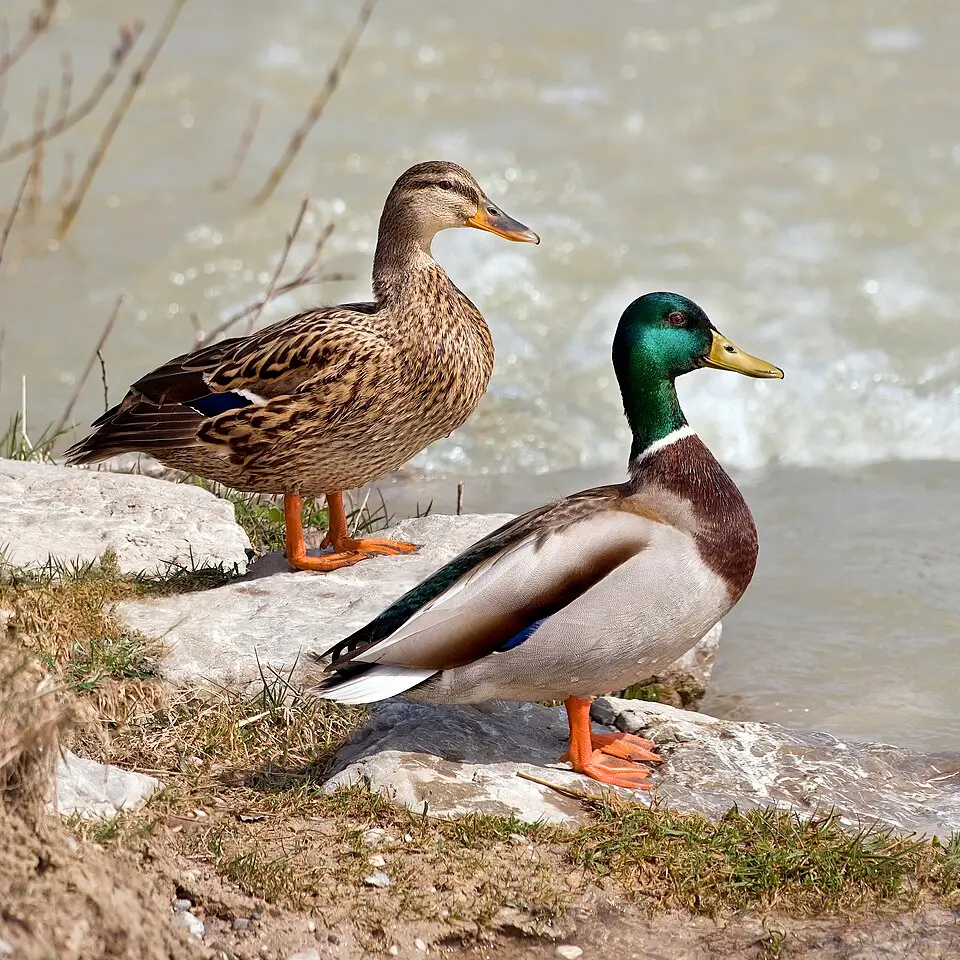
Sexual dimorphism is pronounced in this species. The male, or drake, is perhaps the most recognizable waterfowl in the world. During breeding season, he sports a glossy, iridescent green head separated from a rich chestnut-brown breast by a narrow white collar. His body is largely gray, his tail is white with distinctive black, upward-curled central feathers, and his bill is a bright, waxy yellow. The female, or hen, is considerably more understated in her appearance, wearing mottled brown plumage that provides excellent camouflage during nesting. Her bill is orange with dark markings. Both sexes display a distinctive speculum — a patch of iridescent blue-purple feathers bordered by white on the trailing edge of the wing — which is visible in flight and serves as a reliable field identification mark.
Mallards are dabbling ducks, meaning they feed primarily at or near the water's surface rather than diving. They tip forward to reach aquatic vegetation, seeds, invertebrates, and small fish beneath the surface, leaving their hindquarters pointed skyward in a posture familiar to any pond-side observer. This feeding strategy allows them to exploit shallow water environments that diving ducks cannot access as efficiently.
Vocalizations differ noticeably between the sexes. The familiar, resonant "quack" that most people associate with ducks is, in fact, produced almost exclusively by the female. The drake produces a softer, raspier call. Mallards are highly vocal birds, and their calls play important roles in pair bonding, flock communication, and warning behaviors.
Breeding behavior begins in late winter and early spring. Mallards are seasonally monogamous, with pairs typically forming on wintering grounds and remaining together through incubation. The hen selects a nest site, usually on the ground in dense vegetation near water, and lays an average clutch of around 8 to 13 eggs. Incubation lasts approximately 23 to 30 days, and the precocial ducklings are capable of following their mother to water within hours of hatching. After the female begins incubating, the male typically departs and joins other males for the summer molting period. Mallards undergo a complete molt after the breeding season, during which drakes briefly resemble hens in their dull "eclipse" plumage before transitioning back to their bold breeding colors in the fall.
The mallard's lifespan in the wild averages around five to ten years, though many individuals do not survive their first year. Predation, hunting, disease, and habitat loss are among the primary mortality factors. Despite these pressures, the species maintains robust populations thanks to high reproductive potential and extraordinary adaptability.
Habitat & Range
The mallard boasts one of the broadest geographic ranges of any waterfowl species in the world. It is found across North America, Europe, Asia, and northern Africa, and has been introduced to many other regions including Australia and New Zealand. In North America, mallards breed from Alaska and Canada south through the contiguous United States, with the highest breeding densities concentrated in the Prairie Pothole Region — a landscape of glacially formed wetlands stretching from the Dakotas and Minnesota northward into the Canadian provinces of Alberta, Saskatchewan, and Manitoba.
This vast prairie pothole landscape is considered the "duck factory" of North America, producing the majority of the continent's waterfowl. South Dakota sits squarely within this critical zone. The state's diverse habitats — including glacial wetlands, river bottomlands, grassland potholes, and the sprawling Missouri River reservoir system — provide exceptional breeding, staging, and migratory habitat for mallards. During migration, enormous concentrations of mallards pass through South Dakota each fall, moving along the Central Flyway between their northern breeding grounds and southern wintering areas.
Mallards are remarkably habitat-flexible. They thrive in agricultural landscapes where waste grain is abundant, in natural wetlands dominated by emergent vegetation, in city parks, and along major river corridors. This adaptability is a key factor in their success as a species and helps explain why South Dakota, with its mosaic of crop fields, wetlands, and river systems, serves as such an important hub for mallard populations during both the breeding season and fall migration.
Hunting Information
The mallard is the most harvested duck species in North America, and it is a primary target species for waterfowl hunters throughout the Central Flyway. South Dakota offers outstanding waterfowl hunting opportunities that complement the state's world-famous pheasant hunting tradition. According to the South Dakota Game, Fish and Parks, South Dakota is renowned worldwide for its pheasant hunting, and waterfowl — including mallards — are a significant part of the diverse hunting package the state offers across its varied landscapes, which include forests, river bottoms, grasslands, wetlands, and the vast Missouri River reservoir system.
Mallard hunting in South Dakota typically centers around the state's abundant wetland complexes, flooded agricultural fields, and the Missouri River reservoirs. The Missouri River system in particular attracts large numbers of migrating and wintering mallards and is considered one of the premier late-season duck hunting destinations in the region. Hunters often employ decoy spreads, duck calls, and layout or pit blinds in agricultural settings, or use boat-based setups along river corridors and reservoir edges.
Because mallard hunting regulations — including season dates, bag limits, and licensing requirements — are set annually by the South Dakota Game, Fish and Parks in coordination with the U.S. Fish and Wildlife Service and are subject to change based on population surveys, hunters are strongly encouraged to consult the current South Dakota waterfowl hunting regulations before each season. Licensing and permit requirements should be verified directly with the South Dakota Game, Fish and Parks to ensure full legal compliance.
Conservation
The mallard serves as an indicator species for the health of North America's wetland ecosystems. Conservation efforts focused on this species have broad positive effects on the entire suite of wetland wildlife. Organizations such as Ducks Unlimited, the Delta Waterfowl Foundation, and various state and federal agencies have invested heavily in protecting and restoring wetland habitat across the Prairie Pothole Region and the Central Flyway, directly benefiting mallard populations.
The North American Waterfowl Management Plan, a cooperative framework between the United States, Canada, and Mexico, has been instrumental in guiding mallard conservation since its inception in 1986. Population monitoring through annual breeding surveys helps wildlife managers calibrate hunting regulations to maintain sustainable harvests while protecting breeding populations.
Hunters play a meaningful and direct role in mallard conservation. Federal duck stamp purchases, excise taxes on hunting equipment through the Pittman-Robertson Act, and private land enrollment in conservation programs collectively fund the wetland protection and restoration work that sustains healthy mallard numbers. In South Dakota and across the Central Flyway, the partnership between sportsmen and conservation agencies continues to yield positive results for this iconic species and the ecosystems it depends upon.