Overview
Few birds capture the spirit of the American Great Plains quite like the Greater prairie-chicken (Tympanuchus cupido). This remarkable native grouse has roamed the vast open prairies of North America for thousands of years, serving as both an ecological cornerstone and a symbol of the wild, windswept landscapes that define the heart of the continent. Once numbering in the millions and ranging across an enormous swath of North American grasslands, the Greater prairie-chicken today occupies a more limited but still significant range — and remains one of the most fascinating and sought-after game birds for hunters and wildlife enthusiasts alike.
In states like South Dakota, where diverse landscapes ranging from rolling grasslands to river bottoms and wetlands provide rich habitat for a wide variety of wildlife, the Greater prairie-chicken holds a special place in the outdoor heritage. South Dakota itself is globally recognized for its exceptional hunting opportunities, and the Greater prairie-chicken is very much part of that broader tapestry of wildlife that makes the region so extraordinary. Whether you are a dedicated upland bird hunter, a wildlife watcher, or simply someone with a deep appreciation for native wildlife, understanding the Greater prairie-chicken enriches your connection to the American prairie.
Biological Traits
The Greater prairie-chicken is a member of the grouse family (Phasianidae) and belongs to the genus Tympanuchus, which also includes the Lesser prairie-chicken and the Sharp-tailed grouse. The species name cupido is a direct reference to the dramatic courtship displays that have made this bird legendary among ornithologists and wildlife observers for generations.
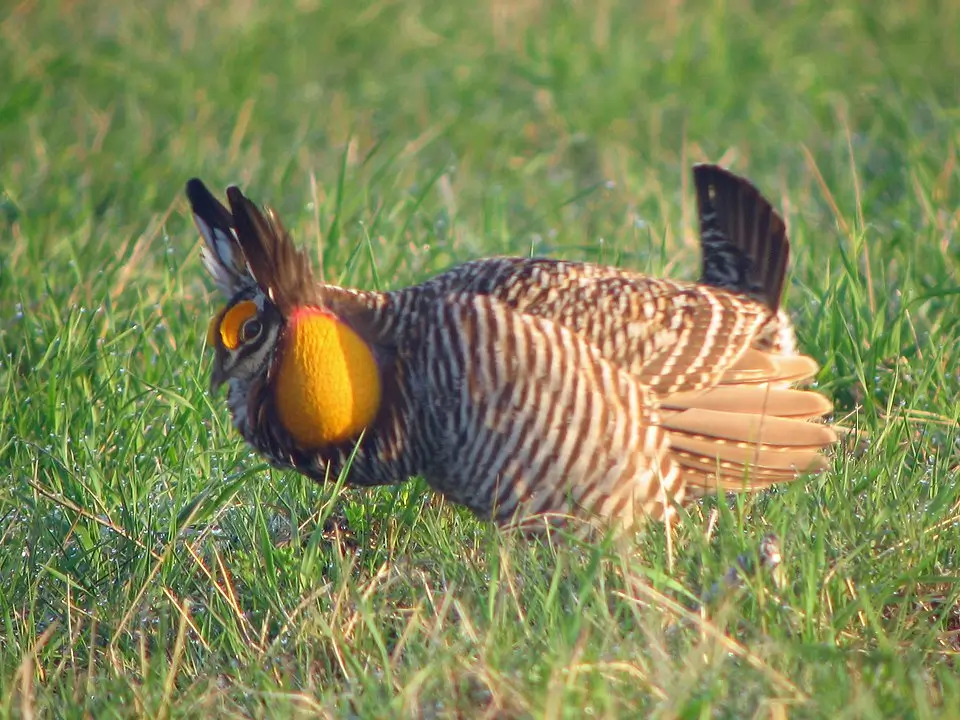
One of the most visually striking aspects of the Greater prairie-chicken is its physical appearance. Adults display bold barring patterns across their chest and flanks, with alternating bands of dark brown and buff or white. Males are notably distinguished by their elongated pinnae feathers — long, dark neck feathers that can be raised dramatically during display — and by prominent orange-yellow combs above their eyes, which become especially vivid during the breeding season. Both sexes also possess inflatable air sacs on either side of their necks; in males, these sacs are a rich orange-yellow color and are used to produce the haunting, resonant booming calls that have made the prairie-chicken one of the most recognizable sounds of the open plains.
The booming courtship display is one of nature's most spectacular performances. In early spring, male Greater prairie-chickens gather at traditional display grounds known as leks — open, elevated patches of ground where males compete vigorously for the attention of females. At a lek, males stomp their feet rapidly, spread their tails, lower their wings, erect their pinnae feathers, and inflate their neck sacs to produce the deep, resonant booming sounds that carry for remarkable distances across the open prairie. This communal display, performed at dawn and dusk, has captivated observers for centuries and remains one of the most iconic wildlife spectacles in North America.
Greater prairie-chickens are medium-sized grouse. They are generally round-bodied and strong-flying birds, capable of explosive bursts of speed when flushed. Their wings are broad and rounded, producing the characteristic thunderous wingbeat sound familiar to hunters. Like other prairie grouse, they are well adapted to life on the ground, spending the majority of their time foraging for seeds, grains, insects, berries, and green plant matter. Their diet shifts seasonally — insects and green vegetation are important in summer, while seeds, waste grains, and agricultural crops like corn and soybeans become critical food sources during fall and winter.
Habitat & Range
Historically, the Greater prairie-chicken's range was vast, stretching across much of the central and eastern portions of North America wherever tallgrass and mixed-grass prairie existed. The species thrived in the great unbroken expanses of native prairie that once covered enormous portions of the continent. As European settlement transformed these landscapes through agriculture, urbanization, and intensive land use, the species' range contracted significantly.
Today, stable populations of Greater prairie-chickens are found primarily in portions of the Great Plains, including Kansas, Nebraska, and South Dakota, among other states. Within these areas, the birds favor open grasslands, native prairie, and areas with a mix of grasses, forbs, and scattered shrubs that provide both food and cover. They are closely associated with landscapes that retain large, contiguous blocks of native or managed grassland, as fragmented habitats can reduce their ability to maintain viable populations.
South Dakota, situated squarely in the Great Plains and North Central region of the United States, encompasses exactly the types of diverse landscapes — grasslands, river bottoms, wetlands, and open prairies — that Greater prairie-chickens depend upon. The state's expansive and varied terrain supports a rich community of wildlife, and the Greater prairie-chicken is part of the native fauna that has defined these lands for millennia. The interplay between agricultural lands and native prairie in South Dakota creates a mosaic of habitat that can support the species, particularly where native grasslands are maintained or restored.
Seasonal movements in Greater prairie-chickens are relatively limited compared to migratory birds, but the species does move in response to food availability and weather conditions. During harsh winters, birds may travel to areas with reliable food sources, including agricultural fields where waste grain provides critical energy during cold months.
Hunting Information
The Greater prairie-chicken is a prized upland game bird, and hunting has long been a cherished tradition in the states where the species remains present. Hunters seeking the Greater prairie-chicken find the experience deeply rewarding — the birds offer challenging shooting due to their explosive flush and swift flight, and hunting them typically takes place in some of the most scenic and remote grassland country in North America.
South Dakota is widely celebrated as a premier hunting destination, renowned internationally for its exceptional upland bird hunting. The state offers hunters the opportunity to experience diverse landscapes and pursue a variety of game animals across its forests, river bottoms, grasslands, wetlands, and the vast Missouri River reservoir country. While South Dakota is perhaps most famous worldwide for its pheasant hunting — the state's average annual pheasant harvest over the past decade has reached 1.2 million roosters, a remarkable testament to its wildlife management programs — the broader spectrum of hunting available there includes native prairie species like the Greater prairie-chicken.
Anyone interested in hunting Greater prairie-chickens in South Dakota should consult the South Dakota Game, Fish, and Parks (SDGFP) directly for current season dates, licensing requirements, bag limits, and any specific regulations pertaining to this species. Wildlife management guidelines and season structures can change from year to year, and obtaining up-to-date information from the official state wildlife agency ensures that hunters remain in full compliance with all applicable regulations. The SDGFP website and its official hunting resources are the definitive source for this information.
Traditional methods for hunting prairie-chickens include hunting over pointing dogs — breeds such as setters, pointers, and Brittanys excel at locating and pointing these birds in open grassland terrain. Hunters typically cover large areas on foot, working with their dogs through native grass and mixed prairie cover. The wide-open landscapes in which prairie-chickens live demand physical endurance and patience, but the reward of a classic prairie bird hunt is deeply satisfying for those who pursue it.
Conservation
The Greater prairie-chicken's story is also one of conservation significance. The species has experienced significant population declines over the past two centuries, driven largely by habitat loss as native prairies were converted to cropland, pasture, and developed land. Certain subspecies and populations of the Greater prairie-chicken have fared worse than others; the Heath hen (Tympanuchus cupido cupido), once found along the eastern seaboard, went extinct in 1932, serving as an important lesson in the consequences of unmanaged habitat loss and overhunting.
Today, the remaining populations of Greater prairie-chickens — particularly the nominate subspecies found across the Great Plains — are the subject of active conservation and management efforts. Organizations including state wildlife agencies, private landowners, and conservation groups work collaboratively to preserve and restore native grassland habitats that the species depends upon. Programs that incentivize the maintenance of native prairie, rotational grazing, and controlled burns to maintain grassland health have all proven beneficial for prairie-chicken populations.
Regulated hunting plays a role in the broader conservation framework for this species. When managed responsibly, hunting provides crucial funding for wildlife management and habitat conservation through license fees and excise taxes on equipment, as established under the Federal Aid in Wildlife Restoration Act (commonly known as the Pittman-Robertson Act). Hunters also serve as important advocates for preserving the open landscapes that prairie-chickens — and countless other species — require to thrive.
In South Dakota, the commitment to wildlife management is evident in the state's robust hunting programs and the diversity of game animals sustained across its varied landscapes. The same stewardship ethos that has made South Dakota a world-class pheasant hunting destination also benefits native species like the Greater prairie-chicken, as healthy grassland ecosystems support a broad community of wildlife.
Looking ahead, the future of the Greater prairie-chicken depends on the continued commitment of landowners, agencies, and conservation organizations to prioritize and protect the native grassland habitats that remain. Public awareness of this remarkable bird and its needs is an essential part of ensuring that future generations will have the opportunity to witness the unforgettable spectacle of a prairie-chicken lek at dawn, or to experience the thrill of hunting one of North America's most iconic native grouse across the sweeping prairies of the Great Plains.