Overview
Few animals capture the imagination quite like the cougar. Known by more names than perhaps any other mammal in the Western Hemisphere — mountain lion, puma, panther, catamount, and painter among them — this magnificent cat has fascinated naturalists, hunters, and wildlife enthusiasts for centuries. Scientifically classified as Puma concolor, the cougar holds the distinction of being the largest cat native to North America north of the tropics, and its range once stretched from the tip of South America all the way to the Yukon in Canada. Today, the cougar remains one of the most adaptable, powerful, and ecologically significant predators on the continent.
In a state like South Dakota, the presence of cougars adds a layer of wild mystique to already spectacular landscapes. From the rugged pine forests of the Black Hills to the dramatic badlands and river bottoms of the western regions, South Dakota provides a compelling backdrop for the story of this incredible feline. Whether you are a hunter, a wildlife watcher, a conservationist, or simply someone who appreciates the natural world, understanding the cougar is a rewarding pursuit.
Biological Traits
The cougar (Puma concolor) is a member of the family Felidae and belongs to the subfamily Felinae — the same group that includes domestic cats, cheetahs, and lynxes. Despite its large size, it is more closely related to smaller cats than to lions or tigers. One of the most telling indicators of this is the cougar's vocalization: unlike the "big cats" such as lions and leopards, cougars cannot roar. Instead, they communicate through whistles, chirps, growls, hisses, and a haunting, human-like scream that has startled many a backcountry traveler.
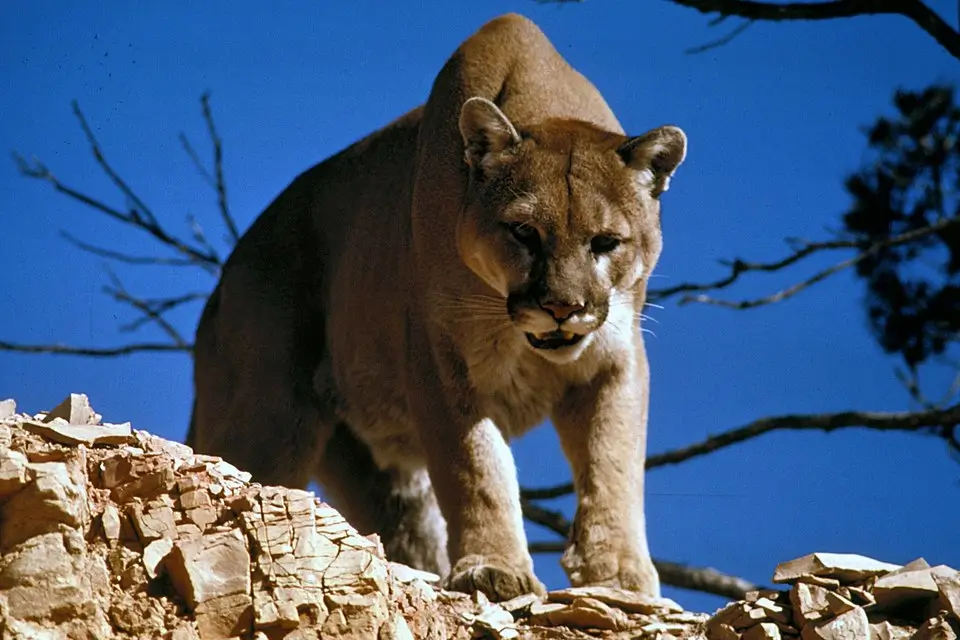
Adult cougars are powerfully built animals. Males are typically larger than females, as is common among big cats. A mature male can weigh anywhere from around 115 to over 200 pounds, while females are generally lighter. The body is long and muscular, with a relatively small, rounded head, short face, erect ears, and notably powerful hindquarters — built for explosive bursts of speed and extraordinary leaping ability. Cougars are capable of jumping upward of 18 feet vertically and can leap horizontally up to 40 feet in a single bound. Their long tail, which can measure up to a third of their total body length, serves as a critical balancing tool during pursuit and climbing.
The coat of a cougar is typically a uniform tawny-brown or buff color on the back and sides, with lighter — often whitish or cream-colored — underparts. The face features distinctive dark markings around the muzzle. Kittens are born with spotted coats, which gradually fade as they mature into adults. This species has a lifespan of roughly 8 to 13 years in the wild, though individuals in captivity have been known to live considerably longer.
As obligate carnivores, cougars depend entirely on meat for nutrition. They are classic ambush predators, relying on stealth, patience, and explosive power rather than sustained pursuit. Deer constitute the primary prey in most of their range, but cougars are highly opportunistic and will hunt elk, bighorn sheep, pronghorn, smaller mammals, and even livestock when opportunity arises. They are solitary hunters, and their hunting technique typically involves a stalk followed by a rapid charge and a killing bite to the back of the skull or neck.
Cougars are largely nocturnal and crepuscular, meaning they are most active during the low-light hours of dawn and dusk. They are highly territorial animals, with males maintaining large home ranges that can span dozens to hundreds of square miles depending on terrain and prey availability. Female home ranges tend to be smaller and may overlap with male territories.
Reproduction in cougars is not tied to a specific season; females can come into estrus at any time of year. After a gestation period of approximately 90 days, a female gives birth to a litter of one to six kittens, with two to three being most common. The young remain dependent on their mother for up to two years, during which time they learn the skills needed for survival as solitary hunters.
Habitat & Range
One of the most remarkable characteristics of Puma concolor is its extraordinary ecological flexibility. The species has the largest range of any wild terrestrial mammal in the Western Hemisphere. Historically, cougars occupied virtually every major habitat type across the Americas — from Patagonian grasslands and Amazonian rainforests to Andean peaks, Caribbean coastlines, Pacific temperate forests, and North American deserts.
In North America today, cougars are most commonly found in the western United States, western Canada, and throughout Central and South America. The species thrives in forested mountains, rocky canyons, dense chaparral, swamps, and open desert. What it requires above all else is adequate prey and sufficient cover for stalking and denning.
In South Dakota, cougars are most associated with the Black Hills region — a forested island of mountains rising dramatically from the surrounding Great Plains. The Black Hills provide the kind of rugged, forested terrain that cougars prefer, along with healthy populations of white-tailed deer and mule deer that serve as primary prey. The presence of cougars in South Dakota speaks to both the health of the state's wild ecosystems and the resilience of this remarkable predator. Beyond the Black Hills, cougar sightings have been documented in the Badlands and other western South Dakota landscapes, reflecting the species' tendency for dispersal and range expansion.
South Dakota itself is a state of remarkable ecological diversity. Its forests, river bottoms, grasslands, wetlands, and vast Missouri River reservoir system support an extraordinary variety of wildlife, making it one of the premier wildlife destinations in the entire Great Plains region.
Hunting Information
Cougar hunting has a long and storied tradition in North America, particularly in the American West. Hunters prize the cougar for its elusiveness, its demanding physical requirements for pursuit, and its status as a genuine apex predator. Traditional cougar hunting often involves the use of trained hounds, which track the cat's scent trail until the animal is treed, at which point the hunter moves in for a shot. This method requires significant expertise, both in handling hounds and in navigating steep, rugged terrain under often challenging conditions.
For hunters interested in pursuing cougars in South Dakota, the state's Game, Fish, and Parks department is the authoritative source for current regulations, license requirements, and season information. The South Dakota Game, Fish, and Parks agency manages a wide variety of game animals across the state's diverse landscapes, and hunters are strongly encouraged to consult the agency directly for the most up-to-date licensing, tag, and season information before planning any hunt.
Because cougar populations and management regulations can change based on population surveys, harvest data, and conservation goals, specific season dates, bag limits, and licensing structures are subject to revision. Always verify current requirements with the South Dakota Game, Fish, and Parks department before pursuing this species. The agency's commitment to science-based wildlife management ensures that any legal hunting opportunity for cougars in the state is grounded in sound conservation principles.
Hunters who do pursue cougars should be prepared for demanding backcountry conditions. Physical fitness, proficiency with firearms or archery equipment, and a solid understanding of cougar behavior are all essential. Respect for the animal and adherence to all applicable regulations are the hallmarks of ethical cougar hunting.
Conservation
The conservation status of the cougar is a nuanced and regionally variable story. Globally, Puma concolor is classified as a species of "Least Concern" by the International Union for Conservation of Nature (IUCN), reflecting its broad range and relatively stable populations across much of its territory. However, this broad classification masks significant regional variation: some subspecies and populations face genuine threats from habitat loss, prey depletion, and conflict with humans and livestock.
In North America, cougar populations in the western United States are generally considered stable to increasing in many areas, a testament to thoughtful wildlife management and the recovery of deer and elk populations that serve as their primary prey. The Florida panther (Puma concolor couguar), a subspecies found in the southeastern United States, remains critically endangered and has been the subject of intensive conservation efforts for decades.
Cougars play an irreplaceable ecological role as apex predators. Their predation shapes the behavior and distribution of prey species like deer and elk, which in turn affects vegetation patterns, stream health, and overall ecosystem function — a phenomenon ecologists call a "trophic cascade." Where healthy cougar populations exist, ecosystems often show measurable improvements in biodiversity and resilience.
Coexistence between cougars and human communities remains an ongoing conversation in many western states, including South Dakota. Ranchers, wildlife managers, hunters, and conservation organizations all play important roles in maintaining this balance. Regulated hunting, when conducted under the oversight of professional wildlife managers, is widely recognized as a legitimate and effective tool for managing cougar populations while funding broader conservation efforts through license fees and excise taxes.
The cougar's return to and persistence in states like South Dakota is, in many respects, a conservation success story — a reminder of nature's resilience when given the opportunity to flourish.