Overview
Few animals are as deeply woven into the fabric of American outdoor life as the cottontail rabbit. A familiar sight in backyards, farm fields, brushy fence lines, and forest edges across the continent, the cottontail is one of North America's most recognizable and beloved wild creatures. Whether encountered on a morning walk, spotted darting across a country road at dusk, or pursued by hunters and their beagles on crisp autumn mornings, the cottontail rabbit occupies a special place in the hearts and traditions of outdoors enthusiasts everywhere.
Belonging to the genus Sylvilagus, cottontail rabbits represent a diverse group of small mammals that have thrived across an extraordinary range of habitats — from the eastern woodlands to the high desert of the American Southwest, from the lush river bottoms of the Great Plains states like South Dakota to the swampy lowlands of the Deep South. Their adaptability, prolific breeding habits, and ecological importance make them one of the most fascinating creatures in North American wildlife. For hunters, they represent the quintessential small game quarry — a challenging, rewarding, and delicious target that has introduced countless young sportsmen and sportswomen to the joys of hunting.
This article explores the biology, habitat, hunting traditions, and conservation status of the cottontail rabbit, with a focus on the opportunities available to hunters and wildlife enthusiasts in a state like South Dakota, where diverse landscapes provide ideal conditions for these remarkable little animals.
Biological Traits
The cottontail rabbit belongs to the genus Sylvilagus, a group within the family Leporidae and the order Lagomorpha. The genus Sylvilagus is uniquely North and South American in its distribution, setting these rabbits apart from the true hares (genus Lepus) and the European rabbit (Oryctolagus cuniculus) that most people picture when they think of a generic "rabbit."
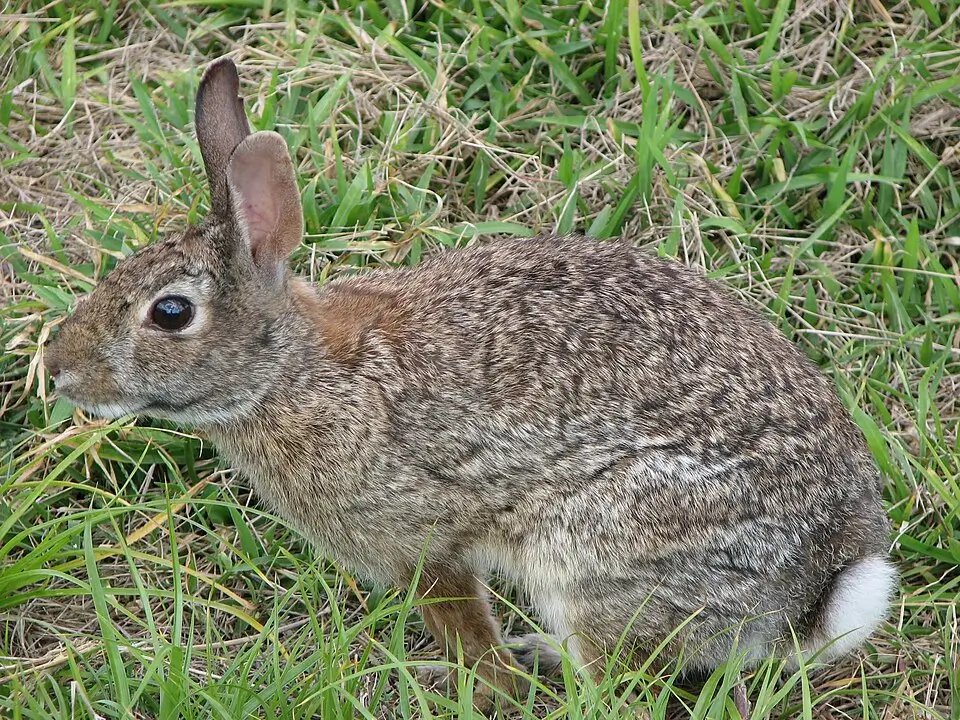
One of the most distinctive features of the cottontail is, of course, its tail. The short, fluffy, white underside of the tail resembles a small cotton ball, giving the animal its common name. When a cottontail flees from a predator, this white tail flashes visibly, a characteristic that has made it instantly recognizable to generations of observers. The rest of the body is typically covered in grayish-brown fur that provides excellent camouflage against leaf litter, grass, and brushy undergrowth.
Cottontails are relatively small mammals, though their exact size varies by species. They possess the long, powerful hind legs characteristic of all lagomorphs, designed for explosive bursts of speed and the rapid, zigzagging escape runs that make them so challenging for both predators and hunters to catch. Their large, upright ears serve double duty — providing excellent hearing to detect approaching threats and helping to regulate body temperature in warm weather.
Like all lagomorphs, cottontails are not rodents, despite a superficial resemblance. One notable biological trait that distinguishes lagomorphs from rodents is the presence of a second set of small incisors directly behind the large front incisors. Cottontails are also notable for a behavior called cecotrophy — the consumption of special soft fecal pellets directly from the anus. This behavior, while seemingly unusual, allows the rabbit to extract maximum nutrition from its plant-based diet by processing food through the digestive system twice.
Cottontail rabbits are herbivores, feeding on a wide variety of plant material that changes with the seasons. In warmer months, they graze on grasses, clover, wildflowers, and garden vegetables. During winter, they shift to woody browse — nibbling on the bark, twigs, and buds of shrubs and young trees. This dietary flexibility is a key part of what makes cottontails so resilient and widespread.
Perhaps the most famous biological trait of cottontail rabbits is their reproductive capacity. Cottontails can produce multiple litters per year, with each litter typically containing several young, called kittens or kits. The young are born in shallow, fur-lined nests and develop rapidly. This remarkable reproductive rate is nature's answer to the incredibly high predation pressure that cottontails face throughout their lives — they are prey to virtually every mid-sized and large predator in their range, including hawks, owls, foxes, coyotes, bobcats, and humans.
Habitat & Range
The genus Sylvilagus includes numerous species adapted to an impressive variety of North American environments. The Eastern cottontail (Sylvilagus floridanus) is perhaps the most widespread and well-known, ranging across a vast swath of the United States, Canada, and into Central and South America. Other species include the Desert cottontail (Sylvilagus audubonii), the Mountain cottontail (Sylvilagus nuttallii), the New England cottontail (Sylvilagus transitionalis), and several others, each adapted to specific regional environments.
Cottontails are quintessential "edge" animals — they thrive in the transitional zones between different habitat types. The classic cottontail habitat includes brushy field edges, overgrown fence rows, briar patches, riparian corridors along streams and rivers, forest edges, and areas where shrubby vegetation provides both food and cover. Cottontails depend heavily on dense vegetative cover for escape from predators, and the presence of thick brush, tall grass, or woody debris piles is often a reliable indicator of cottontail activity.
In South Dakota, the diverse landscape provides a remarkable variety of habitats that support healthy cottontail populations. The state's geography is wonderfully varied — encompassing the river bottoms and grasslands of the Great Plains, wetland edges, the forested draws and coulees of the Missouri River system, and the rolling prairies that define the region. South Dakota's Game, Fish and Parks agency oversees the management of this diverse landscape, which supports not only the world-famous pheasant hunting for which the state is globally renowned, but also a rich array of other wildlife including cottontail rabbits.
The river bottoms and brushy draws of South Dakota are particularly productive cottontail country. Dense stands of wild plum, buffaloberry, dogwood, and other shrubby species provide ideal cover, while adjacent agricultural fields offer reliable food sources. Grassland edges, shelterbelts planted across the prairies, and the brushy margins of wetlands and stock ponds round out the habitat picture for South Dakota's cottontails.
Hunting Information
Cottontail rabbit hunting is one of the oldest and most beloved small game hunting traditions in North America. For many hunters, pursuing cottontails with a beagle or small hound, listening to the melodic baying as the dog works out a scent trail, represents the very essence of what hunting is all about — a deep, joyful connection between humans, dogs, and the natural world.
Hunters pursue cottontails using a variety of methods. The classic approach involves walking slowly through brushy cover, either alone or with hunting companions spread out in a line, pushing through likely habitat and waiting for a rabbit to bolt from its hiding spot. Shotguns are the traditional tool for this style of hunting, allowing for quick shots on fast-moving targets. Small-bore shotguns in 20-gauge or .410 are popular choices, as are 12-gauge and 16-gauge guns loaded with small shot sizes such as No. 6 or No. 7½.
Hunting with dogs — particularly beagles, which were practically purpose-built for rabbit hunting — adds another dimension to the experience. A well-trained beagle will work through thick cover, locate a rabbit, and pursue it in large circles, giving the hunter time to anticipate the rabbit's route and position for a shot. This style of hunting is deeply traditional and remains popular wherever cottontails are found.
Hunters can also pursue cottontails effectively using small-caliber rifles, a popular approach for those who prefer a slower, more deliberate style of hunting. A .22 LR rifle is a classic choice for still-hunting or spotting cottontails sitting in the open.
South Dakota, celebrated worldwide for its exceptional hunting opportunities, offers a diverse landscape that can provide outstanding cottontail rabbit hunting. The state's varied environments — from its famous grasslands and pheasant country to river bottoms and woodland edges — create habitat that supports rabbits alongside the many other game species that make South Dakota a premier hunting destination. Hunters visiting South Dakota to pursue pheasants or other game often find that cottontail hunting provides an excellent complement to their trip, particularly in brushy cover along field edges and riparian zones.
For specific season dates, bag limits, and licensing requirements in South Dakota, hunters should always consult the current regulations published by South Dakota Game, Fish and Parks, as these details may change from year to year.
Conservation
Despite facing relentless predation pressure and being one of the most heavily harvested small game animals on the continent, cottontail rabbit populations have generally remained stable and resilient across much of their range. Their extraordinary reproductive capacity gives them the ability to rebound quickly from population declines, and they are not currently considered a species of conservation concern at the national level.
That said, habitat loss and land-use changes have negatively impacted cottontail populations in some regions. The loss of brushy fence rows, hedgerows, and weedy field edges as agriculture has intensified has reduced available habitat in some agricultural landscapes. In the eastern United States, the New England cottontail has experienced more significant population pressure and has been the focus of targeted conservation efforts.
Conservation practices that benefit cottontails include the maintenance and creation of brushy edge habitat, the preservation of native shrub communities, and responsible land management practices that retain the weedy, overgrown areas that cottontails depend on. Many hunters and hunting organizations actively support these habitat efforts, recognizing that healthy rabbit populations are an indicator of a diverse, functioning landscape.
Hunting itself, properly regulated, does not threaten cottontail populations. Because these rabbits reproduce so prolifically, sustainable harvest levels have minimal long-term impact on population numbers. In this sense, the cottontail rabbit stands as a positive example of how regulated hunting and wildlife conservation can work hand in hand.