Overview
Few birds capture the imagination of hunters and wildlife enthusiasts quite like the Common pheasant (Phasianus colchicus). With its vivid plumage, explosive flush, and spirited nature in the field, this remarkable bird has earned its place as one of the most pursued and admired game birds in the world. In the United States, no state has embraced the Common pheasant more wholeheartedly than South Dakota, where pheasant hunting has grown into a cultural institution and a source of tremendous state pride. Whether you are a seasoned hunter who has chased roosters across wind-swept prairie fields for decades or a newcomer eager to experience what all the excitement is about, the Common pheasant offers an experience unlike any other in the upland hunting world.
Originally native to Asia and parts of Eastern Europe, the Common pheasant has been successfully introduced across vast regions of the globe, adapting to a remarkable range of environments and climates. Today, it thrives across much of North America, Europe, Australia, and New Zealand, making it one of the most widely distributed game birds on the planet. Its story is one of biological resilience, careful wildlife management, and a passionate hunting culture that has helped sustain and even expand wild pheasant populations in many regions. In South Dakota, that story takes on an especially vivid character.
Biological Traits
The Common pheasant, Phasianus colchicus, belongs to the family Phasianidae, a group that also includes turkeys, peacocks, quail, and grouse. The species name colchicus refers to Colchis, an ancient region along the eastern coast of the Black Sea, reflecting the bird's historical native range. There are numerous recognized subspecies of the Common pheasant, and centuries of introductions and interbreeding have resulted in populations around the world that display a wide variety of plumage patterns and color variations.
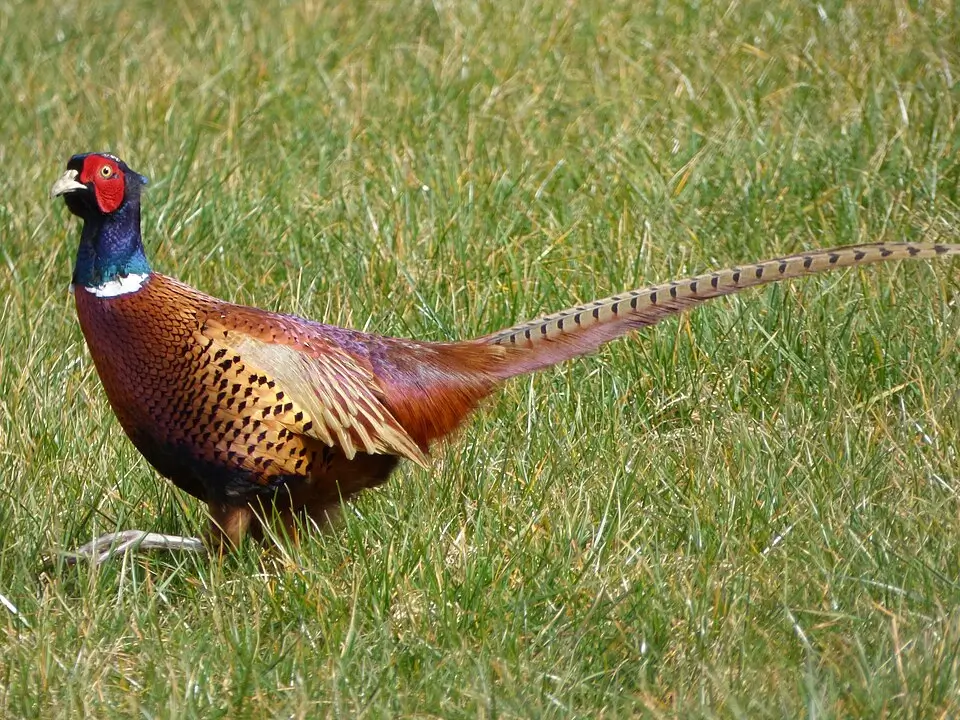
Sexual dimorphism is one of the most striking features of this species. Male pheasants, commonly called roosters or cocks, are renowned for their extraordinary appearance. A mature rooster displays an iridescent combination of copper, gold, rust, and green feathers, along with a distinctive red facial wattle and, in many populations, a brilliant white ring around the neck — a feature so iconic it has led to the colloquial name "ring-necked pheasant" for the North American variety. Long, barred tail feathers complete the rooster's dramatic silhouette, making him one of the most visually striking birds in the upland world.
Female pheasants, known as hens, are considerably more subdued in their coloration. Their mottled brown plumage provides excellent camouflage, which is essential for ground-nesting birds that must protect themselves and their eggs from a wide variety of predators. Hens are noticeably smaller than roosters and lack the long tail feathers and facial wattles that define the males.
Pheasants are primarily ground-dwelling birds, foraging for seeds, grains, insects, berries, and various plant materials. They are omnivores by nature, and their diet shifts with the seasons, favoring insects and invertebrates during the warmer months and relying more heavily on seeds and agricultural grains in the fall and winter. Their strong legs and sturdy feet make them well-suited to walking through dense vegetation in search of food.
When threatened, pheasants have a tendency to run rather than fly, often sneaking through tall grass or shrubby cover before exploding into flight when escape on foot is no longer an option. This explosive, cackling flush — accompanied by the distinctive crowing call of the rooster — is one of the most exciting moments in all of upland bird hunting. Once airborne, pheasants are powerful fliers capable of reaching significant speeds, making them a challenging and rewarding target.
The breeding season for Common pheasants typically begins in spring. Roosters are polygynous, meaning a single dominant male will mate with multiple hens. Males establish territories and engage in elaborate displays to attract females, fanning their tail feathers and puffing out their colorful plumage. After mating, hens are solely responsible for incubating the clutch of eggs, which typically numbers between eight and fifteen eggs. The eggs hatch after approximately 23 to 28 days of incubation, and the precocial chicks are capable of moving and feeding on their own very shortly after hatching, though they remain under the hen's protection for several weeks.
Habitat & Range
The Common pheasant is a highly adaptable species that thrives in a variety of landscapes. Its native range spans from the Caucasus region and Central Asia eastward through China to the Korean Peninsula and Taiwan, encompassing a wide diversity of habitats including river valleys, forest edges, grasslands, and agricultural areas.
In North America, the ring-necked pheasant was successfully introduced in the late 19th century and quickly established itself across vast stretches of the continent. The bird's affinity for agricultural landscapes, particularly areas with a mixture of grain crops, grasslands, wetlands, and shrubby cover, made much of the American Midwest an ideal home.
South Dakota represents perhaps the finest example of pheasant habitat in all of North America. The state's diverse landscapes — encompassing river bottoms, native grasslands, wetlands, prairie pothole country, and the broad Missouri River reservoir system — provide the mosaic of habitat types that pheasants need to thrive throughout the year. Nesting cover, winter shelter, water sources, and abundant food in the form of agricultural grains and natural seeds are all available across the South Dakota landscape, supporting robust and resilient pheasant populations year after year.
Hunting Information
South Dakota's reputation as the premier pheasant hunting destination in the world is both well-earned and well-documented. The state is renowned worldwide for the quality and abundance of its pheasant hunting opportunities, and the numbers speak for themselves. According to South Dakota Game, Fish and Parks, the average annual pheasant harvest over a recent ten-year period reached an impressive 1.2 million roosters — a figure that underscores just how extraordinary South Dakota's pheasant resource truly is.
Hunters from across the United States and around the globe travel to South Dakota each fall to pursue roosters across the state's vast and varied landscapes. The hunting experience in South Dakota is as diverse as the terrain itself. From the rolling prairies and agricultural fields of the eastern part of the state to the river bottoms, CRP grasslands, and wetland edges that dot the landscape, pheasant hunters will find no shortage of prime ground to explore.
Upland bird hunting in South Dakota is very much a community experience as well as an individual pursuit. Hunting with well-trained pointing dogs or flushing breeds is an integral part of the tradition, and the teamwork between hunter and dog as they work through a field of tall grass or a stand of cattails is one of the great pleasures of the sport. Groups of friends and family gathering for a pheasant hunting trip to South Dakota has become a cherished annual tradition for many households across the country.
It is important for prospective hunters to consult the South Dakota Game, Fish and Parks for the most current season dates, licensing requirements, and regulations before heading afield, as these details are subject to change from year to year. The agency works diligently to manage pheasant populations sustainably and to provide high-quality hunting opportunities for residents and non-residents alike.
Beyond pheasants, South Dakota offers hunters a wealth of additional opportunities. The state's diverse habitats support a variety of game animals and birds, making it a comprehensive destination for those who love the outdoors and the hunting lifestyle. Forests, river bottoms, grasslands, wetlands, and the Missouri River reservoir system all contribute to a rich and varied hunting experience that goes well beyond rooster pheasants.
Conservation
The long-term health of Common pheasant populations depends on thoughtful wildlife management, habitat conservation, and the stewardship of the agricultural and natural landscapes that these birds call home. In South Dakota and across the broader pheasant range in North America, conservation efforts have focused on preserving and restoring the grassland and wetland habitats that pheasants need for nesting, brooding, and winter survival.
Programs that encourage farmers and landowners to maintain native grass buffers, wetland edges, shelterbelts, and other forms of cover have proven effective in supporting healthy pheasant populations. The relationship between agriculture and pheasant habitat is a complex and important one, and many landowners in South Dakota and the broader Midwest take great pride in managing their properties in ways that benefit both their farming operations and local wildlife populations.
Hunters themselves play a vital role in pheasant conservation. Through license fees, excise taxes on sporting goods, and voluntary contributions to conservation organizations, hunters help fund habitat programs, research, and management activities that benefit not only pheasants but countless other wildlife species. The harvest of roosters only — hens are protected during the hunting season in most management schemes — helps ensure that breeding populations remain strong and productive from one season to the next.
The Common pheasant's remarkable adaptability and the dedication of wildlife managers, hunters, and landowners alike give good reason for optimism about the future of this beloved bird. In South Dakota, where the pheasant is not merely a game bird but a cultural symbol and a source of enormous economic and recreational value, that commitment to conservation is especially strong and deeply felt.