Overview
Few sights in the natural world are as iconic as a V-formation of Canada geese cutting across an autumn sky, their resonant honking calls echoing across marshes, fields, and waterways. The Canada goose (Branta canadensis) is one of the most recognizable birds in North America, a symbol of wild places and changing seasons that has captured the imagination of naturalists, hunters, and casual observers alike for generations. From the tundra of northern Canada to the wetlands of the American South, this remarkable bird has carved out a place not only in the natural landscape but also in the cultural fabric of the continent.
For hunters and wildlife enthusiasts in South Dakota, the Canada goose represents a thrilling and rewarding quarry. The state's diverse geography — encompassing river bottoms, wetlands, vast grasslands, and the expansive Missouri River reservoir system — provides ideal habitat for these birds during their seasonal migrations. South Dakota, while globally celebrated for its extraordinary pheasant hunting, also offers hunters a rich and varied outdoor experience that includes waterfowl pursuits, and the Canada goose is one of its prized targets.
This article explores the biology, habitat preferences, hunting traditions, and conservation story of the Canada goose, with a focus on what makes South Dakota a meaningful destination for goose hunters and wildlife watchers alike.
Biological Traits
The Canada goose (Branta canadensis) belongs to the family Anatidae, the large and diverse family of birds that includes ducks, geese, and swans. It is classified in the genus Branta, a group commonly referred to as the "black geese," which also includes the barnacle goose and the brant.
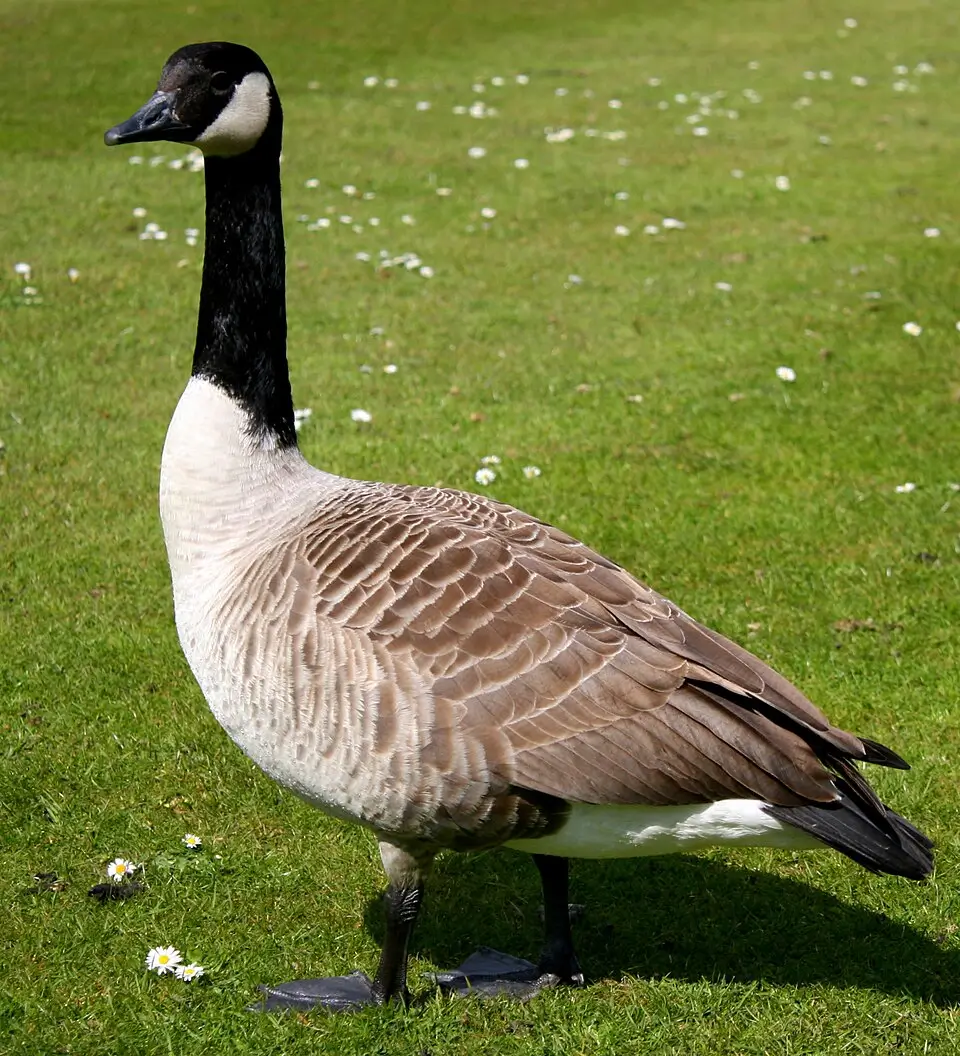
Canada geese are among the largest waterfowl in North America. Adults are immediately recognizable by their long black neck and head, contrasted sharply by distinctive white cheek patches that extend from the chin upward toward the eye — a marking so consistent that it serves as the definitive field identification feature for the species. The body is typically brown on the back and sides, with a lighter, often pale or cream-colored breast and belly. The tail and rump are black, and white undertail coverts are visible in flight.
The species exhibits considerable size variation across its many recognized subspecies. The largest individuals, belonging to the subspecies often associated with interior and southern populations, can weigh upward of 14 pounds and have wingspans approaching five to six feet. Smaller subspecies, sometimes colloquially referred to as "cackling geese," were for many years considered part of the Canada goose group before being reclassified as a separate species (Branta hutchinsii).
Canada geese are strong, capable fliers. Their famous V-formation flying behavior is not merely aesthetic — it is an aerodynamically efficient strategy that conserves energy during long migratory flights. Each bird in the formation benefits from the upwash created by the wingtip vortex of the bird ahead of it, reducing the energy required to stay aloft. The lead bird expends the most energy and is regularly rotated throughout a flock.
These birds are highly social and form strong pair bonds. Canada geese are monogamous, typically mating for life, and pairs often remain together year-round. Females typically lay between two and eight eggs per clutch, with an incubation period of approximately 25 to 28 days. Goslings are precocial, meaning they are born with open eyes, covered in down, and capable of walking and swimming within hours of hatching. Both parents are intensely protective of the nest and young, and Canada geese are well known for their bold, sometimes aggressive defense of their nesting territory.
The average lifespan of a Canada goose in the wild is approximately 10 to 24 years, though many individuals do not survive their first year due to predation and environmental pressures. Their diet is largely herbivorous, consisting primarily of grasses, sedges, aquatic vegetation, grains, and berries. During migration, agricultural fields — particularly those with corn, wheat, and other grains — become critically important feeding areas.
Their vocalizations are well known and distinctive. The classic "honk" associated with Canada geese is primarily a contact call used to maintain flock cohesion during flight and foraging. The species also produces a variety of other sounds, including hissing during aggressive encounters.
Habitat & Range
The Canada goose is one of the most widely distributed waterfowl species in North America. Its breeding range extends across much of Canada and Alaska, from the Atlantic to the Pacific coast, and includes parts of the northern United States. During winter months, the birds migrate south, spreading across the continental United States and into northern Mexico.
Canada geese are highly adaptable in their habitat selection. They thrive in a broad range of environments, from remote Arctic tundra during the breeding season to urban parks, golf courses, agricultural fields, and suburban retention ponds during the non-breeding months. Their primary requirements are relatively simple: open water for resting and escape from predators, nearby grassland or agricultural land for foraging, and relatively undisturbed areas for nesting.
Wetlands are central to the ecology of Canada geese throughout all seasons. Rivers, lakes, marshes, reservoirs, and ponds all serve as critical resting and staging areas during migration. The Missouri River system, which forms the eastern boundary of much of South Dakota, is a prime example of the kind of large, productive waterway that attracts significant numbers of migrating Canada geese each fall and spring.
South Dakota's geography places it squarely within several major migratory flyways. The state's wetlands, river corridors, and agricultural landscapes create a mosaic of habitat that supports waterfowl in impressive numbers. Geese moving through the state take advantage of the grain fields left after harvest, fueling up on waste corn and other crops before continuing their southward journey or settling in to overwinter in favorable areas.
Hunting Information
The Canada goose occupies a special place in North American hunting tradition. Goose hunting is a pursuit that blends fieldcraft, calling skill, decoy placement, and patience into a deeply satisfying outdoor experience. Hunters pursue Canada geese in a variety of settings, from pit blinds in picked grain fields to layout blinds along river sandbars and shorelines.
South Dakota is widely recognized as one of the premier hunting destinations in the United States. While the state has earned its global reputation through its remarkable pheasant hunting — with an average annual harvest of approximately 1.2 million roosters over the past decade — the hunting package in South Dakota extends well beyond upland birds. The state's diverse landscapes, including forests, river bottoms, grasslands, wetlands, and the Missouri River reservoir system, provide outstanding opportunities for a wide variety of game, and waterfowl hunting is a meaningful and cherished part of that tradition.
Canada goose hunting in South Dakota typically takes place during the fall migration, when birds funnel through the state's waterways and agricultural areas. Field hunting over decoy spreads is a particularly popular and effective method, with hunters concealing themselves near feeding areas and using a combination of full-body and shell decoys, along with skillful calling, to bring birds within range. Layout blinds and natural vegetation concealment are commonly employed to break up the human silhouette in open field settings.
Calling is one of the most important skills in a goose hunter's repertoire. The classic double-cluck and moaning calls, executed on short-reed or acrylic goose calls, can be highly effective when timed correctly to responding birds. Expert callers can read a flock's behavior and adjust their cadence and tone to draw geese into the decoy spread.
Hunters interested in pursuing Canada geese in South Dakota should consult the South Dakota Game, Fish and Parks (GFP) for current season dates, bag limits, license requirements, and any special regulations applicable to specific zones or management areas. Regulations for migratory waterfowl are established in coordination with the U.S. Fish and Wildlife Service and are updated annually to reflect population data and conservation goals.
Conservation
The conservation story of the Canada goose is one of the great wildlife management success stories of the twentieth century. By the mid-twentieth century, several subspecies of Canada goose had experienced significant population declines due to overhunting, habitat loss, and the collection of eggs and birds at nesting sites. Concerted conservation efforts, including legal protections under the Migratory Bird Treaty Act, habitat restoration, and carefully managed hunting seasons, led to a dramatic recovery.
Today, Canada goose populations across much of North America are robust and, in many areas, thriving. The success of these conservation measures reflects the effectiveness of science-based wildlife management and the critical role that hunters, conservation organizations, and government agencies play in sustaining healthy wildlife populations. Organizations like Ducks Unlimited have invested heavily in wetland conservation across North America, benefiting not only waterfowl but the full spectrum of species that depend on healthy wetland ecosystems.
Hunters themselves remain one of the most important contributors to waterfowl conservation. License fees and excise taxes collected through the Federal Duck Stamp program and the Pittman-Robertson Act fund habitat acquisition, restoration, and management projects that directly benefit Canada geese and dozens of other species.
The Canada goose stands as a living example of what thoughtful, coordinated conservation can achieve — a bird that was once in decline, now flourishing across the continent and providing joy, inspiration, and sporting opportunity to millions of people each year.