Overview
Few animals capture the rugged spirit of the American wilderness quite like the bighorn sheep (Ovis canadensis). With their massive curved horns, sure-footed agility, and commanding presence on steep mountain terrain, bighorn sheep have long been regarded as symbols of wild, untamed landscapes. From the rocky crags of the Rocky Mountains to the desert canyons of the Southwest, these magnificent animals have inspired awe in hunters, wildlife enthusiasts, and naturalists alike for centuries.
Bighorn sheep are native to North America and represent one of the continent's most iconic large mammals. Their story is one of resilience — a species that faced dramatic population declines, rallied through conservation efforts, and continues to thrive in some of the most breathtaking and remote corners of the continent. For hunters, securing a bighorn sheep tag remains one of the most coveted achievements in North American big game hunting, often referred to as part of the prestigious "Grand Slam" of wild sheep hunting.
In South Dakota, bighorn sheep occupy a special place in the state's rich hunting heritage. While South Dakota is perhaps best known worldwide for its extraordinary pheasant hunting — with an average annual pheasant harvest of 1.2 million roosters over the past decade — the state also offers hunters the opportunity to pursue diverse game across its varied landscapes, which include forests, river bottoms, grasslands, wetlands, and the vast Missouri River reservoir system. Among these opportunities, the chance to pursue bighorn sheep in the state's rugged terrain stands as a truly unique and memorable experience.
Biological Traits
The bighorn sheep, Ovis canadensis, is a member of the family Bovidae and the genus Ovis, placing it in close evolutionary company with domestic sheep, mountain goats, and other hoofed mammals. The species name canadensis reflects the fact that early scientific specimens were collected from the Canadian Rockies, though the animal's range extends far beyond Canada.
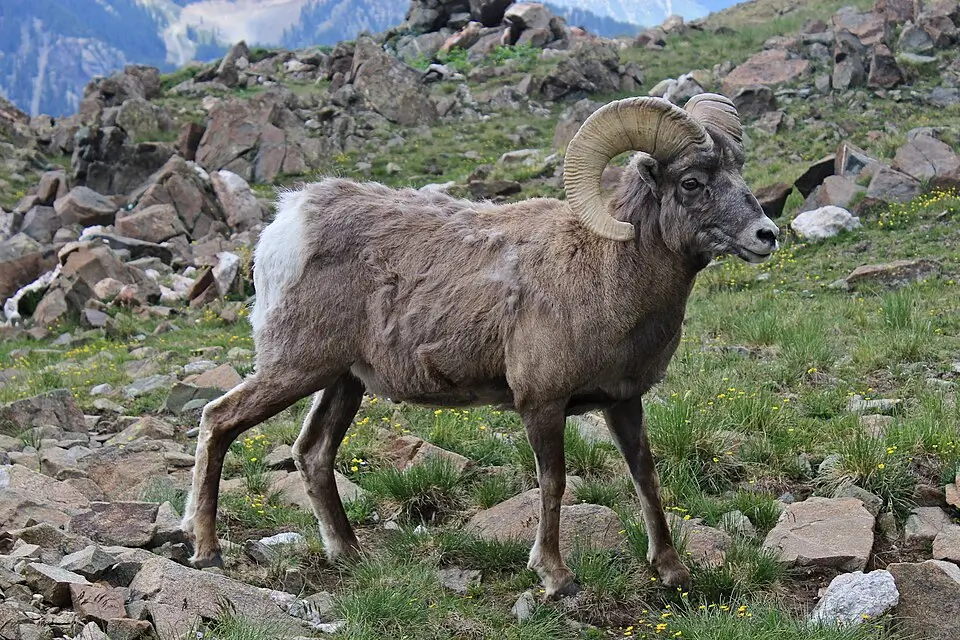
One of the most immediately recognizable features of the bighorn sheep is, of course, its horns — particularly those of the mature rams. These horns are not antlers; they are permanent, bony structures covered in a keratinous sheath that grows continuously throughout the animal's life. In mature rams, the horns can form a dramatic full curl or even exceed a full curl, sweeping back, down, around, and forward in an impressive arc. These horns are not merely decorative — they are weapons used in the spectacular head-to-head clashes that rams engage in during the breeding season, known as the rut. The crack of two rams colliding can be heard from great distances and represents one of nature's most dramatic displays of dominance.
Ewes (females) also carry horns, though theirs are considerably shorter, more slender, and only slightly curved. Both sexes are built for life in challenging terrain, with muscular, compact bodies, specialized hooves that provide traction on rocky surfaces, and exceptional eyesight that allows them to detect predators and rivals from long distances.
Bighorn sheep are sexually dimorphic, meaning males and females differ noticeably in size. Rams are substantially larger than ewes, and the size and mass of a ram's horns are closely linked to his age and social status within the herd. Younger rams must earn their place, and horn size plays a critical role in determining dominance hierarchies. Older rams with large, heavily bossed horns command respect and access to breeding opportunities during the rut.
The diet of bighorn sheep is herbivorous, consisting primarily of grasses, sedges, forbs, and other vegetation. Their digestive systems, like those of other ruminants, allow them to extract nutrition from plant material through a multi-chambered stomach and a process of regurgitation and re-chewing known as cud-chewing. During winter months, bighorn sheep may rely more heavily on dried grasses, shrubs, and whatever vegetation remains accessible above the snow.
Bighorn sheep are highly social animals. Ewes, lambs, and young rams typically form nursery herds, while mature rams often band together in bachelor groups outside of the breeding season. The rut typically takes place in late autumn or early winter, during which rams actively seek out ewes and compete vigorously with rival males. Lambs are usually born in late spring, and ewes typically give birth to a single lamb, though twins do occur. Lambs are remarkably precocious, capable of standing and moving across terrain within hours of birth — an adaptation critical to survival in predator-rich environments.
Habitat & Range
Bighorn sheep are found across a broad range of western North America, from southern Canada through the western United States and into northern Mexico. Their preferred habitats are characterized by rugged, open terrain — steep mountain slopes, rocky ridges, cliff faces, and canyon walls — that provide both forage and escape routes from predators such as mountain lions, wolves, coyotes, and golden eagles.
There are several recognized subspecies of bighorn sheep, each adapted to distinct regional environments. The Rocky Mountain bighorn (Ovis canadensis canadensis) is the largest subspecies and inhabits the mountainous regions of the northern Rockies and adjacent ranges. The desert bighorn (Ovis canadensis nelsoni and related subspecies) is adapted to the arid landscapes of the Mojave, Sonoran, and Chihuahuan deserts, where water sources are scarce and temperatures can be extreme.
In South Dakota, bighorn sheep are associated with the rugged Badlands and the Black Hills region — landscapes that offer the kind of broken, rocky terrain that bighorn sheep favor. South Dakota's diverse geography, which transitions from the Great Plains in the east to the more dramatic topography of the Black Hills in the west, provides pockets of suitable bighorn habitat. The state's position within the Great Plains region and its connection to the broader western landscape make it a meaningful part of the bighorn sheep's extended range in the northern Great Plains.
Water availability is an important factor in bighorn sheep habitat selection, particularly for desert-dwelling populations. Rocky Mountain bighorns in higher elevations often have access to snowmelt and mountain streams, while desert populations may travel considerable distances between reliable water sources.
Hunting Information
Hunting bighorn sheep is widely regarded as one of the most challenging and rewarding pursuits in all of North American big game hunting. Tags are extremely limited in virtually every state and province where legal hunting occurs, and in many jurisdictions, hunters may wait years — sometimes decades — before drawing a coveted bighorn tag through lottery systems.
South Dakota offers hunters an exceptional variety of game and terrain. The state's Game, Fish, and Parks department manages wildlife across a mosaic of habitats including forests, river bottoms, grasslands, wetlands, and the extensive Missouri River reservoir system. While South Dakota is celebrated globally for its pheasant hunting, the state's western regions provide opportunities for big game hunters seeking more challenging pursuits.
For those interested in hunting bighorn sheep in South Dakota, it is strongly recommended to contact the South Dakota Game, Fish, and Parks directly for the most current and accurate information regarding license availability, application deadlines, season dates, and specific regulations. Bighorn sheep hunting regulations can vary significantly from year to year and are subject to change based on population surveys and wildlife management objectives. Given the limited number of tags typically issued for this species, early research and timely application are essential for any hunter hoping to pursue bighorn sheep.
Hunters who do secure a bighorn tag can expect a physically demanding experience. Successful bighorn hunting typically requires excellent physical fitness, proficiency with a rifle or bow at varied ranges, and the ability to navigate steep and often treacherous terrain. Many hunters choose to work with experienced outfitters who are familiar with the local landscape and animal behavior. Glassing — spending long hours scanning distant hillsides and rocky outcroppings with high-quality binoculars and spotting scopes — is a cornerstone technique in bighorn hunting, as locating animals before attempting a stalk is critical to success.
The quality of a bighorn ram is often assessed by horn length, mass, and the degree of curl, with fully curled rams representing the pinnacle of trophy quality. However, for most hunters, the true value of a bighorn sheep hunt lies in the experience itself — the wild places visited, the challenges overcome, and the deep connection to one of North America's most extraordinary animals.
Conservation
The conservation story of the bighorn sheep is both cautionary and inspiring. By the early twentieth century, bighorn populations had been dramatically reduced from their historical levels due to a combination of overhunting, habitat loss, competition with domestic livestock, and — perhaps most devastatingly — diseases transmitted by domestic sheep. Populations that had once numbered in the hundreds of thousands were reduced to scattered, fragmented groups.
Over the past several decades, however, coordinated conservation efforts by state and federal wildlife agencies, tribal governments, conservation organizations, and the hunting community have helped bighorn sheep populations recover across much of their range. Transplantation programs, in which animals from healthy populations are captured and relocated to suitable but unoccupied habitats, have been particularly effective in reestablishing herds in areas where bighorns had been locally extirpated.
Hunters have played a meaningful role in bighorn sheep conservation through the funding generated by license and tag fees, as well as through organizations dedicated to wild sheep conservation. The Pittman-Robertson Act, which directs an excise tax on firearms and ammunition toward wildlife restoration, has provided substantial funding for bighorn sheep management and habitat work across the West.
Ongoing challenges for bighorn sheep conservation include pneumonia outbreaks caused by Mycoplasma ovipneumoniae and other pathogens, habitat fragmentation from roads and development, and the complexities of managing sheep in proximity to domestic livestock. Wildlife managers and researchers continue to work diligently to address these challenges and ensure that bighorn sheep remain a vital part of the western landscape for generations to come.