Overview
Few animals in North America command as much attention — from wildlife biologists, landowners, and hunters alike — as the wild boar. Known scientifically as Sus scrofa, the wild boar is one of the most widely distributed large mammals on the planet, found across an extraordinary range of continents, climates, and ecosystems. In the United States, and particularly in states like Oklahoma, the wild boar has established itself as both a fascinating wildlife species and a significant presence in the hunting community.
Whether you know them as wild boar, feral hogs, wild pigs, or razorbacks, these animals are deeply embedded in the culture and landscape of the American South and South-Central regions. Oklahoma, with its diverse geography stretching from the rolling plains of the west to the forested hills of the east, provides an environment where wild boar have found ample opportunity to thrive. For hunters and outdoor enthusiasts in the Sooner State, understanding the biology, behavior, and management of this species is both practical and rewarding.
This guide takes an in-depth look at the wild boar — its biological traits, preferred habitats, range across North America, hunting traditions, and its place within wildlife conservation efforts. Whether you are a seasoned hunter or a curious naturalist, there is much to appreciate about this resilient and intelligent animal.
Biological Traits
The wild boar, Sus scrofa, belongs to the family Suidae within the order Artiodactyla — the even-toed ungulates. It is the wild ancestor of the domestic pig and shares a long, intertwined history with human civilization stretching back thousands of years. Today, populations of wild boar in the United States consist of a mixture of true wild boar, feral domestic pigs, and hybrids between the two. This genetic diversity contributes to the wide variation in size, coloration, and physical characteristics observed across populations.
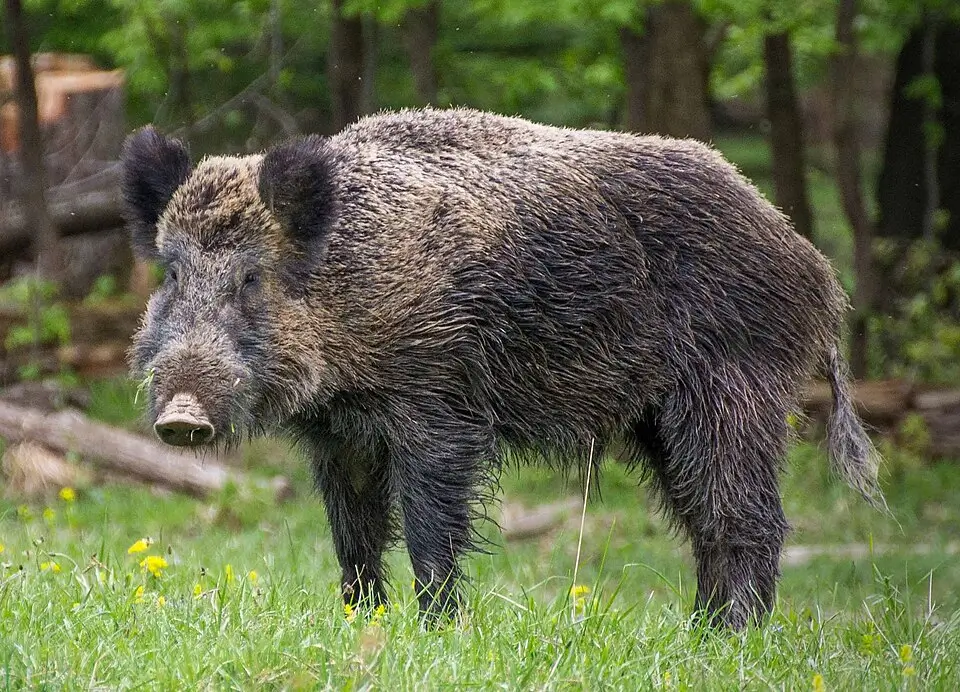
Physically, wild boar are robust, powerfully built animals. Adults typically display a large, wedge-shaped head, a thick neck, and a muscular body covered in coarse bristled hair. Coat coloration can vary widely — from solid black, brown, or reddish hues to spotted or grizzled patterns — depending on the individual's genetic background. One of the most iconic features of the wild boar is its tusks, which are elongated canine teeth that grow continuously throughout the animal's life. In adult males, known as boars, these tusks can become quite pronounced and are used in competition with other males as well as in defense against predators.
Wild boar are omnivores with a remarkably broad diet. They consume roots, tubers, fruits, nuts, insects, small vertebrates, carrion, and agricultural crops with equal opportunism. Their strong, cartilaginous snout — equipped with a specialized disc of cartilage at the tip — is a highly effective tool for rooting in the soil in search of food. This rooting behavior is one of the primary reasons wild boar have such a significant impact on the ecosystems they inhabit.
Reproductively, wild boar are highly prolific. Sows, or female pigs, can reach sexual maturity in as little as six months under favorable conditions, and they are capable of producing multiple litters per year. Litter sizes typically range from four to eight piglets, though larger litters are not uncommon. This extraordinary reproductive capacity is a key factor in the species' ability to colonize new areas rapidly and to maintain large population densities despite intensive hunting pressure.
Wild boar are highly social animals, with sows and their offspring typically living in family groups called sounders. Adult males tend to be more solitary, joining groups primarily during the breeding season, known as the rut. Their intelligence is well-documented — they demonstrate strong memory, problem-solving ability, and adaptability, qualities that make them both challenging quarry for hunters and difficult animals to manage through conventional means.
Habitat & Range
Sus scrofa is native to much of Europe, Asia, and North Africa, making it one of the most geographically widespread large mammals in the world. Wild boar were introduced to the Americas by European explorers and settlers beginning in the 16th century, and feral populations have since established themselves across a vast swath of the continent.
In terms of habitat preference, wild boar are notable generalists. They thrive in deciduous and mixed forests, river bottoms, brushy grasslands, agricultural margins, and swampy lowlands. Access to water, dense cover for bedding and refuge, and a reliable food supply are the primary factors that determine where wild boar establish themselves. They are equally comfortable in relatively arid environments and in moist, heavily vegetated terrain.
Oklahoma's varied landscape makes it an attractive state for wild boar populations. The state's geography encompasses the short-grass prairies of the western panhandle, the Cross Timbers region of oak-dominated woodlands in the central part of the state, the Ouachita Mountains in the southeast, and the rich river bottomlands of the Red River and Arkansas River systems. These diverse ecosystems provide wild boar with ample food, water, and cover throughout the year.
Across the United States, feral hog populations are most concentrated in the southern states, with Texas hosting the largest population in the nation. Oklahoma, sharing a lengthy border with Texas along the Red River, has seen significant movement of wild boar populations northward over the decades. The animals are present in many counties throughout Oklahoma, and their range within the state continues to evolve.
Hunting Information
Wild boar hunting is a pursuit with deep roots in human history, dating back to ancient times when the hunt was considered a test of courage and skill. Today, it remains one of the most exciting and accessible forms of big game hunting available to Oklahoma sportsmen and women.
In Oklahoma, wild boar — often referred to locally as feral hogs — are not classified as a game animal in the traditional sense, which has important implications for hunters. Hunters interested in pursuing wild boar in Oklahoma are encouraged to consult the Oklahoma Department of Wildlife Conservation (ODWC) for the most current and accurate information regarding regulations, licensing requirements, and any applicable season dates or restrictions. The ODWC provides comprehensive hunting resources, including hunting regulations, public land access information through the Oklahoma Land Access Program, and details on controlled hunts.
Because regulations surrounding feral hogs can differ significantly from those governing traditional game species, it is always advisable to review the latest ODWC hunting regulations before heading afield. Hunters should also be aware of landowner permissions and any specific rules that may apply to the public lands or wildlife management areas they intend to hunt.
The methods used to hunt wild boar are varied and each offers its own unique set of challenges and rewards. Spot-and-stalk hunting on foot is a popular approach, allowing hunters to cover ground quietly while glassing open areas at dawn and dusk when boar are most active. Stand hunting near water sources, food plots, or known travel corridors can also be highly productive. Dog hunting, in which trained hounds are used to locate and bay wild boar, is a traditional method with a strong following in the South-Central United States. Additionally, thermal and night-vision optics have become increasingly popular tools for hunting wild boar after dark, when the animals are often most active.
Wild boar are known for their tenacity and toughness, and hunters should select firearms, archery equipment, or other hunting implements appropriate for taking a heavily built animal at a variety of distances. Shot placement is critical, and hunters are encouraged to practice good marksmanship and to pursue the cleanest, most ethical harvest possible.
Beyond the hunt itself, wild boar offer excellent table fare. The meat is lean, flavorful, and versatile in the kitchen. The ODWC's "Wild About Cooking" program provides recipes and preparation guidance for hunters looking to make the most of their harvest.
Conservation
The conservation picture surrounding wild boar is complex and multifaceted. On one hand, Sus scrofa is a species of least concern globally, boasting robust populations across its native range and introduced territories alike. On the other hand, feral hog populations in the United States present documented challenges for native ecosystems, agricultural lands, and other wildlife species.
Wild boar's rooting behavior disrupts native plant communities and soil structure. Their consumption of mast crops such as acorns can compete with native wildlife species. Their omnivorous diet and adaptability allow them to exploit resources across a wide range of habitats. Wildlife managers across Oklahoma and the broader region actively work to monitor wild boar populations and to develop strategies that balance hunting opportunity with sound wildlife stewardship.
Hunters play a meaningful role in this management equation. By participating responsibly in wild boar hunting, Oklahoma sportsmen and women contribute to broader wildlife management goals while enjoying a challenging and rewarding outdoor pursuit. Reporting harvests, cooperating with wildlife agency surveys, and adhering to all applicable regulations are simple but important ways that hunters can support conservation efforts.
The Oklahoma Department of Wildlife Conservation, through its various programs and initiatives, works diligently to provide hunters with up-to-date information and to promote the responsible use and management of Oklahoma's wildlife resources. Hunters are encouraged to engage with ODWC resources, attend hunter education programs, and stay informed about the evolving management landscape surrounding wild boar in the state.