Overview
Few creatures command the imagination quite like the American alligator. A prehistoric survivor that has prowled the wetlands, swamps, and waterways of North America for millions of years, Alligator mississippiensis stands as one of the continent's most iconic and fascinating reptiles. At once a symbol of raw wilderness and remarkable natural resilience, the American alligator has earned its place in the cultural and ecological fabric of the southeastern United States. From the murky bayous of Louisiana to the sun-drenched marshes of Florida, this formidable reptile continues to captivate hunters, wildlife enthusiasts, scientists, and outdoor adventurers alike.
The story of the American alligator is, in many ways, one of the great conservation success stories of modern times. Once driven toward the brink of extinction by unregulated hunting and habitat loss, the species has rebounded dramatically thanks to dedicated conservation efforts and thoughtful wildlife management. Today, the alligator thrives across much of its historical range, serving as a keystone species in the ecosystems it inhabits and as a prized target for hunters fortunate enough to pursue it in states where regulated seasons are in place.
This article explores the biology, habitat, hunting traditions, and conservation legacy of one of North America's most awe-inspiring animals.
Biological Traits
The American alligator, Alligator mississippiensis, belongs to the order Crocodylia and the family Alligatoridae, making it one of only two living species of true alligators in the world — the other being the Chinese alligator (Alligator sinensis). As a crocodilian, the alligator is closely related to crocodiles and gharials, and its lineage traces back to reptilian ancestors that shared the Earth with dinosaurs. In a very real sense, the American alligator is a living relic of an ancient world.
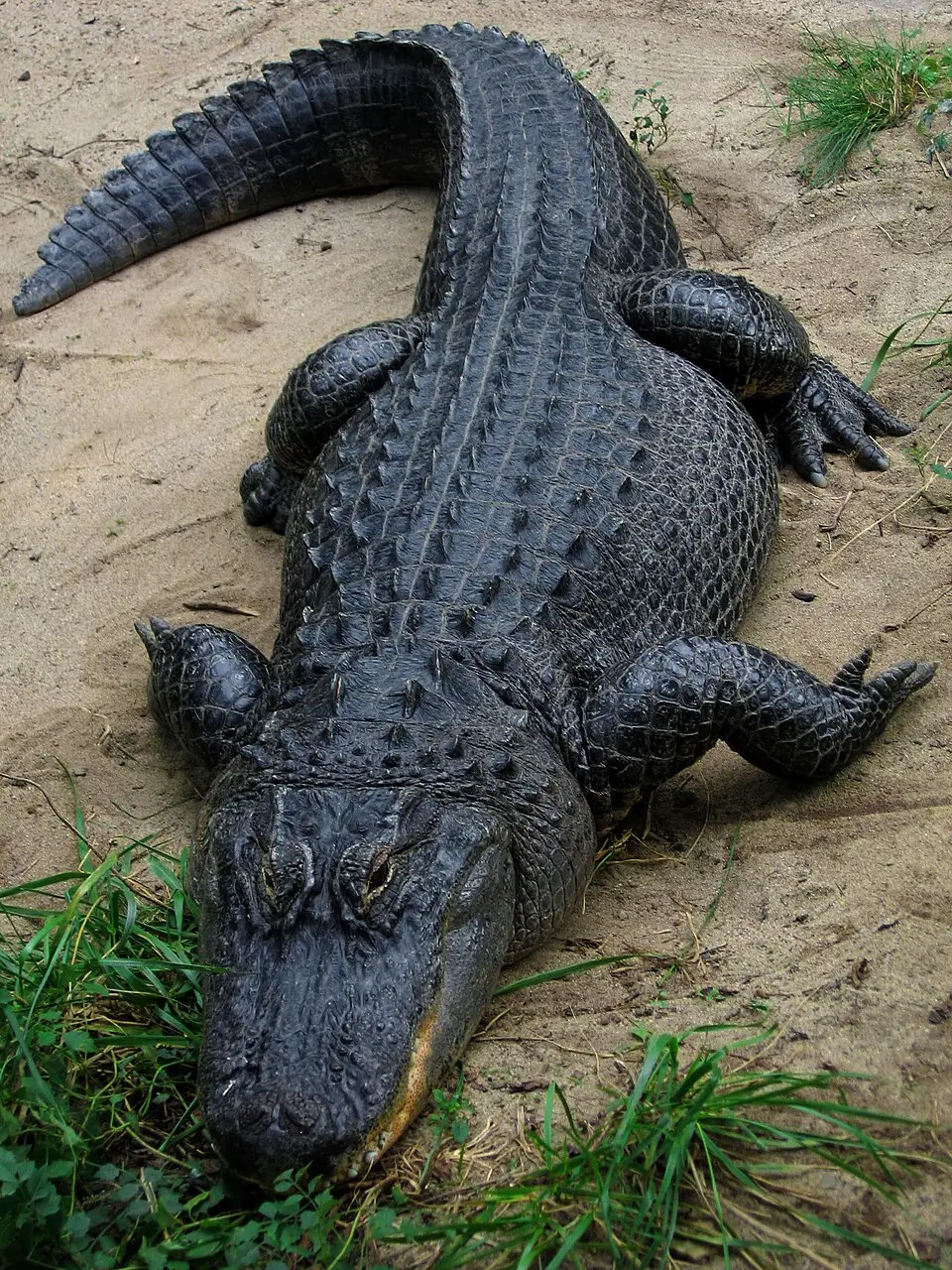
Adult American alligators are large, powerfully built reptiles with broad, rounded snouts — a key distinguishing feature that sets them apart from the narrower-snouted American crocodile. Their bodies are covered in thick, armor-like osteoderms (bony plates embedded in the skin), which provide both physical protection and serve a thermoregulatory function. The coloration of adult alligators is typically dark gray to nearly black on the dorsal (upper) side, with a pale, creamy yellow or white underbelly.
Males are generally larger than females and can reach impressive sizes. Large adult males are well-documented to exceed ten feet in length and can weigh several hundred pounds, with exceptional individuals growing even larger. Females tend to be smaller, typically reaching lengths of around eight to nine feet. Hatchlings, by contrast, are tiny — typically less than a foot long — and are distinguished by bright yellow and black striped markings that fade as the animals mature.
Alligators are ectothermic (cold-blooded) and regulate their body temperature through behavioral means, such as basking in the sun or retreating to water. This dependence on external heat sources means that alligators are most active during warmer months and may enter a state of dormancy — often referred to colloquially as brumation — during cooler periods by retreating into burrows or "gator holes" they excavate in the mud.
As apex predators, American alligators are opportunistic carnivores with a remarkably broad diet. Juveniles feed primarily on insects, small fish, frogs, and invertebrates. As they grow, their diet expands to include larger prey such as turtles, wading birds, mammals, and fish. Large adults are capable of taking deer, wild boar, and other sizable prey that venture too close to the water's edge.
One of the most behaviorally fascinating aspects of alligators is their surprisingly complex social and reproductive behavior. During breeding season, males produce deep, resonant bellows to attract females and assert dominance over rivals. These vocalizations, often described as one of the most primordial sounds in the natural world, can be heard from considerable distances. Females are notably attentive mothers — constructing large mound nests from vegetation and mud, incubating their eggs, and actively guarding and assisting hatchlings after they emerge. The sex of hatchlings is determined by the temperature at which eggs are incubated, a phenomenon known as temperature-dependent sex determination.
The lifespan of wild alligators is estimated at approximately 35 to 50 years, though individuals in captivity have been known to live considerably longer. Their longevity, combined with slow reproductive maturity (females typically do not breed until they reach around six feet in length), makes thoughtful population management essential.
Habitat & Range
The American alligator is endemic to the southeastern United States, with its range extending from the coastal regions of North Carolina southward through Florida and westward along the Gulf Coast through Alabama, Mississippi, Louisiana, and Texas. Isolated populations also exist in parts of Arkansas and Oklahoma, where the species reaches the western edge of its natural range.
Alligators are highly adaptable freshwater reptiles and inhabit a wide variety of wetland environments. They are most commonly associated with swamps, marshes, rivers, lakes, ponds, bayous, and brackish coastal wetlands. They demonstrate a preference for slow-moving or still water bodies where aquatic vegetation is abundant and prey is readily available. However, alligators are also known to venture into brackish and occasionally saltwater environments, though they are not as well-adapted to saltwater as true crocodiles.
One of the alligator's most ecologically important behaviors is the creation of "gator holes" — depressions excavated in the landscape that retain water during dry periods. These features serve as critical refuges for a wide variety of wildlife during droughts, effectively functioning as oases in otherwise desiccated landscapes. This makes the alligator a true keystone species, one whose presence and activities have a disproportionately large positive impact on the broader ecosystem.
In Oklahoma, the alligator's presence represents the far western frontier of the species' natural range. The state's southeastern corner, with its network of rivers, wetlands, and bottomland forests, provides marginal but viable habitat. Oklahoma is a landlocked state situated in the South Central and Southwestern regions of the United States, bordering Texas, Kansas, Missouri, Arkansas, New Mexico, and Colorado — and it is within the southeastern portions of the state, closer to the Arkansas and Texas borders, where alligator sightings are most likely to occur.
Hunting Information
The American alligator holds a storied place in the hunting traditions of the American South. For generations, alligator hunters — or "gator hunters" — have pursued this formidable reptile across the marshes and swamps of states like Louisiana and Florida, where robust wild populations support carefully regulated hunting seasons. Alligator hunting is widely celebrated as one of the most thrilling and demanding forms of big game hunting available in North America, requiring patience, skill, physical strength, and a deep respect for the animal.
Modern alligator hunting is governed by strict state wildlife management regulations that help ensure the long-term sustainability of populations. Hunters typically pursue alligators using baited lines, snatch hooks, harpoons, gigs, or firearms — and specific legal methods vary by state and jurisdiction. Successful alligator harvests provide hunters and their families with exceptional table fare; alligator meat is a cherished culinary tradition throughout the South, praised for its mild, tender flavor and versatility in the kitchen.
In Oklahoma, prospective alligator hunters should be aware that the species exists at the very edge of its natural range within the state. Hunting regulations, season dates, licensing requirements, and legal harvest methods for alligators in Oklahoma are administered by the Oklahoma Department of Wildlife Conservation (ODWC). Hunters are strongly encouraged to consult the ODWC directly — through the official Oklahoma Hunting Regulations publication and the department's official website — for the most current and accurate information regarding any seasons, permits, or rules that may apply to alligators within the state. Wildlife regulations are subject to change from year to year, and compliance with all applicable state and federal laws is essential.
For hunters interested in pursuing alligators in states with established, well-known seasons — such as Louisiana, Florida, Georgia, South Carolina, and Texas — a wealth of guided hunting opportunities exist. Professional alligator hunting guides can provide invaluable expertise, local knowledge, and the equipment necessary for a safe and successful hunt.
Conservation
The conservation history of the American alligator is one of the most inspiring chapters in the broader story of wildlife management in the United States. By the mid-20th century, decades of unregulated commercial hunting for hides — used in leather goods — and widespread habitat destruction had reduced alligator populations to alarmingly low levels across much of their range. The species was officially listed as endangered under early predecessor legislation to the Endangered Species Act.
The response from wildlife managers, conservationists, and state agencies was swift and effective. Strict protections were put in place, commercial hunting was regulated, and recovery programs were implemented. The results were extraordinary. Alligator populations rebounded with remarkable speed, and by 1987 the U.S. Fish and Wildlife Service removed the American alligator from the endangered species list — a testament to the effectiveness of science-based wildlife management.
Today, the American alligator is classified as "Least Concern" by the International Union for Conservation of Nature (IUCN), reflecting the health and stability of its populations across its range. Controlled hunting seasons in states with robust alligator populations now serve as an important wildlife management tool, helping to maintain populations at levels appropriate for the available habitat while generating critical funding for ongoing conservation programs through license fees and excise taxes.
The alligator's recovery also illustrates a broader principle that hunters and conservationists have long understood: that well-managed, sustainable hunting and genuine conservation are not opposing forces, but powerful partners in the long-term stewardship of North America's wildlife heritage.