Overview
Among the many waterfowl species that grace North America's wetlands, marshes, and coastal waters, the American black duck (Anas rubripes) stands out as one of the most recognizable and ecologically significant dabbling ducks on the continent. Despite its name, this bird is not truly black but rather cloaked in rich, dark brown plumage that gives it a distinctly shadowy appearance in the field — a characteristic that has captivated hunters, birdwatchers, and wildlife enthusiasts alike for generations.
The American black duck holds a special place in North American waterfowl culture. It has long been prized by waterfowl hunters as a challenging and rewarding quarry, and it plays a meaningful role in the health of wetland ecosystems from the Atlantic Coast to the interior of the continent. Whether you encounter one swimming quietly along a tidal marsh edge or rocketing through a gray November sky, the American black duck commands respect and admiration.
This article explores what makes this species so remarkable — from its biology and habitat preferences to its significance as a game bird and the conservation efforts that help ensure its future.
Biological Traits
The American black duck (Anas rubripes) belongs to the family Anatidae and is closely related to the mallard (Anas platyrhynchos). In fact, the two species are so genetically similar that they are capable of interbreeding, which is an important consideration in ongoing conservation discussions.
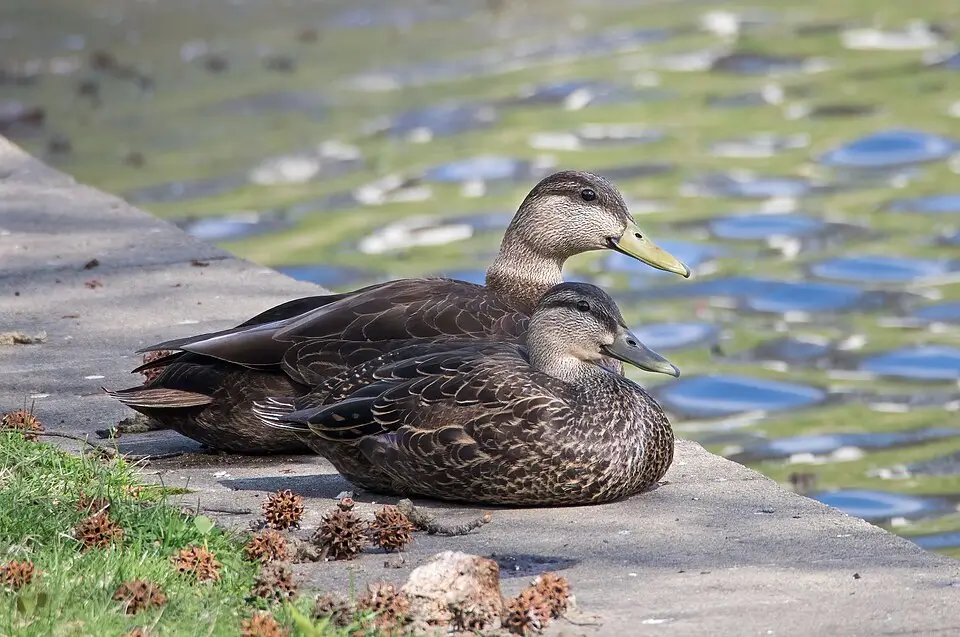
At first glance, the American black duck may appear uniformly dark, but a closer look reveals a nuanced and beautiful bird. The body plumage is a deep, sooty brown, with feathers edged in lighter buff tones, creating a subtle scaled or streaked pattern across the breast, back, and flanks. The head is noticeably paler than the body, appearing a warm buffy brown, and is finely streaked with darker brown markings. Both males and females share a similar overall appearance, which makes this species relatively unusual among dabbling ducks where sexual dimorphism (differences in appearance between males and females) is typically quite pronounced.
One of the most striking field marks of the American black duck is its iridescent violet-blue speculum — a patch of color found on the secondary wing feathers — which is bordered by black rather than the white edging seen on the mallard's speculum. This detail is a reliable identifier in the field. The legs and feet are a vivid orange-red, and the bill differs between the sexes: males typically show a yellow-green bill, while females display a more dull, olive-colored bill, sometimes with dark mottling.
American black ducks are medium to large dabbling ducks, generally comparable in size to mallards. They are strong, fast fliers, and their wariness in the field — developed over centuries of hunting pressure — makes them a genuinely challenging species for waterfowlers. Their vocalizations are similar to mallards; females give the classic loud quack, while males produce a softer, raspier call.
Like other dabbling ducks, American black ducks feed by tipping forward in shallow water to reach aquatic vegetation, seeds, invertebrates, and other food sources. They are highly adaptable feeders and can thrive in a variety of wetland environments, adjusting their diet seasonally based on availability.
Breeding typically occurs in the spring and early summer. Females construct nests on the ground, often near water and concealed in dense vegetation. A typical clutch consists of around 6 to 12 eggs, which are incubated by the female alone for approximately 26 to 29 days. Ducklings are precocial — meaning they are mobile and capable of following their mother to water shortly after hatching.
Habitat & Range
The American black duck is primarily a bird of the eastern half of North America, with a breeding range that extends from the boreal forests of northern Quebec and Ontario south through the Great Lakes region and New England, down into the Atlantic coastal states. The species is particularly associated with the tidal marshes, estuaries, and coastal wetlands of the Atlantic Flyway, where it has historically been most abundant.
During migration and winter, American black ducks spread southward along the Atlantic Coast, and flocks can be found wintering in coastal marshes, river deltas, freshwater wetlands, and even agricultural areas throughout the eastern United States. They show a preference for undisturbed wetland habitats with abundant emergent vegetation, though they are also found in more open water environments.
The American black duck's range does extend into interior North America during migration, which means it can occasionally be encountered in states far from the Atlantic Coast, including in the South Central region. For hunters and wildlife observers in Oklahoma and neighboring states, sightings of American black ducks — while not common compared to other dabbling duck species — are a genuine possibility during the fall and winter migration season when birds may stray west of their traditional flyway corridor.
Oklahoma itself offers a rich variety of wetland habitats that attract a wide array of migratory waterfowl each year. The state's rivers, reservoirs, bottomland hardwoods, and managed wetlands can provide stopover and wintering habitat for ducks and geese moving through the Central Flyway. The Oklahoma Department of Wildlife Conservation manages waterfowl hunting seasons and provides resources for hunters across the state, making Oklahoma an active and engaged participant in waterfowl conservation and hunting heritage.
Hunting Information
The American black duck has a long and storied history as a game bird in North America. It has been pursued by hunters along the Atlantic Coast for well over a century and is widely regarded as one of the wariest and most difficult ducks to decoy and harvest. Its reputation for keen eyesight, quick flight, and reluctance to commit to decoy spreads has elevated it to near-legendary status among serious waterfowlers.
Hunting American black ducks typically requires careful attention to concealment, realistic decoy presentations, and skillful calling. Because of their wariness, hunters often blend black duck decoys with mallard spreads to create a natural-looking setup. Blinds must be meticulously constructed and camouflaged, as black ducks are notorious for flaring at the slightest hint of human presence.
For hunters in Oklahoma, it is important to consult the Oklahoma Department of Wildlife Conservation's current hunting regulations for the most up-to-date information on season dates, bag limits, and licensing requirements. Regulations for migratory waterfowl — including any species as specific as the American black duck — are set annually in coordination with the U.S. Fish & Wildlife Service and can change from season to season. Always verify current rules before heading afield. The Oklahoma Department of Wildlife Conservation provides comprehensive hunting resources, including information on where to hunt, licensing, and waterfowl-specific guidelines.
Federal migratory bird regulations apply to the American black duck across all states, and hunters must possess the appropriate state hunting license as well as a valid Federal Duck Stamp. Hunting on public lands in Oklahoma through the Oklahoma Land Access Program and other managed areas can provide excellent opportunities for waterfowlers throughout the season.
Conservation
The American black duck has been the subject of significant conservation attention over the past several decades. While the species remains huntable and supports active harvest management programs, biologists and wildlife managers have closely monitored population trends and worked to address factors that influence the species' long-term health.
One of the primary conservation concerns surrounding the American black duck is hybridization with the closely related mallard. As mallard populations have expanded eastward and increasingly overlap with black duck habitat, interbreeding between the two species has become more common. This genetic blending raises questions about the long-term distinctiveness of the American black duck as a species, and it is a topic of active research and management discussion among waterfowl biologists.
Habitat loss and degradation are also key factors affecting American black duck populations. Coastal wetlands, tidal marshes, and inland freshwater wetlands that the species depends upon have been reduced and altered by development, pollution, and other land-use changes over the decades. Conservation organizations, government agencies, and private landowners have worked collaboratively to protect, restore, and manage wetland habitats critical to this species.
Waterfowl hunters themselves play a significant role in conservation through the purchase of Federal Duck Stamps, state licenses, and excise taxes on sporting equipment under the Federal Aid in Wildlife Restoration Act (Pittman-Robertson Act). These funding mechanisms have supported the acquisition and management of millions of acres of wetland habitat across North America, directly benefiting the American black duck and countless other wildlife species.
The cooperation between hunters, conservationists, and government agencies exemplifies the North American Model of Wildlife Conservation — a system built on science-based management and the belief that wild resources are a public trust to be managed for the benefit of all. The American black duck's continued presence in North American wetlands is, in many ways, a testament to this collaborative approach.
Conclusion
The American black duck is far more than just a dark-feathered dabbler moving through the marshes of the eastern flyway. It is a species rich in natural history, deeply woven into the fabric of North American hunting and conservation culture, and a meaningful indicator of wetland ecosystem health. For hunters, birders, and wildlife enthusiasts alike, an encounter with a flock of black ducks dropping into a remote marsh on a cold autumn morning is one of those experiences that reminds us why wild places — and the creatures that inhabit them — are worth protecting.
Whether you are planning a waterfowl hunt in Oklahoma, watching birds along an Atlantic estuary, or simply curious about this fascinating species, the American black duck offers a compelling story of adaptation, resilience, and the enduring importance of wetland conservation.