Overview
Few animals in North America capture the imagination of wildlife enthusiasts and hunters quite like the snowshoe hare (Lepus americanus). Known for its remarkable seasonal camouflage, explosive population cycles, and critical role in northern ecosystems, the snowshoe hare is one of the continent's most fascinating mammals. Whether you are a seasoned small game hunter, a wildlife photographer, or simply a nature lover curious about the forest's hidden inhabitants, the snowshoe hare offers an endlessly compelling subject.
The snowshoe hare takes its common name from two distinctive features: the oversized hind feet that act like natural snowshoes, distributing the animal's weight across soft snow and allowing it to travel with remarkable ease in deep winter conditions, and its habit of living in snowy, boreal environments for much of the year. These adaptations make it uniquely suited to some of the harshest climates in North America, and they are a testament to the power of natural selection working over millennia in cold, demanding landscapes.
Beyond its physical adaptations, the snowshoe hare is an ecological cornerstone. Its famous population boom-and-bust cycles — among the most well-documented in all of ecology — influence the fortunes of dozens of predator species, from the Canada lynx to the great horned owl. Understanding this animal means understanding an entire web of life that stretches from the boreal forests of Canada deep into the mountain ranges of the American West and East.
Biological Traits
The snowshoe hare (Lepus americanus) is a member of the family Leporidae, which includes all hares and rabbits. As a true hare (genus Lepus), it shares several traits that distinguish hares from rabbits: its young (called leverets) are born fully furred and with open eyes, capable of moving about almost immediately after birth, while rabbit kits are born hairless and helpless. This precocial development is an important survival advantage in environments where predation pressure is intense.
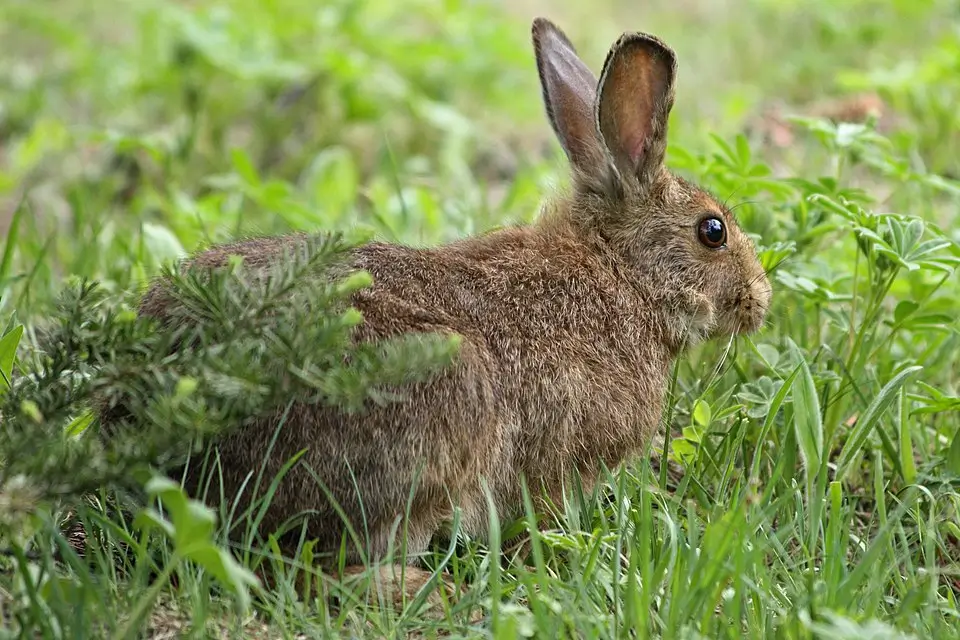
One of the snowshoe hare's most celebrated biological traits is its seasonal color change. In summer, the hare's coat is a rusty or grayish-brown, providing effective camouflage against the leaf litter, soil, and underbrush of the forest floor. As winter approaches and day length shortens, a hormonal and physiological process triggers a molt, gradually replacing the brown coat with dense, white winter fur. This transformation is not merely cosmetic — the winter coat is also thicker and more insulating than the summer coat, helping the animal conserve body heat during cold months. Come spring, the cycle reverses, and the hare transitions back to its warm-season coloration. This remarkable adaptation makes the snowshoe hare effectively invisible against snow in winter and nearly equally invisible against the forest floor in summer.
The hind feet of the snowshoe hare are another defining biological feature. These feet are disproportionately large compared to the animal's body size. The toes can spread wide when the hare places its foot on snow, creating a broad, supportive surface that prevents the animal from sinking deeply. In winter, additional fur grows between the toes, further increasing this snowshoe effect. This adaptation gives the snowshoe hare a critical mobility advantage over some of its predators in snowy terrain.
Snowshoe hares are herbivores, feeding on a wide variety of plant material. During the warmer months, their diet consists of grasses, forbs, ferns, and leafy plants. In winter, when green vegetation is buried under snow, they shift to a diet of woody browse — twigs, buds, bark, and the small branches of shrubs and young trees such as willows, aspens, and birches. This dietary flexibility helps them survive in environments where food availability changes dramatically with the seasons.
Perhaps the most famous aspect of snowshoe hare biology is the population cycle. Snowshoe hare populations across North America undergo dramatic fluctuations roughly every eight to eleven years, cycling from population peaks to dramatic crashes and back again. These cycles are closely linked to food availability and predator populations. During peak years, hare numbers can be extraordinarily high; during crash years, populations may fall to a tiny fraction of their peak numbers. The Canada lynx (Lynx canadensis) is perhaps the most closely tied predator to this cycle, with lynx populations rising and falling in near-lockstep with those of their primary prey.
Habitat and Range
The snowshoe hare's range covers an enormous swath of the North American continent. It is found throughout Canada, from the Atlantic coast to the Pacific, and extends into Alaska. In the contiguous United States, the species is found primarily in the northern states and along major mountain ranges, including the Rocky Mountains, the Appalachians, and the Sierra Nevada, where suitable habitat extends southward at higher elevations.
The species is strongly associated with dense coniferous and mixed forests, particularly those dominated by spruce, fir, pine, and their associated understory vegetation. Dense thickets of young trees, shrubs, and fallen logs provide both food and protective cover from the many predators that pursue the snowshoe hare. Riparian areas — the vegetated margins of streams and rivers — are also favored habitat, as these zones tend to produce the dense, low shrubby growth that hares require.
The snowshoe hare is well adapted to cold climates and snowy winters, and its range reflects this. While it thrives in boreal forest conditions, it also colonizes subalpine forests and transitional zones between forest types, wherever dense cover and sufficient food are available.
Hunting Information
Snowshoe hares have a long and storied tradition as a small game quarry in North America. Hunting them is a beloved pursuit in many northern states and Canadian provinces, often practiced during winter months when the hare's white coat stands out against the snow — or, for the skilled hunter, blends into it with deceptive perfection. Hare hunting is frequently done on foot, with hunters moving quietly through dense forest cover and brushy areas where hares shelter. Beagles and other scent hounds are popular partners for hare hunting, as the hares will typically run in wide circles when pushed by dogs, eventually returning close to where they started — a trait that makes for exciting and challenging sport.
The snowshoe hare is also excellent table fare. The meat is lean, mild, and versatile, suitable for a wide range of preparations from simple pan frying to slow-cooked stews and braises.
Hunting Snowshoe Hare in Oklahoma
It is important for Oklahoma hunters and outdoor enthusiasts to note that the snowshoe hare is not a native species to Oklahoma. Oklahoma is a landlocked state located in the South Central and Southwestern United States, characterized by plains, prairies, river valleys, and Cross Timbers — landscapes that are warm and generally unsuitable for a species adapted to cold boreal forests and deep snow. The snowshoe hare's natural range does not extend into Oklahoma or the broader Southern Plains region.
Hunters in Oklahoma interested in small game pursuits will find excellent opportunities for species that are native and well-established in the state, including the eastern cottontail and the black-tailed jackrabbit. The Oklahoma Department of Wildlife Conservation manages hunting seasons and regulations for a variety of small game and other species across the state. Hunters are encouraged to consult the current Oklahoma Hunting Regulations and the Oklahoma Department of Wildlife Conservation's official resources for up-to-date information on season dates, bag limits, and licensing requirements for small game in Oklahoma.
Conservation
The snowshoe hare is currently listed as a species of least concern from a conservation standpoint, reflecting its wide range and abundant populations across boreal North America. Its natural population cycles, while dramatic, are a normal and well-understood feature of its ecology rather than a sign of decline.
However, like all wildlife, the snowshoe hare faces ongoing pressures from habitat change, including the fragmentation and alteration of boreal and montane forests. Climate change presents a particular and growing concern for the species. As winters become shorter and snowfall less predictable in some parts of its range, the timing of the hare's seasonal coat color change — driven by day length rather than temperature or actual snow cover — may become mismatched with actual environmental conditions. A white hare standing out against bare, snow-free ground is far more vulnerable to predation than one that blends seamlessly into winter white. Research into this "color mismatch" phenomenon is an active area of wildlife science, with implications for how the species may fare in a changing climate.
Conservation of the snowshoe hare ultimately means conservation of the intact boreal and mountain forest ecosystems it depends upon, which in turn supports the extraordinary diversity of species — predators, prey, plants, and invertebrates — that together make these northern forests some of the most ecologically rich environments on Earth.