Overview
Few deer species in the world carry the blend of elegance, adaptability, and intrigue that the Sika deer (Cervus nippon) brings to the animal kingdom. Known for their striking spotted coats, haunting vocalizations, and remarkable ability to thrive across a wide range of environments, Sika deer have captured the attention of wildlife enthusiasts, biologists, and hunters alike for centuries. Originally native to the forests and grasslands of East Asia, Sika deer have since been introduced to numerous countries across the globe, where they have established thriving populations and become an important part of both ecological systems and hunting culture.
Whether you encounter them in their native Japanese woodland habitat — where the name "Sika" itself is derived from the Japanese word for deer, shika (鹿) — or in the marshlands of Maryland, the rolling hills of the British Isles, or even the diverse landscapes of Oklahoma, these animals consistently demonstrate why they are among the most studied and celebrated members of the deer family. This article explores the biological traits, habitat preferences, hunting traditions, and conservation status of the Sika deer, offering a well-rounded look at one of nature's most captivating ungulates.
Biological Traits
The Sika deer belongs to the family Cervidae and is classified under the genus Cervus, placing it in close taxonomic relation to the red deer (Cervus elaphus) and the wapiti or elk (Cervus canadensis). This genetic proximity is more than academic — in regions where Sika deer and red deer share habitat, the two species are known to interbreed, producing fertile hybrid offspring. This hybridization has raised important questions in wildlife management circles, particularly in countries like Ireland and Scotland where native red deer populations are considered a conservation priority.
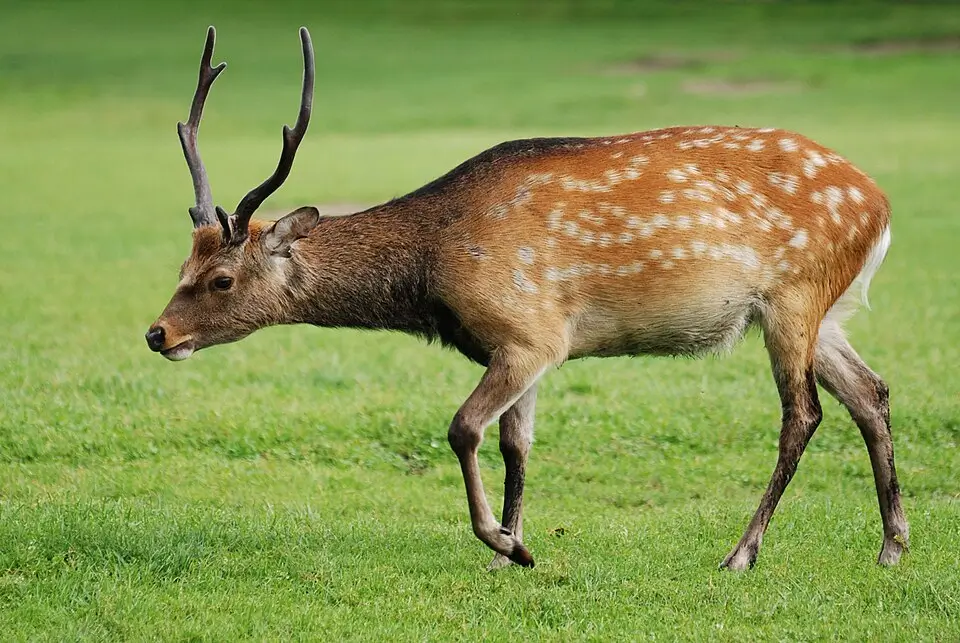
Sika deer are medium-sized cervids, though their exact size can vary considerably depending on subspecies and geographic origin. There are numerous recognized subspecies of Cervus nippon, ranging from the relatively small Japanese Sika (Cervus nippon nippon) to larger forms found in mainland Asia. Generally speaking, males, known as stags, are noticeably larger than females, known as hinds. Stags carry antlers that are typically short and upright compared to many other deer species, featuring a limited number of tines — usually no more than eight on a mature animal — and a distinctive shape that experienced hunters and naturalists learn to recognize at a glance.
One of the most visually striking features of the Sika deer is its coat. During summer months, Sika display a rich chestnut-brown or reddish-brown coloration adorned with rows of white spots along the back and sides — a pattern reminiscent of the fallow deer and, of course, the white-tailed deer fawn. This spotted summer coat gives way to a thicker, darker, and less prominently spotted winter coat as the seasons change. The rump patch, which is white and can be flared outward as an alarm signal, is a particularly useful field identification feature.
Sika deer are also noted for their vocal repertoire, which is unusually varied for a cervid. During the rut — the autumn breeding season — stags produce a distinctive, high-pitched whistle or bugling call that is quite unlike the deeper bugling of North American elk. This call, eerie and penetrating, echoes through forests and marshlands and has become one of the signature sounds associated with the species. Hinds and calves communicate through softer bleats and mews, while alarm calls can include a sharp bark.
The rut typically occurs in autumn, and like other cervids, Sika stags become highly active during this period, establishing territories, wallowing in mud and urine to enhance their scent, and competing with rival males. Calves are usually born in late spring or early summer after a gestation period of approximately seven to eight months. Hinds typically give birth to a single calf, which is born spotted and well-camouflaged to avoid predators during its vulnerable early weeks of life.
Habitat & Range
In their native range, Sika deer are found across East Asia, including Japan, China, Taiwan, Korea, and parts of Russia. Japan, in particular, has an especially strong historical and cultural association with Sika deer — the famous sacred deer of Nara Park, freely roaming the grounds of ancient temples and shrines, are Sika deer and have been designated as a national treasure.
Outside their native range, Sika deer have been introduced to many parts of the world, either as ornamental park animals or as game species for hunting. Established feral populations exist in the United Kingdom, Ireland, Australia, New Zealand, and the United States. In the United States, wild Sika deer populations are perhaps best known in Maryland, particularly on the Delmarva Peninsula and Assateague Island, where they have thrived in the salt marshes and pine forests for over a century following their introduction.
Sika deer are highly adaptable and can inhabit a wide variety of environments. They tend to favor woodland edges, dense shrub cover, and areas near water, but they are equally capable of making use of marshlands, grasslands, and mixed agricultural landscapes. This adaptability has contributed significantly to their success as an introduced species and has made them a resilient presence in ecosystems far removed from their East Asian origins.
Hunting Information
Sika deer have a long tradition as a game animal, valued both for the sport they provide and for the quality of their venison. Their meat is widely regarded as lean, flavorful, and of high culinary quality, making a successful Sika hunt a rewarding experience in more ways than one.
In the United States, hunting opportunities for Sika deer exist in several states, most notably Maryland, where the species has a well-established wild population and a regulated hunting season managed by the state's wildlife authorities. Hunters pursuing Sika deer often employ many of the same techniques used for other deer species, including stand hunting near feeding areas, spot-and-stalk approaches in open terrain, and calling during the rut using vocalizations that mimic the distinctive whistle of the stag.
In Oklahoma, Sika deer are not known to exist as an established free-ranging wild population in the same way that native white-tailed deer do. However, Oklahoma has a vibrant and diverse hunting culture supported by the Oklahoma Department of Wildlife Conservation (ODWC), which oversees hunting seasons, regulations, and licensing for game species across the state. Hunters in Oklahoma interested in pursuing Sika deer may find opportunities through licensed game preserves, exotic wildlife ranches, or high-fence hunting operations — a well-established segment of the hunting industry in Texas and Oklahoma alike, where the warm climate and expansive private landholdings make it possible to maintain herds of exotic cervids including Sika deer.
Prospective hunters interested in Sika deer hunting in Oklahoma are strongly encouraged to consult the Oklahoma Department of Wildlife Conservation directly for the most current regulations, licensing requirements, and any applicable rules regarding exotic species. Regulations can vary significantly between free-range and confined hunting operations, and staying informed ensures both legal compliance and ethical hunting practices.
For hunters encountering Sika deer in the field — whether in their established range or on private hunting operations — shot placement and firearm selection follow the same general principles as for other medium to large deer. A well-placed shot to the vital zone, using a caliber appropriate for deer-sized game, is the standard approach for a clean, ethical harvest.
Conservation
The conservation status of Cervus nippon varies considerably depending on the population in question and the geographic region under consideration. In Japan and parts of East Asia, Sika deer populations are generally healthy and, in some areas, have grown to the point where they pose challenges for forest regeneration due to heavy browsing pressure on native vegetation. Japanese wildlife managers actively work to balance Sika deer population levels with the health of native forest ecosystems, sometimes employing controlled culling programs as a management tool.
In introduced ranges, the conservation picture is more nuanced. In Ireland and Scotland, as previously noted, Sika deer hybridization with native red deer is an ongoing conservation concern. Conservationists and wildlife managers in these regions work to monitor hybrid zones and, in some cases, manage deer populations to protect the genetic integrity of red deer herds.
Globally, the International Union for Conservation of Nature (IUCN) recognizes the wide variation in Sika deer population status across their range, and some island subspecies — particularly certain forms native to specific islands in Asia — face more significant conservation pressures from habitat loss and hunting.
The Sika deer's story is, in many ways, a reflection of the complex relationship between wildlife and human activity. Their success as an introduced species speaks to their remarkable adaptability, while challenges in their native range remind us that even abundant species require thoughtful management. For hunters, naturalists, and conservationists, the Sika deer represents a compelling subject that sits at the intersection of biology, culture, and land stewardship.