Overview
Few wild animals capture the imagination quite like the red fox. With its distinctive russet coat, bushy tail, and sharp, intelligent eyes, Vulpes vulpes is one of the most recognized and widely distributed carnivores on Earth. From the boreal forests of Canada to the sun-baked plains of Oklahoma, the red fox has demonstrated a remarkable ability to thrive in environments that would challenge most other predators. It is simultaneously a subject of fascination for wildlife enthusiasts, a quarry for hunters and trappers, and a critical component of healthy ecosystems across the globe.
The red fox belongs to the family Canidae, which includes wolves, coyotes, and domestic dogs. Within this family, foxes occupy their own distinct niche — smaller and more solitary than wolves, more secretive than coyotes, and far more wild than any domestic breed. Vulpes vulpes is the largest species within the genus Vulpes, and its success as a species is a testament to millions of years of evolutionary refinement. In the context of Oklahoma and the broader South Central United States, the red fox plays a meaningful role in the natural landscape, serving as both a predator and prey animal within a complex ecological web.
This article explores the biology, habitat, hunting traditions, and conservation status of the red fox, with a particular focus on what makes this animal so extraordinary — and why it continues to captivate hunters, naturalists, and outdoor enthusiasts across the state of Oklahoma and beyond.
Biological Traits
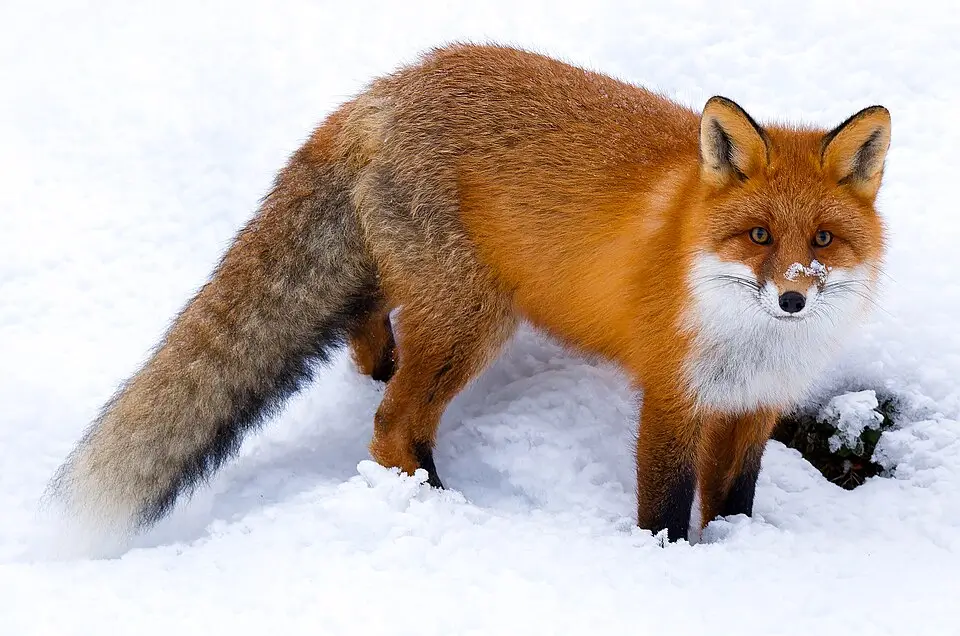
The red fox is a study in elegant design. Its most iconic feature is, of course, its coat — typically a rich, flame-red to amber color across the back and flanks, with a white underbelly, black legs, and a full, flowing tail tipped in white. However, color variations do exist within the species, including silver, cross, and melanistic forms, all of which are natural expressions of genetic diversity within Vulpes vulpes.
As the largest member of the genus Vulpes, the red fox is still a relatively slender and lightweight animal compared to other canids. It possesses a long, pointed muzzle well-suited for sniffing out prey, large upright ears that can rotate independently to pinpoint sound with extraordinary precision, and vertically slit pupils — a feature more commonly associated with cats — that provide excellent low-light vision. These adaptations make the red fox a highly effective nocturnal and crepuscular hunter.
The red fox is an omnivore with an impressively varied diet. It consumes small mammals such as mice, voles, and rabbits, as well as birds, eggs, insects, fruits, berries, and carrion. This dietary flexibility is one of the key reasons the species has been so successful across such a wide range of environments. The fox employs a distinctive hunting technique known as "mousing," in which it leaps high into the air and pounces on hidden prey beneath grass or snow — a behavior that is both highly effective and visually striking.
Red foxes are primarily solitary hunters, though they do form family units during the breeding season. Mating typically occurs in late winter, and after a gestation period of approximately 51 to 53 days, the vixen gives birth to a litter of kits — usually between two and twelve young. Both parents participate in raising the kits, with the male providing food for the female and young during the early weeks after birth. By autumn, the young foxes disperse to establish their own territories, which they mark and defend using scent glands, urine, and feces.
The red fox is known for its cunning and adaptability, qualities that have made it a central figure in folklore, mythology, and literature across many cultures. In terms of intelligence, foxes demonstrate problem-solving capabilities, strong spatial memory, and a capacity for learned behavior that allows them to quickly adjust to new environments and challenges — including those posed by human development and urbanization.
Habitat & Range
Vulpes vulpes holds the distinction of having the widest natural geographic range of any wild terrestrial carnivore. The species is native across the entire Northern Hemisphere, including most of North America, Europe, Asia, and North Africa. It has also been introduced to Australia, where it has become one of the most significant invasive predators on the continent.
Within North America, the red fox occupies an extraordinary variety of habitats. It thrives in mixed farmland and forest environments, open grasslands, riparian corridors, suburban edges, and even some urban settings. The species tends to favor areas that offer a mosaic of different habitat types — open areas for hunting and wooded or brushy cover for denning and shelter. This preference for edge habitat makes the red fox particularly well-suited to the agricultural and semi-rural landscapes that characterize much of Oklahoma.
Oklahoma itself is a state of remarkable ecological diversity. Spanning the transition zone between the eastern deciduous forests and the western shortgrass prairies, Oklahoma encompasses a wide array of landscapes, including the Cross Timbers, the Ozark Plateau, the Ouachita Mountains, rolling plains, and river bottomlands. Each of these ecosystems can support red fox populations, provided that suitable food sources and cover are available. The state's extensive agricultural lands, interspersed with woodlots and creek corridors, create ideal conditions for red foxes to establish territories and raise young.
It is worth noting that in Oklahoma and across much of the central United States, the red fox shares its range with the coyote (Canis latrans) and the gray fox (Urocyon cinereoargenteus). Competition with coyotes, in particular, can influence red fox distribution and population density. In areas with high coyote pressure, red foxes may shift their activity patterns or seek out habitats that coyotes are less likely to use — such as areas closer to human development.
Hunting Information
The red fox has a long and storied history as a quarry for hunters and trappers throughout North America and Europe. Fox hunting in the traditional British style — on horseback with hounds — was practiced in the American colonies before independence and remains a cultural tradition in certain parts of the country. More commonly today, red foxes are pursued through trapping, predator calling, and still hunting with rifles or shotguns.
In Oklahoma, the Oklahoma Department of Wildlife Conservation (ODWC) is the governing body responsible for managing wildlife resources and setting hunting and trapping regulations throughout the state. Hunters and trappers interested in pursuing red fox in Oklahoma are encouraged to consult the most current edition of the Oklahoma Hunting Regulations, which are published annually by the ODWC and are available on the department's official website. Regulations regarding seasons, licensing requirements, and legal methods of take can vary from year to year, so it is always important to verify current rules before heading afield.
Predator hunting, which often includes red foxes as a target species, has grown significantly in popularity across Oklahoma in recent years. Hunters typically use electronic or mouth-blown calls that mimic the distress sounds of prey animals — such as rabbits or rodents — to lure foxes within shooting range. Red foxes are most active during dawn, dusk, and nighttime hours, so early morning and late evening setups tend to be most productive. Winter months, particularly around the breeding season, can also increase fox activity and responsiveness to calling.
Trappers pursuing red foxes in Oklahoma employ a variety of techniques, including foothold traps, cage traps, and snares. Successful trapping requires knowledge of fox travel routes, denning areas, and feeding habits, as well as a thorough understanding of applicable state trapping regulations. As with hunting, anyone engaging in trapping activities should consult the ODWC's current regulations for specific season dates, license requirements, and permissible trapping methods.
Conservation
The red fox is currently classified as a species of Least Concern by the International Union for Conservation of Nature (IUCN), reflecting its wide distribution, large global population, and high degree of adaptability. Unlike many wildlife species that have declined in the face of habitat loss and human pressure, the red fox has in many respects benefited from landscape changes associated with agriculture and suburban development, which often create the edge habitats the species favors.
In Oklahoma and across the United States, state wildlife agencies like the ODWC play a critical role in monitoring wildlife populations, setting sustainable harvest limits, and ensuring that hunting and trapping activities do not negatively impact long-term population health. Hunters and trappers are important partners in this conservation mission, contributing both through license fees and through the firsthand population data they help generate.
The red fox also provides meaningful ecological services in its native range. As a mid-level predator, it helps regulate populations of rodents and other small mammals, which can reduce crop damage and limit the spread of certain rodent-borne diseases. Its role as both predator and prey — foxes are taken by larger predators such as coyotes, bobcats, and birds of prey — places it squarely in the middle of the food web, where its presence contributes to overall ecosystem balance.
Whether encountered on a frosty Oklahoma morning during a predator hunt, glimpsed at the edge of a farm field at dusk, or tracked through fresh snow across a creek bottom, the red fox is a reminder of the extraordinary richness of the natural world. Its intelligence, beauty, and adaptability make it one of North America's most compelling wild animals — and one well worth understanding, respecting, and conserving for generations to come.