Overview
Few animals have shaped the North American landscape as profoundly as the beaver. Known scientifically as Castor canadensis, the North American beaver is the continent's largest rodent and one of the most ecologically influential mammals on Earth. From the trickling streams of the Appalachian Mountains to the winding waterways threading through Oklahoma's diverse terrain, beavers have been modifying aquatic environments for thousands of years — long before humans began building their own dams, canals, and reservoirs.
The beaver holds a unique place in North American history, culture, and ecology. It was the pursuit of beaver pelts during the 17th and 18th centuries that drove European exploration deep into the continent's interior, fueling a fur trade that shaped the political and economic destinies of entire nations. Today, the species is celebrated not just for its historical significance, but for its extraordinary role as a keystone species — an organism whose presence fundamentally defines the health and structure of the ecosystems it inhabits.
Whether you are a wildlife enthusiast, a conservation-minded angler, or a trapper and hunter looking to better understand your quarry, the North American beaver is a species well worth knowing. In Oklahoma and across the continent, this industrious animal continues to leave its unmistakable mark on the land.
Biological Traits
The North American beaver (Castor canadensis) is classified within the order Rodentia and the family Castoridae, a family that contains only two living species worldwide — the North American beaver and its Eurasian counterpart, Castor fiber. As the largest rodent native to North America, the beaver is a robust and physically impressive animal built for a semi-aquatic lifestyle.
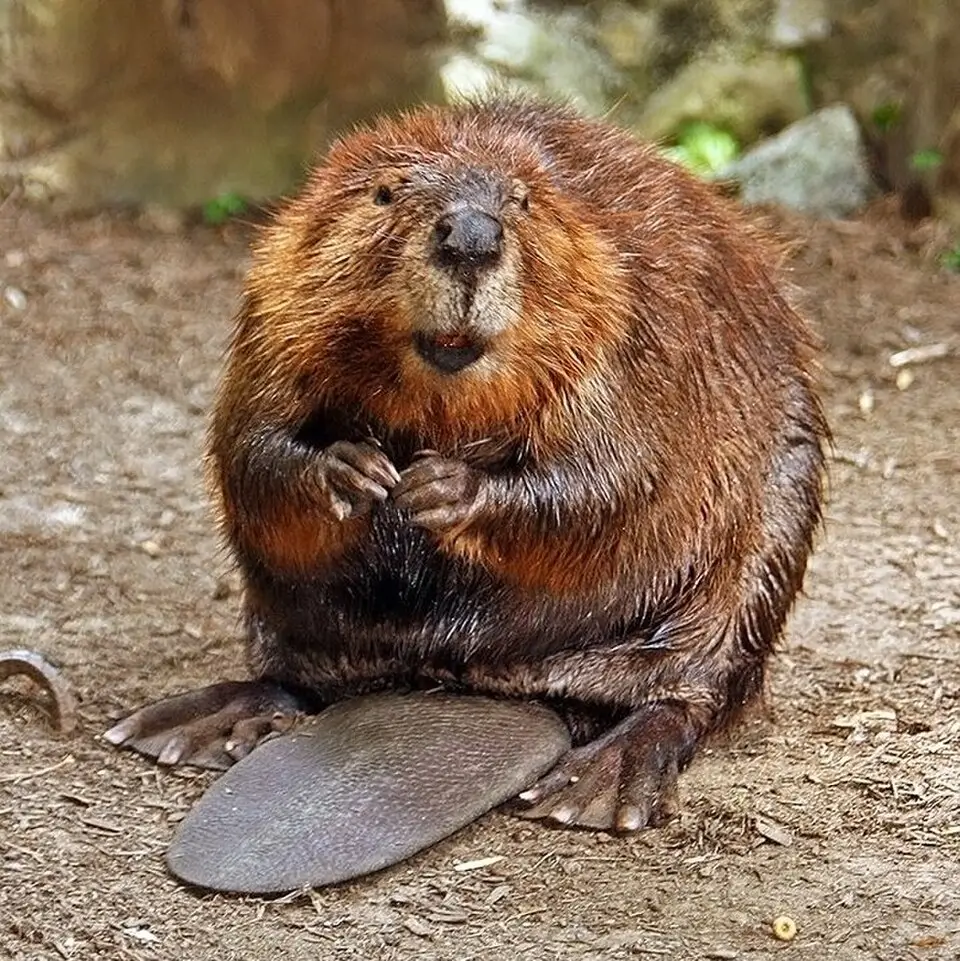
Adult beavers typically have stocky, barrel-shaped bodies covered in dense, two-layered fur. The outer coat consists of long, coarse guard hairs, while the soft, dense underfur provides exceptional insulation against cold water. The fur ranges in color from golden brown to nearly black, and the underside is generally lighter in tone. One of the beaver's most iconic features is its broad, flat, paddle-shaped tail, which is covered in scaly, leathery skin. This remarkable tail serves multiple functions: it acts as a rudder while swimming, helps the animal balance when standing upright to gnaw trees, and can be slapped loudly against the water's surface as a warning signal to other beavers nearby.
The beaver's hind feet are large and fully webbed, making the animal a powerful and efficient swimmer capable of reaching speeds up to five miles per hour. By contrast, beavers move slowly and somewhat awkwardly on land. Their front paws are dexterous and unwebbed, used with impressive skill to manipulate sticks, mud, and stones during construction activities.
Perhaps the beaver's most extraordinary anatomical feature is its teeth. The four large incisors — two on top and two on the bottom — are coated in iron-rich orange enamel on the front surface, giving them a distinctive color and exceptional hardness. These self-sharpening teeth grow continuously throughout the animal's life and are capable of felling trees many times the size of the beaver itself. The beaver's powerful jaw muscles and chisel-like incisors can bring down a medium-sized aspen or willow tree in a matter of minutes.
Beavers are herbivores, feeding on the bark, cambium, leaves, and twigs of a wide variety of trees and shrubs, including willow, cottonwood, aspen, alder, and birch. During warmer months, they also consume aquatic vegetation, grasses, and agricultural crops in some areas. In preparation for winter, beavers cache branches and logs underwater near their lodge entrance — a food store that allows the colony to eat throughout the frozen months without venturing onto ice.
Beavers are highly social animals that live in family groups called colonies, typically consisting of a monogamous mated pair, their current year's offspring (called kits), and yearlings from the previous season. Kits are born in late spring or early summer, usually in litters of two to four, and are remarkably well-developed at birth — fully furred and with their eyes open. Young beavers remain with the family unit for about two years before dispersing to find their own territory and mate.
The life expectancy of a wild beaver is generally in the range of ten to twelve years, though some individuals in protected environments have lived longer. Beavers are vocal animals that communicate through a variety of sounds as well as through scent marking using castoreum — a musky secretion from specialized castor glands — deposited at the boundaries of their territory.
Habitat & Range
The North American beaver enjoys one of the broadest distributions of any large mammal on the continent. Its range extends from Alaska and Canada southward through much of the contiguous United States and into parts of northern Mexico. It occupies virtually every type of freshwater habitat, including rivers, streams, lakes, ponds, marshes, and swamps, provided there is an adequate supply of woody vegetation nearby.
The beaver's most famous contribution to its habitat is, of course, the dam. By felling trees and using branches, mud, and stones to block streams and waterways, beavers create ponds that serve as the centerpiece of their territory. These ponds provide deep, still water that protects the lodge entrance from predators and prevents it from freezing solid in winter. Within these ponds, beavers construct dome-shaped lodges of sticks and mud that rise above the waterline, with underwater entrances accessible only to the colony.
In Oklahoma, beavers are found across a wide range of the state's river and stream systems. Oklahoma's geography — which encompasses everything from the heavily forested Ouachita Mountains in the southeast to the rolling plains of the west and the Cross Timbers region in the center — provides diverse freshwater habitats suitable for beaver colonization. Stream corridors lined with cottonwood and willow trees, common throughout Oklahoma's river drainages, offer ideal conditions for beaver activity.
The ponds and wetlands created by beaver dams have far-reaching ecological benefits. They raise local water tables, reduce downstream flooding, filter sediment and pollutants from water, and create rich, biodiverse habitats that support fish, amphibians, waterfowl, songbirds, and countless invertebrates. Many wildlife biologists consider the beaver to be a critical driver of wetland creation and maintenance across North America.
Hunting & Trapping Information
The North American beaver has a long and storied relationship with human hunters and trappers. As noted in the introduction, the beaver pelt trade was one of the primary economic engines of early North American exploration and settlement. Today, beaver hunting and trapping remain a legal and regulated activity in Oklahoma and throughout much of the species' range.
In Oklahoma, beaver hunting and trapping fall under the jurisdiction of the Oklahoma Department of Wildlife Conservation (ODWDC). The ODWDC manages hunting and trapping regulations for beaver and all other furbearing species in the state. Hunters and trappers interested in pursuing beaver in Oklahoma are strongly encouraged to consult the most current edition of the Oklahoma Hunting Regulations, available directly from the Oklahoma Department of Wildlife Conservation, as seasons, licensing requirements, and bag limits are subject to change from year to year.
Because the source data available for this article does not include specific season dates, license fees, or bag limit numbers for the current regulatory year, it would be irresponsible to cite figures that may be outdated. Always verify current regulations before heading afield. The ODWDC website is the authoritative source for up-to-date licensing and season information.
From a practical standpoint, beaver are most often taken by trappers using body-gripping traps, foothold traps, or snares set at runs, slides, and dam crossings. Hunters occasionally pursue beaver using rimfire or centerfire rifles during legal seasons. Calling techniques are less common for beaver than for other furbearers, though scent-based attractants and lures made from castoreum and beaver-feeding area lures can be highly effective in trapping sets.
The peak of beaver trapping activity traditionally coincides with colder months when beaver fur is at its prime — thick, lustrous, and at its most valuable. Beaver pelts have historically been used for hats, coats, trim, and blankets, and there remains a market for quality beaver fur among traditional crafters and the international fur trade.
Beyond pelt value, beaver meat is also edible and has been consumed by Indigenous peoples and frontiersmen for centuries. The tail in particular, when smoked or roasted, was considered a delicacy by many early trappers and explorers.
Responsible and ethical hunting and trapping of beaver in Oklahoma helps manage local populations, prevents overgrazing of riparian vegetation, and reduces flooding and property damage in areas where beaver activity conflicts with human land use.
Conservation
The story of beaver conservation in North America is one of the most remarkable wildlife recovery narratives on the continent. By the early 19th century, centuries of intensive commercial trapping had reduced beaver populations from an estimated historical high of perhaps 60 million animals to mere remnant populations across much of their former range. The species had been extirpated from vast areas of its historical territory.
Thanks to the establishment of regulated hunting and trapping seasons, the development of a professional wildlife management framework, and active reintroduction programs carried out throughout the 20th century, beaver populations have made a dramatic and inspiring comeback. Today, Castor canadensis is listed as a species of Least Concern by the International Union for Conservation of Nature (IUCN), reflecting stable and widespread populations across the continent.
In Oklahoma and neighboring states, the beaver's recovery has been aided by the protection and restoration of riparian habitats along rivers and streams. Conservation organizations and state wildlife agencies recognize the beaver's critical ecological role and work to maintain balanced, healthy populations that benefit both the species and the broader ecosystem.
Modern wildlife managers sometimes navigate the tension between beaver conservation and the damage that beavers can cause to trees, agricultural lands, roads, and drainage infrastructure. Tools such as pond levelers — devices that regulate water depth in beaver ponds without destroying the dam entirely — allow managers to reduce flood-related damage while still preserving the ecological benefits of beaver activity. These approaches reflect a mature and nuanced conservation philosophy that seeks coexistence rather than conflict.
The North American beaver stands as a powerful symbol of ecological resilience and the success of science-based wildlife management. Its story — from near-extinction to widespread recovery — should inspire confidence in what dedicated conservation efforts can achieve.