Overview
Few animals embody the spirit of North America's wetlands quite like the muskrat (Ondatra zibethicus). Resilient, resourceful, and remarkably adaptable, the muskrat has thrived across the continent for millennia, carving out a vital ecological role in marshes, ponds, rivers, and streams from coast to coast. This semi-aquatic rodent is one of the most widely distributed mammals in North America, and its presence in states like Oklahoma speaks to just how versatile and tenacious this small creature truly is.
Long before European settlers arrived on the continent, Native American peoples recognized the muskrat as a creature of both practical and cultural significance. The animal's dense, water-resistant fur made it a valuable resource for clothing and trade, while its remarkable burrowing and lodge-building behaviors earned it a place in numerous tribal stories and traditions. Today, muskrats continue to attract the attention of wildlife enthusiasts, trappers, hunters, and conservationists alike, all of whom appreciate this animal for different and equally valid reasons.
Whether you are a naturalist wading through an Oklahoma wetland, a trapper setting lines along a creek bank, or simply a curious outdoor enthusiast eager to learn more about the wildlife sharing your landscape, the muskrat is a species well worth understanding. This article explores the biology, habitat, hunting traditions, and conservation status of one of North America's most fascinating and often underappreciated mammals.
Biological Traits
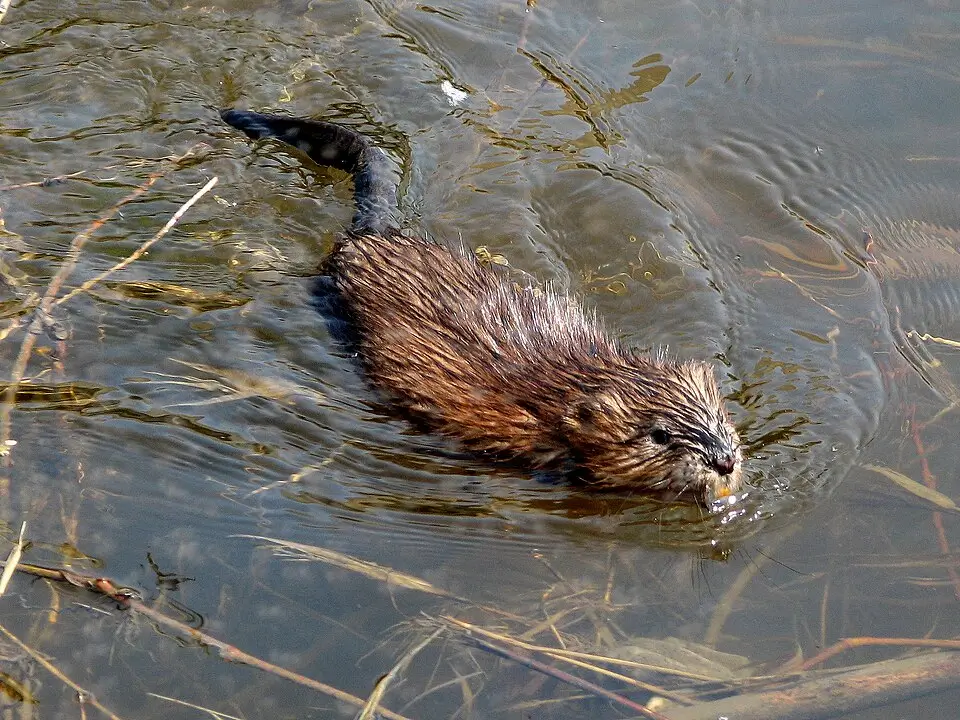
The muskrat (Ondatra zibethicus) is the sole member of the genus Ondatra and belongs to the family Cricetidae, which also includes voles, lemmings, and many other rodents. Despite its common name and rat-like appearance, the muskrat is not closely related to true rats. It is, however, one of the largest members of the subfamily Arvicolinae, making it a notably sizeable rodent by North American standards.
One of the muskrat's most distinctive physical features is its laterally flattened tail, which it uses as a rudder while swimming. Unlike the round tails of many other rodents, this unique adaptation makes the muskrat an exceptionally capable swimmer, able to navigate currents and dive beneath the water's surface with ease. Its hind feet are partially webbed, further enhancing its aquatic agility. A muskrat can remain submerged for up to 15 minutes at a time — an impressive feat for any mammal — and it is capable of swimming both forward and backward underwater.
The muskrat's fur is another standout characteristic. Its coat consists of two distinct layers: a dense, soft underfur that provides insulation and water resistance, and an outer layer of longer, coarser guard hairs that help shed water and protect the underfur beneath. This luxurious dual-layer pelage has historically made muskrat fur one of the most commercially valuable furs in North America, prized by trappers and furriers for centuries.
In terms of size, muskrats are stocky and compact, with a body built for life in and around the water. Their small, rounded ears sit close to the head, minimizing drag while swimming, and their eyes, though relatively small, are well-positioned for spotting predators both above and below the waterline.
The name "muskrat" derives from a pair of musk glands located beneath the skin near the base of the tail. These glands produce a musky-scented secretion that the animal uses for communication — marking territories, signaling reproductive readiness, and interacting with other individuals. This chemical communication plays an important role in the muskrat's social structure during breeding seasons.
Muskrats are prolific breeders, which is one reason they have been so successful across such a wide geographic range. In warmer climates, including much of Oklahoma, females may produce multiple litters per year, with each litter containing several young. This high reproductive rate allows muskrat populations to recover quickly from environmental pressures such as flooding, drought, or predation.
As omnivores, muskrats consume a wide variety of plant and animal matter. The bulk of their diet consists of aquatic and semi-aquatic vegetation, including cattails, sedges, rushes, and various roots and tubers. They will also consume small animals such as freshwater mussels, crayfish, frogs, and fish when the opportunity arises. This dietary flexibility is yet another reason the muskrat thrives in such a broad range of environments.
Habitat & Range
The muskrat is found throughout a vast swath of North America, ranging from the Arctic tundra of Canada and Alaska southward through the contiguous United States and into the northernmost regions of Mexico. It has also been introduced — both intentionally and accidentally — to parts of Europe, Asia, and South America, where it has established itself with remarkable success, sometimes to the concern of local ecosystems.
Within the United States, the muskrat occupies virtually every type of freshwater wetland habitat available: marshes, swamps, ponds, lakes, rivers, streams, drainage ditches, and even man-made reservoirs. The key requirements are a reliable water source and an adequate supply of aquatic vegetation for food and building materials.
In Oklahoma, a landlocked state situated in the South Central and Southwestern regions of the United States, muskrats find suitable habitat in the state's numerous rivers, lakes, and wetland areas. Oklahoma's diverse geography, which ranges from the rolling prairies of the west to the forested hills and river bottoms of the east, provides a mosaic of wetland environments capable of supporting healthy muskrat populations. River systems such as the Arkansas, Red, Cimarron, and Canadian rivers, along with their associated floodplains and backwater areas, offer prime muskrat habitat throughout the state.
Muskrats are well known for their engineering skills. They construct two primary types of shelter: burrows and lodges. Burrows are dug into the banks of rivers, ponds, or lakes, with underwater entrances that provide protection from predators and easy access to the water. Lodges, which are more commonly associated with muskrats in marshier environments, are dome-shaped structures built from cattails, reeds, mud, and other vegetation. These lodges can be surprisingly large and structurally sound, providing the muskrat with a warm, dry living space even in cold weather.
Natural predators of the muskrat include mink, otters, foxes, coyotes, raccoons, large birds of prey such as great horned owls and red-tailed hawks, and various species of large fish and snapping turtles. The muskrat's high reproductive rate helps buffer populations against these natural predation pressures.
Hunting Information
The muskrat has a long and storied history as a game and furbearer species in North America. For centuries, trappers have targeted muskrats for their dense, valuable fur, and the muskrat pelt trade played a meaningful role in the early economy of colonial North America. Even today, muskrat trapping and hunting remain important traditional outdoor pursuits in many parts of the country.
Muskrats are typically pursued through trapping rather than conventional hunting, and they remain one of the most commonly trapped furbearers in North America. Trappers use a variety of methods to harvest muskrats, including leg-hold traps, body-grip traps, and cage traps, generally set along runs, near lodge entrances, or at burrow openings. The trapping season for muskrats varies by state and region, as regulations are designed to ensure sustainable harvest while protecting breeding populations.
In Oklahoma, hunters and trappers interested in pursuing muskrats should consult the Oklahoma Department of Wildlife Conservation for the most current and accurate information regarding seasons, licensing requirements, and applicable regulations. The Oklahoma Department of Wildlife Conservation is the authoritative resource for all hunting and trapping regulations in the state, and regulations can change from year to year. Always verify current rules before heading into the field.
Muskrat fur, while not as commercially dominant as it once was, still holds value in the fur market, and harvested animals can also be used for their meat. Muskrat meat has been consumed in various North American communities for generations, and in some regions — particularly in the Great Lakes area and parts of the mid-Atlantic states — it is considered a regional delicacy. The meat is dark, mildly flavored, and often prepared by roasting, braising, or frying.
Conservation
The muskrat is currently listed as a species of least concern by the International Union for Conservation of Nature (IUCN), reflecting its wide distribution, large overall population, and high adaptability. While localized declines have been recorded in some areas due to wetland drainage, habitat loss, and changes in water quality, the species as a whole remains abundant and resilient across its native range.
Healthy muskrat populations are generally considered a positive indicator of wetland ecosystem health. Because muskrats rely heavily on aquatic vegetation, their presence suggests that a wetland supports the plant communities necessary to sustain a broad range of other wildlife. In this sense, muskrats serve as an informal barometer of wetland quality and biodiversity.
Interestingly, muskrat activity can itself benefit the wetland ecosystem. Their feeding habits, which often involve cutting and partially consuming large quantities of cattails and other emergent vegetation, can create open water areas within dense marsh vegetation — a phenomenon sometimes referred to as "eat-outs." These open patches can actually increase habitat diversity within a marsh, benefiting waterfowl, shorebirds, and other wetland-dependent species.
Conservation efforts that protect and restore wetland habitats in Oklahoma and across North America directly benefit muskrat populations. Programs that maintain water quality, preserve riparian corridors, and restore degraded wetlands all contribute to sustaining the ecological communities on which muskrats depend.
For hunters, trappers, and wildlife enthusiasts in Oklahoma, the muskrat represents a tangible connection to the state's rich natural heritage and outdoor traditions. By following established regulations, practicing ethical harvest, and supporting wetland conservation initiatives, Oklahomans can help ensure that this remarkable little animal continues to thrive in the state's waterways for generations to come.