Overview
Few animals capture the spirit of the American West quite like the mule deer (Odocoileus hemionus). With its oversized, mule-like ears, powerful bounding gait, and striking antlers, this iconic species has long been a symbol of wild, open country. Whether you encounter one silhouetted against a rocky ridge at dusk or spot a trophy buck navigating a canyon bottom at first light, the mule deer commands immediate respect and admiration from wildlife enthusiasts and hunters alike.
The mule deer is one of North America's most widely recognized big game animals, occupying a vast swath of the continent's western half. It has inspired generations of hunters, naturalists, photographers, and conservationists, and continues to be a cornerstone species in many of the ecosystems it calls home. Understanding the biology, behavior, habitat preferences, and hunting traditions associated with the mule deer helps us appreciate not only the animal itself but also the broader landscapes and communities that depend on its presence.
For hunters and wildlife watchers in Oklahoma and across the broader region, the mule deer represents a unique and thrilling pursuit — one that rewards patience, skill, and a deep respect for the natural world.
Biological Traits
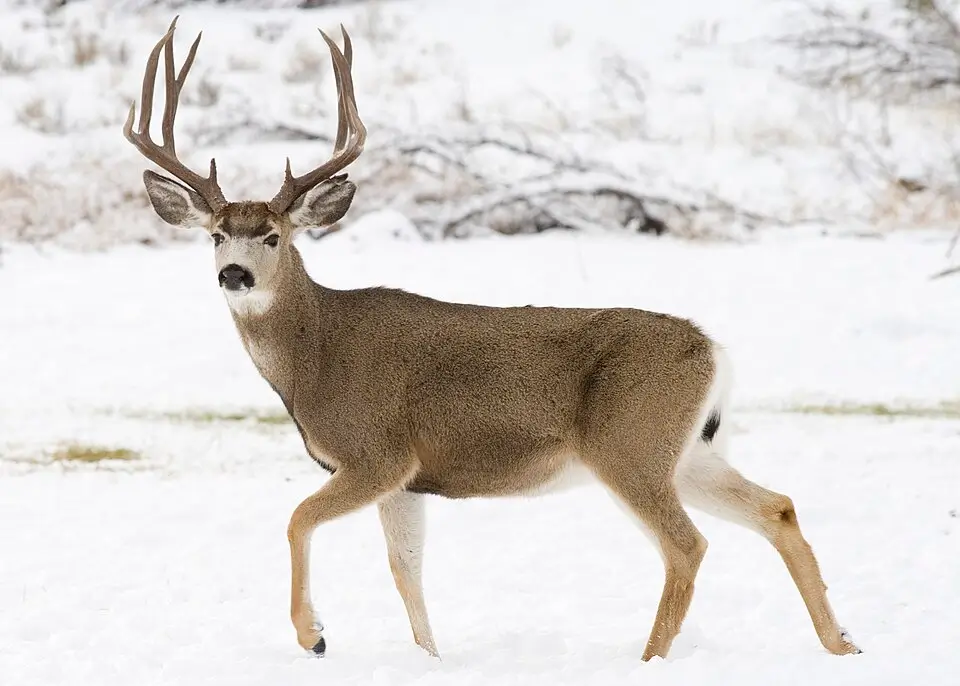
The mule deer (Odocoileus hemionus) belongs to the family Cervidae and is closely related to the white-tailed deer (Odocoileus virginianus), though the two species are quite distinct in appearance and behavior. The mule deer's most immediately recognizable features are its large, prominent ears, which bear a striking resemblance to those of a mule — hence the common name. These large ears are not merely aesthetic; they serve as highly sensitive acoustic instruments that help the deer detect approaching predators across open terrain.
One of the most distinctive behavioral traits of the mule deer is its unique form of locomotion known as stotting or pronking — a bounding, four-legged leap in which all four hooves leave the ground simultaneously. This gait, sometimes called a "stiff-legged bounce," is believed to serve multiple purposes, including predator evasion, signaling fitness to potential mates, and navigating rugged terrain more efficiently than a traditional gallop.
Mule deer are sexually dimorphic, meaning males (bucks) and females (does) differ significantly in size and appearance. Bucks are notably larger and develop antlers annually. Unlike white-tailed deer antlers, which branch from a single main beam, mule deer antlers are bifurcated — they fork repeatedly, with each tine splitting into two. This gives trophy bucks a majestic, symmetrical rack that is highly prized by hunters. Antler growth begins in spring, fueled by lengthening daylight hours and increased nutritional intake, and is shed each winter following the breeding season.
The breeding season, or rut, typically occurs in the late fall, generally between November and December depending on geographic location. During this time, bucks become highly active and visible as they seek out does, making this one of the most exciting times of year both for observing and hunting mule deer. Bucks may travel great distances during the rut, temporarily abandoning their core home ranges in pursuit of receptive females.
Does give birth to fawns — typically one or two — in late spring or early summer. Fawns are born with spotted coats that provide camouflage in their early weeks of life. They are remarkably precocial, able to stand and move within hours of birth, though they remain dependent on their mothers for several months.
Mule deer are herbivores with a diet that shifts seasonally. They are selective browsers, favoring shrubs, forbs, grasses, and the occasional agricultural crop depending on availability and season. Their digestive system is adapted for a diet of fibrous plant material, and like other ruminants, they have a four-chambered stomach that allows them to efficiently extract nutrients from their food.
The average lifespan of a mule deer in the wild is generally estimated at around 9 to 11 years, though many individuals live shorter lives due to predation, hunting pressure, disease, and harsh weather conditions. In captivity, mule deer can live considerably longer.
Habitat & Range
The mule deer is a quintessential species of the American West. Its range encompasses a broad swath of western North America, stretching from the coastal ranges of the Pacific Northwest south through the deserts of the Southwest, east across the Great Plains, and north into the boreal forests of western Canada and Alaska. Several recognized subspecies exist, each adapted to particular regional environments — from the Rocky Mountain mule deer, the most widespread and well-known subspecies, to the desert mule deer of the arid Southwest, the Sitka black-tailed deer of the Pacific Coast, and others.
Mule deer are highly adaptable and occupy an impressive diversity of habitats. They are most commonly associated with rugged, open landscapes — mountain ranges, high desert plateaus, canyon systems, sagebrush flats, and semi-arid shrublands. They are particularly well-suited to broken terrain, where they can use their stotting gait and keen senses to navigate rocky outcroppings and steep slopes with remarkable agility. Many populations are migratory, moving between higher-elevation summer ranges and lower-elevation winter ranges as snowpack and forage availability dictate.
In states like Oklahoma, mule deer are found primarily in the western panhandle region, where the terrain and vegetation transition toward the high plains and arid environments more characteristic of mule deer country. Oklahoma's panhandle counties, with their shortgrass prairie, canyon lands, and mesa topography, provide suitable fringe habitat for mule deer populations. These animals represent the eastern edge of the species' natural range, and their presence in Oklahoma reflects the ecological diversity of the state's western landscapes.
Water availability is an important factor in mule deer habitat use, particularly in arid and semi-arid environments. Deer will regularly use natural springs, seeps, stock tanks, and other water sources, especially during hot summer months. Hunters and wildlife managers alike pay close attention to water sources when scouting mule deer country.
Hunting Information
Mule deer hunting is a storied tradition across the American West and is widely considered one of the premier big game hunting experiences in North America. The pursuit of a mature mule deer buck — particularly in remote, rugged country — demands physical fitness, patience, sharp glassing skills, and a thorough understanding of the animal's behavior and habitat preferences.
The Oklahoma Department of Wildlife Conservation (ODWC) oversees all hunting regulations and licensing requirements in the state, including those applicable to mule deer in the panhandle region. Hunters interested in pursuing mule deer in Oklahoma should consult the ODWC directly for the most current and accurate information regarding season dates, licensing requirements, bag limits, legal equipment, and any applicable permit or draw systems. Regulations can change from year to year, and it is always the hunter's responsibility to be fully informed before taking to the field.
Because mule deer in Oklahoma occupy the far western panhandle, hunters targeting this species should familiarize themselves with the specific zone regulations and any special requirements that may apply to that region. The ODWC website provides comprehensive hunting resources, including the Oklahoma Hunting Regulations guide, information on controlled hunts, and access to the Oklahoma Land Access Program, which helps hunters identify publicly accessible lands for hunting.
From a tactical standpoint, mule deer hunting often revolves around glassing — using quality binoculars or spotting scopes to scan vast expanses of open country from elevated vantage points before committing to a stalk. Mule deer are creatures of habit in many respects, feeding in the early morning and late afternoon hours, resting and ruminating during midday in shaded draws or on north-facing slopes. Understanding these patterns, combined with knowledge of local water sources and travel corridors, dramatically improves a hunter's odds of success.
Ethical hunting practices, respect for the land, and adherence to all applicable regulations are paramount. The mule deer resource in any state is a shared public trust, and responsible hunters play an important role in its conservation through license and tag fees that fund wildlife management programs.
Conservation
The conservation of mule deer populations across their range is an ongoing and collaborative effort involving state wildlife agencies, federal land management agencies, conservation organizations, and the hunting community. Mule deer face a variety of challenges, including habitat fragmentation, competition with livestock and other ungulates, predation pressure, drought, severe winters, disease (including Chronic Wasting Disease), and the encroachment of human development into traditional migration corridors.
In Oklahoma, the ODWC actively monitors wildlife health and participates in Chronic Wasting Disease (CWD) surveillance, which is an important concern for deer populations broadly across North America. Hunters are encouraged to familiarize themselves with CWD guidelines and follow best practices when handling harvested animals to help slow the potential spread of this disease.
Conservation efforts for mule deer often focus on protecting and restoring key habitats, maintaining or reestablishing migration corridors, managing predator-prey dynamics, and conducting population surveys to inform science-based harvest regulations. The hunting community has historically been among the most significant financial contributors to these efforts through the purchase of licenses, tags, and through the Federal Aid in Wildlife Restoration Act (also known as the Pittman-Robertson Act), which directs an excise tax on firearms and ammunition toward state wildlife management programs.
For anyone who values wild places and the animals that inhabit them, supporting strong state wildlife agencies and conservation programs is one of the most meaningful ways to ensure that mule deer continue to thrive for future generations of hunters, wildlife watchers, and outdoor enthusiasts.