Overview
Few birds are as universally recognized as the mallard (Anas platyrhynchos). From the glassy ponds of city parks to the sprawling wetlands of the American heartland, the mallard has earned its place as perhaps the most familiar waterfowl species in the Northern Hemisphere. With its brilliant iridescent green head, chestnut breast, and characteristic quack, the male mallard — known as a drake — is a symbol of wild places and open water that resonates with hunters, birdwatchers, and casual observers alike.
For waterfowl hunters, the mallard holds a special place of honor. It is the most harvested duck in North America and serves as a benchmark species by which many hunters measure the quality of a season. In Oklahoma, a landlocked state rich in river systems, reservoirs, and wetland habitats, mallard hunting draws enthusiastic participants each year as birds migrate through the Central Flyway. Whether you are a seasoned waterfowler or someone just beginning to explore the world of duck hunting, understanding the mallard — its biology, its habits, and its place in the ecosystem — is a rewarding endeavor.
Biological Traits
The mallard belongs to the family Anatidae, the large and diverse family of birds that includes ducks, geese, and swans. Within this family, mallards are classified as dabbling ducks, a group characterized by their feeding behavior of tipping forward in shallow water to reach aquatic vegetation and invertebrates rather than diving beneath the surface.
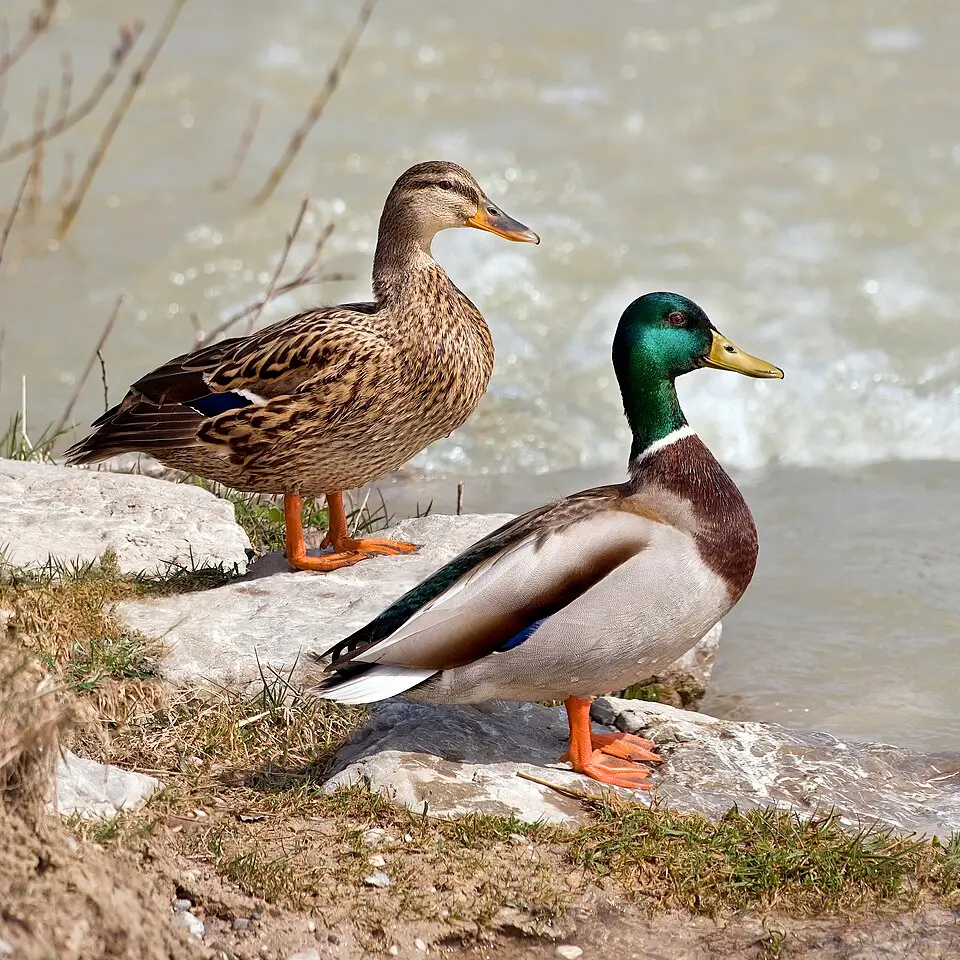
One of the most striking features of the mallard is its pronounced sexual dimorphism — that is, the visual difference between males and females. The breeding drake is instantly recognizable by his glossy, iridescent green head, which can appear almost black or deep blue depending on the angle of light. A white ring encircles his neck, separating the green head from a rich chestnut-brown breast. His body is largely gray, his tail is white with distinctive black curled feathers at the rump, and his bill is a bright yellow-orange. His legs and feet are a vivid orange-red.
The female mallard, or hen, is more subtly colored in mottled brown tones that provide excellent camouflage during the nesting season. Her bill is orange with darker mottling, and she shares the same blue-purple speculum wing patch — bordered by white bars — that both sexes display in flight. This speculum is an important field identification mark.
Mallards are medium to large ducks. Adult birds typically weigh between two and three pounds, though individuals can occasionally exceed this range, particularly in well-fed populations or late-season birds that have been feeding heavily on agricultural grains. Their wingspan can reach approximately three feet, giving them a strong, powerful silhouette in the air.
The mallard's voice is also distinctive. The familiar, resonant "quack" most people associate with ducks is, in fact, the call of the female mallard. The hen uses a variety of quacks, from loud single notes to rapid descending sequences. Drakes, by contrast, produce a softer, raspier sound, often described as a reedy grunt or whistle.
Mallards are highly adaptable in their diet. They are omnivores, consuming aquatic plants, seeds, insects, small amphibians, earthworms, and agricultural grains when available. This dietary flexibility is one reason mallards thrive in such a wide array of environments, from natural wetlands to flooded agricultural fields — a habitat type that waterfowl hunters know well.
In terms of reproduction, mallards typically form pair bonds in late autumn and winter, well before arriving on breeding grounds. The hen selects a nest site, usually on the ground near water, concealed beneath dense vegetation. She lays an average clutch of around eight to thirteen eggs, which she incubates alone for approximately 27 to 28 days. Ducklings are precocial — meaning they are born with open eyes and downy feathers and are capable of following their mother to water within hours of hatching. Mallards can live up to ten years in the wild, though average lifespans are considerably shorter due to predation, hunting, and other mortality factors.
Habitat & Range
The mallard is one of the most widespread duck species on the planet. Its native range covers a vast area of the Northern Hemisphere, including North America, Europe, Asia, and parts of North Africa. In the United States, mallards are present year-round in many regions, with northern breeding populations migrating south in autumn to wintering grounds across the southern states, Mexico, and beyond.
Mallards are supremely adaptable when it comes to habitat. They occupy freshwater lakes, rivers, ponds, marshes, estuaries, flooded agricultural fields, and even urban park ponds. They prefer shallow water environments where dabbling feeding is possible — typically water no deeper than the length of their upended body. Emergent vegetation, such as cattails and rushes, provides essential cover for nesting and loafing.
In Oklahoma, geography plays a significant role in mallard activity. The state lies within the Central Flyway, one of four major waterfowl migration corridors in North America. As temperatures drop in the northern breeding grounds of Canada and the northern United States each autumn, mallards begin moving south. Oklahoma's numerous reservoirs, river bottoms, flooded agricultural fields, and managed wetlands serve as important staging and wintering areas for these birds. The state's rivers — including the Arkansas, Red, Canadian, and Cimarron — along with large reservoirs and managed wildlife areas, provide attractive habitat for migrating and wintering mallards.
Hunting Information
Waterfowl hunting, including mallard hunting, is regulated in the United States through a cooperative management system involving the U.S. Fish and Wildlife Service and individual state wildlife agencies. In Oklahoma, the Oklahoma Department of Wildlife Conservation (ODWC) oversees waterfowl hunting regulations and seasons.
Because waterfowl are migratory birds protected under the Migratory Bird Treaty Act, hunters must comply with both federal and state regulations. This typically includes obtaining a valid Oklahoma hunting license, a federal Duck Stamp (officially known as the Migratory Bird Hunting and Conservation Stamp), and adhering to season dates, bag limits, and shooting hours established annually.
The ODWC provides comprehensive hunting information for Oklahoma waterfowlers, including season dates, regulations, and public hunting areas through its official website and annual hunting regulations publication. Hunters are strongly encouraged to consult the ODWC's current regulations before heading afield, as season dates and bag limits can change from year to year based on population surveys and management objectives.
Mallard hunting in Oklahoma takes place across a variety of settings. Many hunters pursue birds over flooded agricultural fields, particularly rice, corn, and milo fields, where mallards congregate to feed. Others hunt from blinds on public and private wetlands, using decoy spreads and calls to attract birds. The iconic hen mallard call — the loud, descending series of quacks — is one of the most important tools in a duck hunter's repertoire, and proficiency with a duck call can make the difference between a memorable hunt and a quiet morning in the blind.
Steel shot and other non-toxic shot types are federally mandated for waterfowl hunting to protect both the birds and the ecosystem from lead contamination. This regulation has been in place since 1991 and applies to all waterfowl hunters across the United States, including Oklahoma.
Public hunting opportunities in Oklahoma are available through the ODWC's Oklahoma Land Access Program and on Wildlife Management Areas managed by the department. Hunters willing to scout and explore these public resources can find excellent mallard hunting throughout the season.
Conservation
The mallard is currently classified as a species of Least Concern by the International Union for Conservation of Nature (IUCN), a reflection of its large global population and wide distribution. However, this status does not mean mallard populations are without challenges. Wetland habitat loss remains one of the most significant pressures facing mallards and all waterfowl species. Drainage of wetlands for agriculture and development has reduced the availability of nesting and foraging habitat across the continent.
Conservation organizations such as Ducks Unlimited, the USFWS, and state agencies like the ODWC have invested heavily in wetland restoration and protection efforts. Programs like the North American Waterfowl Management Plan provide a continental framework for waterfowl habitat conservation. Hunters themselves play a meaningful role in conservation through the purchase of Duck Stamps, hunting licenses, and contributions to conservation organizations — funding that directly supports habitat programs.
In Oklahoma, the ODWC manages and maintains numerous wetland habitats specifically to benefit waterfowl and other wildlife. These efforts reflect the enduring value of waterfowl, both as an ecological indicator of wetland health and as a cherished part of the state's outdoor heritage.
The mallard's resilience and adaptability are a testament to what thoughtful conservation management can achieve. With continued commitment from hunters, agencies, and the broader public, the sight of a drake mallard decelerating over a flooded field on a cold December morning will remain one of the great experiences available to outdoor enthusiasts in Oklahoma and across North America.