Overview
Few birds capture the spirit of the American prairie quite like the lesser prairie-chicken (Tympanuchus pallidicinctus). This striking grouse species, native to the shortgrass and mixed-grass prairies of the south-central United States, has long been a symbol of the wide-open landscapes that define the heart of America. With its elaborate courtship displays, distinctive vocalizations, and intimate connection to native grassland ecosystems, the lesser prairie-chicken stands as one of the most fascinating and ecologically significant birds in the region.
Oklahoma, a state that straddles the South Central and Southwestern regions of the United States, represents an important part of the lesser prairie-chicken's historic and current range. The state's western plains, with their rolling grasslands and sandy soils, provide some of the characteristic habitat this species depends upon. Understanding the lesser prairie-chicken — its biology, behavior, habitat needs, and the conservation challenges it faces — is essential not only for hunters and wildlife enthusiasts but for anyone who cares about the long-term health of the Great Plains ecosystem.
This article explores the world of the lesser prairie-chicken in depth, drawing on biological science and wildlife management principles to paint a complete picture of this remarkable bird.
Biological Traits
The lesser prairie-chicken is a member of the family Phasianidae and the genus Tympanuchus, which also includes the greater prairie-chicken (Tympanuchus cupido) and the sharp-tailed grouse (Tympanuchus phasianellus). As its name implies, the lesser prairie-chicken is somewhat smaller and paler than its close relative, the greater prairie-chicken — an adaptation that reflects the drier, more arid environments it inhabits.
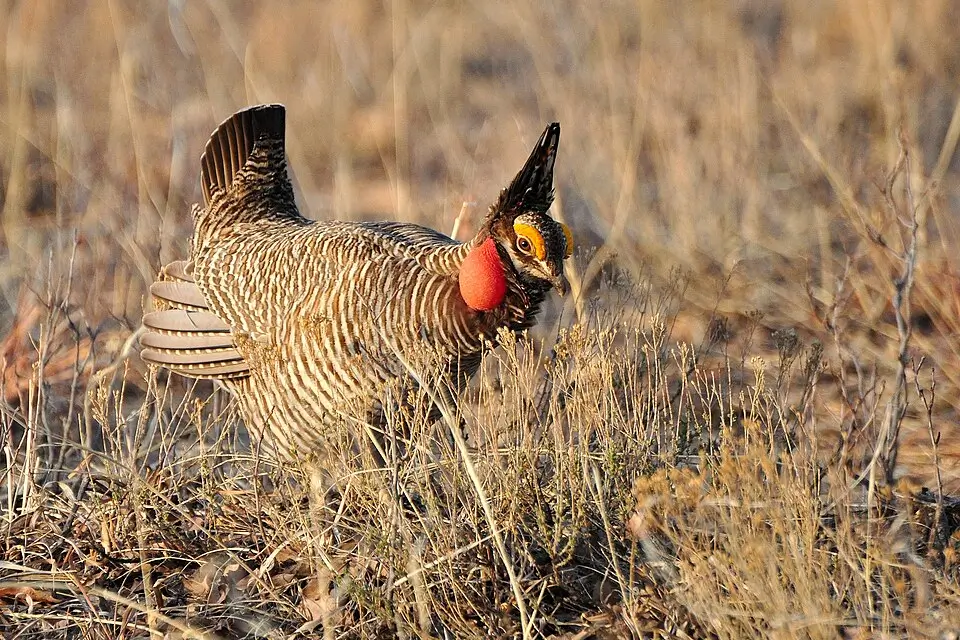
Like all members of the Tympanuchus genus, the lesser prairie-chicken is a ground-dwelling bird with cryptic, barred brown-and-buff plumage that provides excellent camouflage among the grasses and low shrubs of the prairie. Males are equipped with inflatable air sacs on the sides of their necks — reddish-pink in color — which they use during elaborate courtship rituals known as "lekking." The males gather at traditional display grounds called leks, where they perform a mesmerizing dance involving stamping feet, fanned tails, erect feather pinnae (elongated neck feathers), and a haunting, booming call that can carry across the open plains. These lekking displays are one of the most spectacular wildlife spectacles the American prairie has to offer.
Females, called hens, are generally smaller than males and lack the pronounced air sacs and elongated neck feathers. They are responsible for incubating eggs and raising chicks with minimal involvement from males after mating. Nests are shallow scrapes on the ground concealed within grasses, where hens lay and incubate a clutch of eggs over several weeks. The precocial chicks are mobile shortly after hatching, following their mother as she leads them to feeding areas rich in insects — a critical protein source during the early weeks of life.
The lesser prairie-chicken is an omnivore whose diet shifts with the seasons. In spring and summer, the birds consume a variety of insects, forbs, and green vegetation. As the seasons change into fall and winter, seeds and plant material — including those from agricultural crops in areas where farmland borders grassland habitat — become increasingly important dietary staples. This dietary flexibility is one of the species' key adaptations for surviving the variable and sometimes harsh climate of the southern plains.
Habitat & Range
The lesser prairie-chicken is endemic to the southern Great Plains of the United States. Its range encompasses portions of five states: Oklahoma, Texas, Kansas, Colorado, and New Mexico. Each of these states contains distinct ecological zones that the species has adapted to over thousands of years, from the sand sagebrush prairies of southeastern Colorado and southwestern Kansas to the shinnery oak grasslands of western Texas and New Mexico, and the mixed-grass prairies of western Oklahoma and the Texas Panhandle.
Within Oklahoma, the species is primarily associated with the western portions of the state, where native grasslands, sandsage prairie, and shinnery oak communities provide suitable conditions for nesting, brooding, and wintering. Oklahoma occupies a unique geographic position, bordering Texas to the southwest, Kansas to the north, and New Mexico to the west — states that collectively represent the core of lesser prairie-chicken country. The interconnected nature of this range means that population dynamics and land-use practices across all five states have a direct bearing on the species' overall health.
The lesser prairie-chicken's habitat requirements are quite specific. The birds depend on native grasslands with a diverse structure — a mix of grasses at varying heights, interspersed with low shrubs like sand sagebrush or shinnery oak, and open areas for display and foraging. They require large, contiguous blocks of suitable habitat to maintain viable populations, as they are wide-ranging birds that use different areas of the landscape for different life-history needs throughout the year. Leks are typically located on slightly elevated, open ground where displaying males can be seen and heard from a distance. Nesting habitat tends to be in areas with denser grass cover for concealment, while brood-rearing areas often include more open ground with abundant insect prey.
The conversion of native grasslands to cropland, the encroachment of woody vegetation, infrastructure development, and drought — all characteristic challenges of the modern southern plains — have significantly reduced and fragmented available habitat over the past century.
Hunting Information
The lesser prairie-chicken has a long history as a game bird on the southern plains. For generations, upland bird hunters have prized the species as a challenging and rewarding quarry, requiring both skill in navigating wide-open prairie terrain and a well-trained bird dog capable of handling the birds' tendency to run and flush at distance.
Hunting seasons and regulations for the lesser prairie-chicken are managed at the state level, and the specific rules vary by state and year depending on population assessments and conservation goals. In Oklahoma, hunting regulations are overseen by the Oklahoma Department of Wildlife Conservation, which evaluates game bird populations and sets seasons accordingly to ensure sustainable harvest. Hunters interested in pursuing lesser prairie-chickens in Oklahoma are strongly encouraged to consult the most current Oklahoma Hunting Regulations published by the Oklahoma Department of Wildlife Conservation, as season dates, bag limits, and license requirements are subject to change from year to year based on the latest population data.
Because the lesser prairie-chicken's population has faced significant pressures over the past several decades, wildlife managers in Oklahoma and across the species' range take a careful, science-based approach to harvest management. In some years and some areas, seasons may be closed or highly restricted in response to population trends. In other areas where populations are more robust, limited hunting opportunity may be available for licensed hunters.
Pursuing lesser prairie-chickens on the open plains is a memorable experience. Hunters typically work large expanses of native grassland and sandsage prairie on foot, often with pointing dogs. The birds can be elusive, using the terrain and vegetation to their advantage, and a successful hunt requires patience, persistence, and a deep familiarity with the landscape.
For those interested in hunting lesser prairie-chickens in Oklahoma, the first step is always to check with the Oklahoma Department of Wildlife Conservation for current season information, licensing requirements, and any public land access opportunities available through programs like the Oklahoma Land Access Program.
Conservation
Conservation of the lesser prairie-chicken is one of the most active and complex wildlife management stories on the American plains. The species has experienced significant population declines over the course of the 20th and early 21st centuries, driven by habitat loss, land-use change, prolonged drought cycles, and habitat fragmentation. These pressures have prompted intensive conservation efforts at the federal, state, and private levels.
Across the five-state range, a variety of voluntary conservation programs have been implemented to help landowners maintain and restore native grassland habitat. Farm bill conservation programs, working lands initiatives, and rancher-wildlife partnerships have all played meaningful roles in preserving the landscapes that lesser prairie-chickens depend upon. In Oklahoma, the state's western ranch country remains a stronghold for the species, and cooperative relationships between wildlife managers, agricultural producers, and conservation organizations are central to the long-term effort.
The lesser prairie-chicken has navigated a complicated path through the federal regulatory system as well, having been the subject of listings and subsequent regulatory reviews under the Endangered Species Act. These processes reflect the genuine concern among scientists and managers about the species' trajectory, as well as the ongoing work to find solutions that balance conservation needs with the economic realities of working landscapes in the southern plains.
Despite these challenges, there are genuine reasons for optimism. Across the range, population monitoring programs continue to generate the data needed for adaptive management. Conservation partnerships are preserving critical habitat. And on well-managed ranches and public lands throughout western Oklahoma and the broader southern plains, lesser prairie-chickens can still be found performing their ancient lekking rituals each spring — a testament to the resilience of both the species and the grassland ecosystems it calls home.