Overview
Few animals in North America carry the cultural weight of the groundhog. Every February 2nd, millions of Americans turn their eyes toward a rotund, furry mammal to predict the arrival of spring — a tradition rooted in centuries of folklore and celebrated with enthusiasm from Punxsutawney, Pennsylvania to small towns across the continent. But behind the pageantry and the cameras lies a genuinely fascinating creature: a robust, industrious rodent that plays a surprisingly important role in the ecosystems it inhabits.
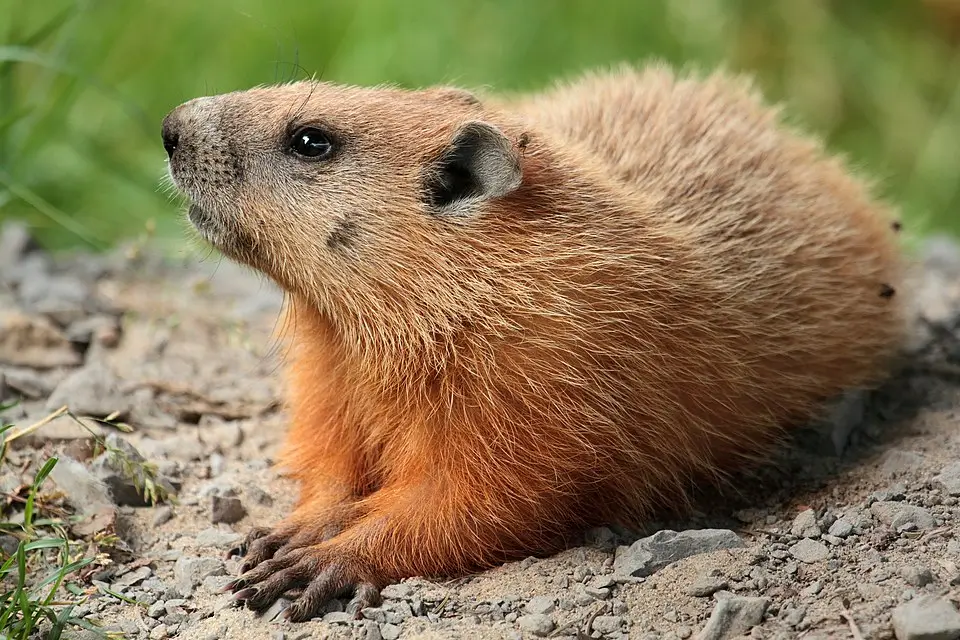
The groundhog (Marmota monax), also commonly known as the woodchuck, whistle pig, or land beaver, is one of the most recognizable members of the squirrel family in North America. Its chunky silhouette, waddling gait, and habit of standing upright at the entrance to its burrow are sights familiar to anyone who has spent time in the rural countryside of the eastern and central United States or Canada. Yet despite its familiarity, the groundhog is a creature of remarkable biological complexity and ecological significance — one that rewards closer study and appreciation.
For hunters and wildlife enthusiasts alike, the groundhog represents a unique opportunity. Whether you're a varmint hunter honing your long-range marksmanship skills, a landowner managing agricultural property, or simply a naturalist curious about the world beyond your back door, the groundhog offers plenty of reasons to pay attention. In states like Oklahoma and across the broader range of this species, understanding the groundhog's biology, behavior, and habitat requirements is the first step toward a meaningful encounter in the field.
Biological Traits
The groundhog belongs to the order Rodentia and the family Sciuridae, placing it squarely in the same broad taxonomic group as tree squirrels, chipmunks, and prairie dogs. Its scientific name, Marmota monax, reflects its membership in the genus Marmota — the marmots — a group of large, burrowing ground squirrels found across North America, Europe, and Asia. The species name monax is derived from a word of Algonquian origin, loosely meaning "digger," a fitting tribute to one of the animal's most defining characteristics.
Physically, the groundhog is a stout, low-slung animal with a broad, flat head, short ears, and a medium-length, bushy tail. Its fur is coarse and typically a grizzled brown or reddish-brown across the back, with paler underparts. The feet are dark, and the incisors — like those of all rodents — are large, self-sharpening, and continuously growing, perfectly adapted to gnawing through vegetation and roots.
One of the most biologically remarkable aspects of the groundhog is its status as a true hibernator. Unlike many animals that merely enter a state of torpor during winter months, the groundhog undergoes a deep, physiologically dramatic hibernation. During this period, its body temperature drops dramatically, its heart rate slows to just a few beats per minute, and it relies entirely on stored body fat for energy. Groundhogs typically begin preparing for hibernation in late summer and early autumn, consuming large quantities of food to build up fat reserves. They retreat to their burrows in the fall and do not typically emerge until late winter or early spring — the scientific basis, however loosely applied, for the Groundhog Day tradition.
The groundhog is also an accomplished digger. Its burrow systems can be extensive, featuring multiple chambers for sleeping, nesting, and even defecation. These burrows typically have a main entrance and one or more secondary "spy holes" that allow the animal to monitor for predators without being easily detected. Importantly, abandoned groundhog burrows serve as critical habitat for a wide variety of other species, including foxes, rabbits, opossums, and numerous reptiles and amphibians, making the groundhog what ecologists sometimes refer to as a "keystone species" in certain environments.
The groundhog is largely diurnal, meaning it is most active during daylight hours, particularly in the morning and early afternoon. It is a solitary animal for most of the year, coming together with others of its kind primarily during the brief breeding season in early spring, shortly after emerging from hibernation. Litters typically consist of several young, which are born blind and helpless and develop rapidly over the following weeks under the care of the mother.
As an herbivore, the groundhog feeds primarily on grasses, clovers, dandelions, and other leafy plants, though it will also consume fruits, bark, and agricultural crops when available. This dietary flexibility makes it both an important grazer in natural ecosystems and, at times, a challenging presence on farms and gardens.
Habitat & Range
The groundhog's range spans a broad swath of North America, extending from the eastern United States westward through the central plains and northward into much of Canada, including Alaska in its northwestern reaches. The species is particularly abundant in the eastern and midwestern United States, where a mosaic of open fields, woodland edges, and agricultural land provides ideal living conditions.
Groundhogs are classic "edge" species, thriving in the transitional zones between forested areas and open meadows or fields. This preference for habitat edges makes them especially common along the borders of woodlots, fence lines, roadsides, and the margins of agricultural fields. They are generally less common in dense, unbroken forest or in arid, open landscapes without sufficient vegetative cover.
Within their range, groundhogs select burrow sites with care, typically preferring well-drained soils on gentle slopes or elevated ground where the risk of flooding is minimized. The presence of nearby cover, whether in the form of brush piles, rock outcroppings, or woodland edges, is also an important factor in site selection.
In the context of Oklahoma and the broader South Central region of the United States, the groundhog occupies the eastern portions of the state where habitat conditions — including hardwood forests, rolling hills, and a more temperate climate — align more closely with the species' preferred range. Oklahoma's diverse landscapes, which transition from the lush, forested Ouachita Mountains and Ozark foothills in the east to the drier plains of the west, create a patchwork of habitats that support a wide range of wildlife species, including the groundhog in suitable eastern localities.
Hunting Information
The groundhog has long been a favorite quarry of varmint hunters across North America, and for good reason. Its tendency to inhabit open fields and agricultural land, combined with its habit of sitting upright and exposing itself in the open, makes it an ideal target for precision rifle work at varying distances. For hunters looking to sharpen their marksmanship, practice range estimation, and spend long hours in the field during seasons when other game is not available, groundhog hunting offers a rewarding and challenging pursuit.
Varmint hunting for groundhogs is popular in many states within the animal's range, and the activity is valued not only for the sport it provides but also for the practical benefits it offers to landowners and farmers. Groundhog burrows, while ecologically beneficial in natural settings, can pose risks to farm machinery, livestock, and the structural integrity of fields, making population management a genuine concern for agricultural communities.
For hunters interested in pursuing groundhogs in Oklahoma, it is important to consult the Oklahoma Department of Wildlife Conservation (ODWC) directly for the most current and accurate information regarding regulations, licensing requirements, and season dates. The ODWC provides comprehensive hunting regulations and resources through its official channels, and staying up to date with those guidelines ensures a legal and responsible hunting experience. Oklahoma's hunting framework is managed with an eye toward balancing wildlife conservation with the traditions and needs of the hunting community, and the department's resources are an invaluable starting point for any hunter new to the state or to a particular species.
Common equipment used for groundhog hunting includes flat-shooting, high-velocity centerfire rifles in calibers well-suited to the task, as well as rimfire rifles for shorter-range opportunities. Binoculars and spotting scopes are essential tools for locating animals in open fields from a distance. Hunters often work with landowners to gain access to productive agricultural properties, and building those relationships is a cornerstone of ethical, access-conscious hunting.
Conservation
From a conservation standpoint, the groundhog is currently considered a species of least concern. Its populations are generally stable and, in many areas, quite robust, supported by the species' adaptability, prolific reproductive capacity, and broad habitat tolerance. The expansion of agricultural land and forest-edge habitat over the past several centuries has, in many regions, actually benefited groundhog populations by increasing the availability of suitable habitat and food resources.
While the groundhog does not face the same conservation pressures as many other North American wildlife species, it remains an important component of the ecosystems it inhabits. As noted earlier, its burrow-digging activity creates shelter for dozens of other species, its grazing contributes to vegetation management, and it serves as an important prey item for a range of predators, including foxes, coyotes, eagles, hawks, and bobcats.
Responsible wildlife stewardship — including ethical hunting practices, habitat conservation, and respect for the natural systems that support healthy wildlife populations — benefits not only the groundhog but the entire web of species with which it shares its habitat. Whether you encounter a groundhog at the edge of an Oklahoma field on a summer morning or catch a glimpse of one standing sentinel at its burrow entrance in the eastern hardwoods, taking a moment to appreciate this often-overlooked mammal is a fitting tribute to the richness of North American wildlife.