Overview
Few animals capture the spirit of North American woodlands quite like the fox squirrel (Sciurus niger). Bold, adaptable, and strikingly beautiful, this species is the largest tree squirrel native to North America, and it has earned a devoted following among wildlife enthusiasts, naturalists, and hunters alike. Whether bounding through an oak grove in the heart of the Midwest, navigating the longleaf pine savannas of the Southeast, or foraging along the riparian corridors of Oklahoma's river bottoms, the fox squirrel is a dynamic and enduring presence in the landscapes it calls home.
Unlike its more commonly seen cousin, the eastern gray squirrel (Sciurus carolinensis), the fox squirrel tends to favor more open woodland settings, giving patient observers the pleasure of watching it work through patches of sunlit forest at a leisurely, unhurried pace. Its size, color variation, and charismatic behavior make it one of the most recognizable and beloved small game animals in the United States — and in a state like Oklahoma, it holds a special place in the broader tapestry of hunting heritage and wildlife management.
This article explores everything worth knowing about the fox squirrel: its biology, its preferred habitats, its range across North America, its significance to hunters and conservationists, and what makes it such a compelling subject of study and pursuit.
Biological Traits
The fox squirrel (Sciurus niger) belongs to the family Sciuridae, the broad and diverse grouping of squirrels, chipmunks, marmots, and prairie dogs that spans virtually every continent except Australia and Antarctica. Within this family, fox squirrels are classified under the genus Sciurus, which includes the familiar tree squirrels of North America and Eurasia.
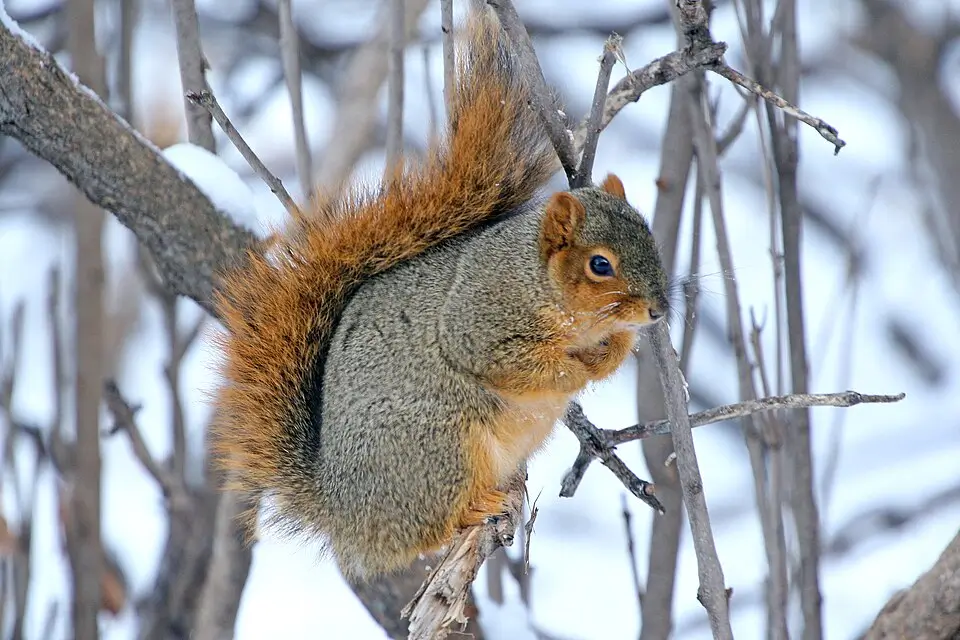
As the largest tree squirrel in North America, the fox squirrel is immediately impressive in terms of sheer physical presence. Adults typically display a robust, well-muscled body built for life in the canopy and on the ground alike. Their large, bushy tail — a hallmark of the species — serves multiple purposes: it acts as a counterbalance when leaping between branches, provides warmth during cold weather when wrapped around the body, and functions as a visual communication tool during social interactions.
One of the most remarkable characteristics of the fox squirrel is its extraordinary coat color variation. Across its range, individuals can appear in a wide spectrum of color morphs — from the classic tawny orange-and-gray combination that gives the species its common name, to jet black individuals common in parts of the South, to pale, almost silver animals in certain populations. This color polymorphism is one of the most striking examples of intraspecies variation among North American mammals and has long fascinated biologists and wildlife observers.
Fox squirrels are primarily herbivorous, with a diet centered on nuts, seeds, berries, fungi, and green plant material. Acorns from various oak species are among their most important food sources, particularly in the fall when squirrels engage in intensive scatter-hoarding — the behavior of burying individual nuts across a wide area to retrieve during leaner months. This caching behavior has an important ecological function: nuts that are never retrieved become seeds, contributing meaningfully to forest regeneration. In this way, fox squirrels serve as inadvertent but effective reforesters.
Breeding typically occurs twice per year, in winter and again in early summer, though timing can vary by latitude and local conditions. Females produce litters of two to four young, which are born helpless and fully dependent on their mother. The young develop rapidly and are typically weaned within a few months, eventually dispersing to establish their own home ranges. Fox squirrels are generally solitary animals outside of the breeding season, each individual maintaining a defined home range within suitable habitat.
Their vocalizations include a variety of chatters, barks, and tail-flagging displays used to warn of predators or communicate with rivals. Natural predators include hawks, owls, foxes, bobcats, and snakes — a diverse suite of threats that keeps fox squirrels perpetually alert and observant.
Habitat & Range
The fox squirrel enjoys one of the broadest ranges of any tree squirrel in North America, spanning from the eastern seaboard west into the Great Plains and from the Gulf Coast north into southern Canada. The species is found across much of the central and eastern United States, with its range encompassing a diverse array of landscapes.
Unlike the eastern gray squirrel, which thrives in dense, closed-canopy forests, the fox squirrel gravitates toward more open woodland environments. It is commonly associated with open oak and hickory woodlands, pine savannas, forest edges, farmstead tree lines, and riparian corridors along rivers and streams. This preference for edge habitat and open woodland gives the fox squirrel a degree of adaptability that has allowed it to persist even as landscapes have been altered by agriculture and development.
In Oklahoma — a state of remarkable ecological diversity — the fox squirrel finds a hospitable home across a wide variety of terrain. Oklahoma's geography transitions dramatically from the forested eastern regions, including the Ouachita Mountains and Ozark Plateau, to the rolling plains and river valleys of the central part of the state, and eventually to the more arid western landscapes. Fox squirrels are well-distributed across much of this range, particularly in the eastern half of the state, where mature oak and hickory woodlands provide abundant food and cover.
Oklahoma's river systems, including the Arkansas, Canadian, Cimarron, and Red Rivers, create extensive ribbons of hardwood forest and brushy bottomland that serve as prime fox squirrel habitat. These riparian corridors connect larger forest blocks and allow squirrels to disperse and colonize new areas over time.
Throughout their range, fox squirrels rely heavily on mature trees with cavities for denning. Tree cavities provide secure nesting sites for raising young and shelter from extreme weather. Where natural cavities are limited, fox squirrels will also construct leaf nests, known as dreys, in the upper branches of trees. The availability of den trees is considered a key factor in determining habitat quality for this species.
Hunting Information
The fox squirrel holds an honored place in the American small game hunting tradition. Squirrel hunting is widely regarded as one of the most accessible and enjoyable forms of small game hunting, requiring modest equipment, minimal travel, and a level of patience and woodsmanship that rewards careful, attentive hunters. For many hunters, pursuing fox squirrels in the autumn hardwoods represents their first experience afield — a foundational tradition passed from generation to generation.
In Oklahoma, the Oklahoma Department of Wildlife Conservation (ODWC) oversees the management and regulation of fox squirrel hunting, as it does for all wildlife species in the state. The ODWC provides current hunting regulations, licensing requirements, and season dates through its official resources, and all hunters are encouraged to consult the most up-to-date information directly from the department before heading afield.
Because specific season dates and license requirements can change from year to year based on population data, habitat assessments, and wildlife management priorities, hunters should always check directly with the Oklahoma Department of Wildlife Conservation for the current year's regulations. The department's official website and printed regulation guides are the authoritative sources for this information.
Fox squirrel hunting in Oklahoma typically involves still-hunting through mature hardwood forests, sitting quietly near known feeding areas such as productive mast-bearing oak trees, or slowly still-hunting along woodland edges and river bottoms. Early morning and late afternoon are generally the most productive times, as squirrels are most active during these periods, foraging for acorns, hickory nuts, and other food sources.
Hunters most commonly use small-caliber rifles such as the .22 LR or small-gauge shotguns loaded with appropriate shot sizes. Both methods are effective and offer distinct experiences — the rifle demands precision and patience, while the shotgun allows for the fast, reactive shooting that comes with hunting squirrels on the move. Fox squirrels, given their larger size compared to gray squirrels, are a satisfying quarry and provide excellent table fare.
Squirrel hunting also serves as an excellent gateway activity for introducing new hunters to the sport. The skills required — reading the woods, understanding animal behavior, moving quietly, and shooting accurately — are foundational to virtually every other form of hunting and translate directly into success in the field.
Conservation
From a conservation standpoint, the fox squirrel presents a nuanced picture. Across much of its range, the species remains common and is not considered to be at significant risk. However, certain subspecies and regional populations tell a more complicated story. The Delmarva fox squirrel (Sciurus niger cinereus), native to the Delmarva Peninsula of the eastern United States, was listed as an endangered subspecies for decades before successful conservation efforts allowed it to be removed from the endangered species list — a celebrated success story in American wildlife management.
More broadly, fox squirrel populations are influenced by the health and availability of mature woodland habitat. The loss of large, old-growth trees with natural cavities, the fragmentation of forest landscapes, and the reduction of open-structured woodland through fire suppression are among the factors that can negatively affect fox squirrel numbers in specific areas. Conservation practices that maintain diverse, structurally complex woodlands — including prescribed burning in appropriate ecosystems — benefit fox squirrels and the many other species that share their habitat.
Hunters and hunting organizations have historically played a significant role in supporting fox squirrel conservation. Hunting license fees and excise taxes collected under the Federal Aid in Wildlife Restoration Act (commonly known as the Pittman-Robertson Act) fund state wildlife agencies, habitat programs, and research efforts that benefit game and non-game species alike. In Oklahoma, the ODWC's management programs reflect a commitment to maintaining healthy, sustainable wildlife populations for current and future generations.
The fox squirrel's adaptability, relatively high reproductive rate, and broad habitat tolerances make it a resilient species capable of thriving alongside human land use when habitat quality is maintained. Responsible hunting, coupled with thoughtful land stewardship, ensures that fox squirrels will continue to animate Oklahoma's woodlands and the wider American landscape for generations to come.