Overview
Few animals are as instantly recognizable and deeply woven into the fabric of North American wildlife as the Eastern gray squirrel (Sciurus carolinensis). From the towering hardwood forests of the Appalachian Mountains to the sprawling urban parks of major cities, this remarkably adaptable rodent has made itself at home across a stunning range of environments. Whether you encounter one leaping acrobatically between oak branches in a quiet woodland or boldly raiding a backyard bird feeder, the Eastern gray squirrel commands attention with its energy, intelligence, and seemingly boundless curiosity.
For hunters, naturalists, and wildlife enthusiasts alike, the Eastern gray squirrel occupies a special place in American outdoor tradition. Squirrel hunting is widely considered one of the foundational hunting experiences on this continent — a pursuit that has introduced generations of young hunters to the woods, taught patience and woodsmanship, and put wholesome, wild protein on countless family tables. In states like Oklahoma, where diverse landscapes provide rich habitat for wildlife of all kinds, the Eastern gray squirrel represents an accessible, rewarding quarry that connects hunters to the land in a genuinely meaningful way.
This article takes a thorough look at the Eastern gray squirrel — its biology and behavior, its preferred habitats, its remarkable range, its role in the ecosystem, and what hunters and wildlife watchers in Oklahoma and beyond should know about pursuing and appreciating this iconic species.
Biological Traits
The Eastern gray squirrel belongs to the family Sciuridae, the broad family of squirrels that includes ground squirrels, chipmunks, marmots, flying squirrels, and prairie dogs. Within this family, it is classified in the genus Sciurus, placing it among the tree squirrels — animals specially adapted for life in the forest canopy.
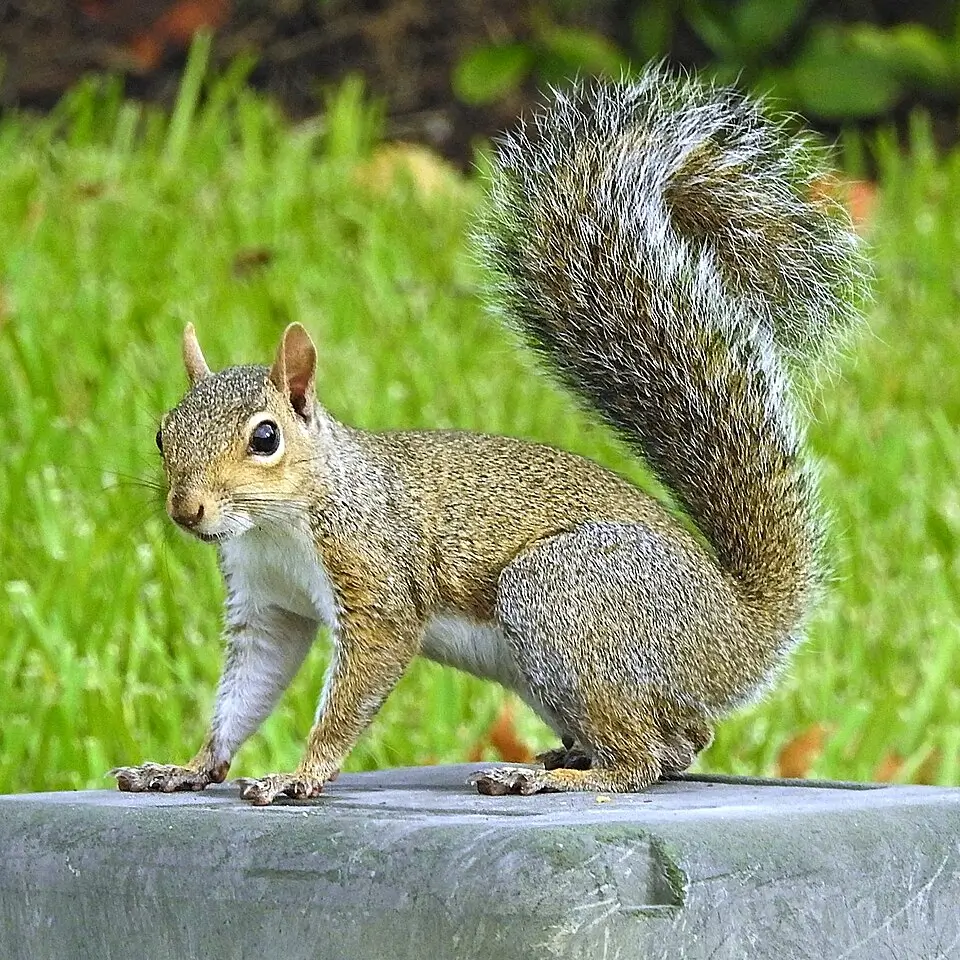
As the common name suggests, the Eastern gray squirrel displays a predominantly gray coat, typically grizzled with subtle brown tones across the back and sides. The underside is noticeably lighter, often white or pale gray. The long, bushy tail — one of the squirrel's most distinctive features — is fringed with silver-tipped hairs that give it a soft, luminous appearance. Some individuals, particularly in certain geographic populations, may display melanistic (all-black) or, more rarely, albino color morphs.
The squirrel's body is compact and built for agility. Sharp, curved claws allow it to grip bark and navigate branches with remarkable precision. Large, expressive eyes are positioned to provide a wide field of vision — a critical adaptation for detecting aerial and terrestrial predators alike. The ears are rounded and moderately sized, and the animal's keen senses of smell and hearing are essential tools in its daily survival.
Eastern gray squirrels are diurnal creatures, meaning they are most active during the daylight hours, particularly in the morning and late afternoon. Their behavior is strongly influenced by the seasons. In autumn, squirrels enter a period of intense food-gathering activity, caching nuts and seeds — particularly acorns — in scattered hiding spots across their home range. This behavior, known as scatter hoarding, is not just about personal survival; it has profound ecological consequences. Squirrels famously fail to recover a portion of their cached food, and the forgotten nuts frequently germinate, making the Eastern gray squirrel an important seed disperser and, in effect, an unintentional forester.
The diet of Sciurus carolinensis is broadly omnivorous, though it centers on seeds, nuts, and other plant matter. Acorns from various oak species form a dietary staple throughout much of the year. Hickory nuts, walnuts, beechnuts, and pecans are also eagerly consumed. Beyond nuts and seeds, gray squirrels will eat fungi, berries, flower buds, and bark. On occasion, they may supplement their diet with insects, bird eggs, or other small animal matter.
Reproduction in Eastern gray squirrels typically occurs twice annually — once in late winter or early spring, and again in midsummer. Litters generally contain two to four young, which are born hairless and entirely dependent on the mother. The young develop rapidly, and by their first autumn they are capable of caching food independently. Females typically nest in tree cavities or in large, leafy dreys — the distinctive ball-shaped nests made from wigs and leaves that are easy to spot high in the branches of deciduous trees during winter when leaves have fallen.
Habitat & Range
As its name implies, the Eastern gray squirrel's native range encompasses the eastern portion of North America. It thrives in the deciduous and mixed forests that dominate the eastern half of the continent, from southern Canada south through the eastern and central United States. The species' range extends westward into the Great Plains and into states like Oklahoma, where forest habitats are present in the eastern and central portions of the state.
The squirrel's preferred habitat is mature hardwood or mixed forest with an abundant mast-producing tree component. Oak, hickory, walnut, and pecan trees are particularly attractive because they reliably produce the calorie-dense nuts that gray squirrels depend on for food and cached winter reserves. Riparian corridors — the forested strips along rivers, creeks, and streams — also provide excellent squirrel habitat, combining dense tree cover with reliable water sources and diverse food production.
In Oklahoma, the Eastern gray squirrel is well established across the eastern and southeastern portions of the state, where the Ouachita Mountains, the Ozark Plateau, and the Cross Timbers region provide the forested, mast-rich environments this species prefers. The river bottoms of the Arkansas, Canadian, Illinois, and other major river systems support healthy squirrel populations as well. As one moves westward across Oklahoma into more open, arid landscapes, gray squirrel populations thin considerably, yielding to the Fox squirrel (Sciurus niger), which is better adapted to the scattered woodlands of the state's central and western regions.
The Eastern gray squirrel has also demonstrated a notable capacity for urban adaptation. City parks, suburban neighborhoods with large trees, and college campuses frequently harbor dense populations of gray squirrels that have become accustomed to human proximity. This adaptability has contributed to the species' success and, in some regions outside its native range where it has been introduced, has made it a controversial invasive species.
Hunting Information
Squirrel hunting holds a cherished position in American hunting culture, and with good reason. It is often the first hunting experience for young sportsmen and sportswomen, offering accessible, year-round (in many states) action in familiar woodlands. The equipment requirements are modest — a .22 rimfire rifle or a light-gauge shotgun are traditional tools of the trade — and the challenge of locating and harvesting squirrels develops genuine woodsmanship skills that translate to virtually every other form of hunting.
In Oklahoma, squirrel hunting falls under the regulatory oversight of the Oklahoma Department of Wildlife Conservation. Hunters seeking to pursue Eastern gray squirrels in the state should consult the most current Oklahoma Hunting Regulations for season dates, bag limits, and any applicable licensing requirements, as these details can change from year to year. The Oklahoma Department of Wildlife Conservation publishes comprehensive, up-to-date hunting regulations and makes a wealth of hunting resources available through its official channels.
Oklahoma's public lands offer numerous opportunities for squirrel hunters. The Ouachita National Forest, the various Wildlife Management Areas scattered across eastern Oklahoma, and the state's many river bottom tracts all provide access to productive squirrel habitat. The Oklahoma Land Access Program is another resource hunters can explore to find permission-granted access to private lands that might otherwise be unavailable.
Hunting gray squirrels requires patience and attentiveness. Successful hunters learn to read the forest, listening for the sounds of cutting — the rapid clipping noise squirrels make when feeding on nuts — and watching for movement high in the canopy. Still-hunting, the practice of moving slowly and quietly through the woods, alternating with long periods of motionless observation, is a particularly effective technique. Early morning, when squirrels are most active and feeding energetically before the heat of the day, is generally the most productive time to be in the woods.
Conservation
The Eastern gray squirrel is currently classified as a species of Least Concern by wildlife authorities, reflecting its broad range, high reproductive capacity, and ability to thrive in a variety of habitat conditions including human-modified landscapes. Healthy populations exist across the majority of the species' native range.
That said, like all wildlife, the Eastern gray squirrel benefits from thoughtful habitat stewardship. The preservation and management of mature hardwood forests — particularly stands of oak, hickory, and walnut — is the single most impactful conservation measure for this species. In agricultural and suburban landscapes, maintaining woodlots, hedgerows, and riparian forest buffers provides vital habitat connectivity that allows squirrel populations to persist and move freely.
From an ecological standpoint, the Eastern gray squirrel's role as a seed disperser makes it a valuable contributor to forest regeneration and health. By caching and forgetting acorns and other tree seeds, squirrels actively plant the next generation of the forest. This relationship between squirrel and oak tree represents one of the more elegant examples of mutualism found in North American ecosystems.
Regulated hunting, managed through the careful oversight of state wildlife agencies like the Oklahoma Department of Wildlife Conservation, has long been compatible with healthy squirrel populations. License revenues and excise taxes paid by hunters directly fund conservation programs, habitat restoration, and wildlife research — ensuring that both hunter and non-hunter can continue to enjoy and benefit from thriving squirrel populations for generations to come.