Overview
Few animals embody the spirit of the American wilderness quite like the coyote. Known scientifically as Canis latrans — a Latin phrase meaning "barking dog" — the coyote is one of the most recognizable, adaptable, and ecologically significant mammals on the North American continent. From the sweeping prairies of Oklahoma to the dense forests of the Eastern Seaboard and the sun-baked deserts of the Southwest, this remarkable canid has not only survived alongside human civilization but has actively thrived in its presence. The coyote's resilience, intelligence, and behavioral flexibility have made it a subject of fascination for wildlife biologists, a cultural icon in Indigenous mythology, and a popular quarry for hunters throughout the United States, including right here in the Sooner State.
Whether you encounter a coyote trotting across a foggy Oklahoma meadow at dawn or hear its unmistakable chorus of yips and howls echoing across the night sky, there is no denying the power and presence of this animal. This article explores the biology, range, habits, and hunting opportunities associated with the coyote, with particular attention to what hunters and wildlife enthusiasts in Oklahoma can expect when pursuing this challenging and rewarding species.
Biological Traits
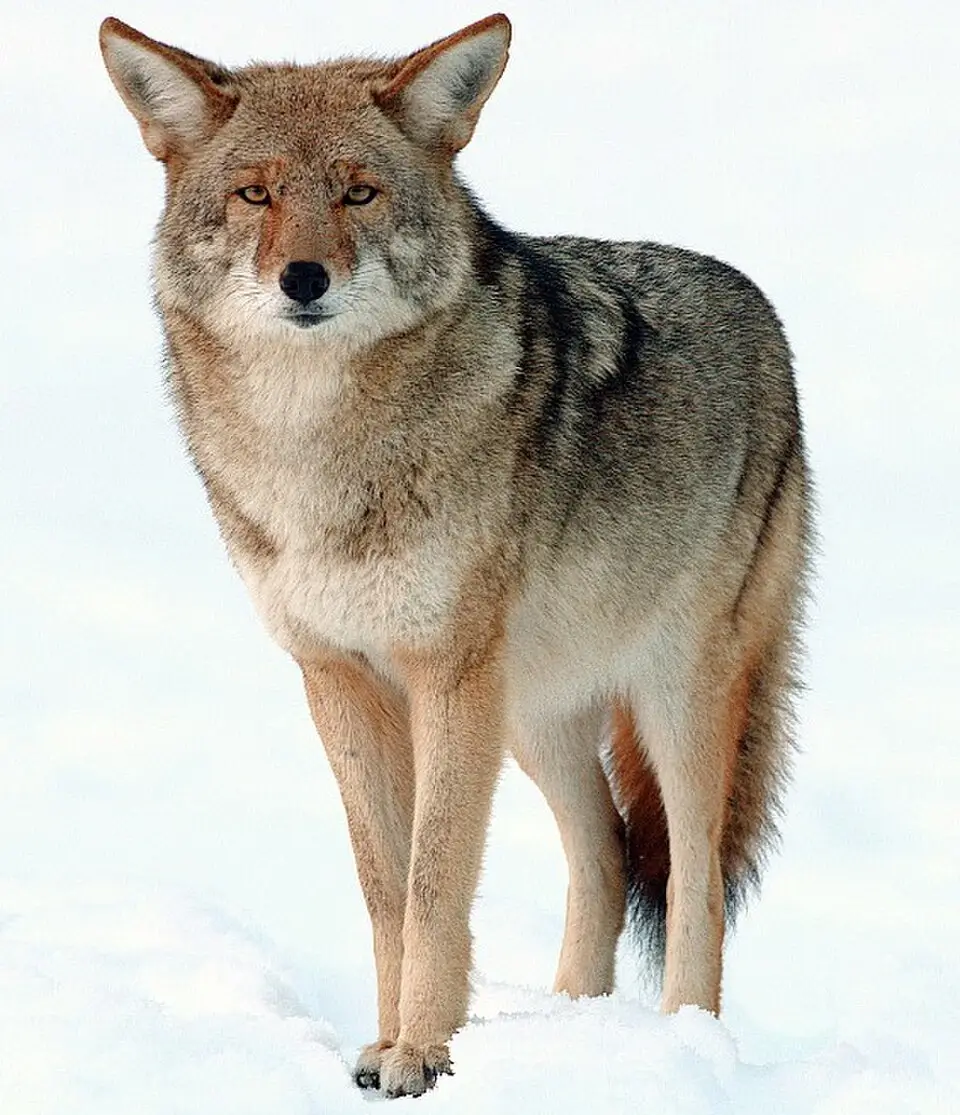
The coyote (Canis latrans) is a member of the family Canidae, closely related to domestic dogs, wolves, and foxes. In terms of physical appearance, coyotes are medium-sized carnivores, typically displaying a lean but muscular build well-suited to long-distance travel and pursuit hunting. Their coats vary considerably depending on geographic location, ranging from grayish-brown to reddish-tan, often with lighter undersides and a characteristic bushy tail tipped in black. Unlike wolves, coyotes tend to carry their tails low while running — a reliable field identification marker.
One of the most impressive aspects of coyote biology is its highly developed sensory system. Coyotes possess acute hearing, an exceptional sense of smell, and sharp eyesight — a combination that makes them extraordinarily effective predators and notoriously difficult to approach undetected. These same qualities make hunting them a genuine test of woodsmanship and fieldcraft.
Coyotes are highly opportunistic omnivores. While they prey primarily on small mammals such as rabbits, mice, voles, and ground squirrels, they will readily consume birds, reptiles, fruits, berries, insects, carrion, and even human refuse when available. This dietary flexibility is a key factor in their remarkable success across diverse environments. In rural agricultural landscapes like much of Oklahoma, coyotes may also target poultry flocks, young livestock, and other farm animals, which has historically placed them in conflict with farmers and ranchers.
From a reproductive standpoint, coyotes are prolific breeders. They typically mate once per year during late winter, with pups born in spring after a gestation period of roughly 60 to 63 days. Litter sizes can vary significantly, and research has shown a fascinating biological phenomenon: when coyote populations are reduced through hunting or trapping, females often respond by producing larger litters — a natural compensatory mechanism that helps the population stabilize. This behavior has significant implications for wildlife management strategies.
Coyotes are also known for their complex social structures. While they are often observed alone, they can form family groups and small packs, particularly during the denning season. Communication plays a central role in coyote society, and their vocalizations — a mix of howls, yips, barks, and whines — serve to define territory, coordinate group activities, and maintain social bonds. This vocal nature is one reason why call-and-response hunting techniques are so effective against them.
Habitat & Range
Historically, the coyote's range was centered on the Great Plains and the arid West. However, over the past century and a half, the species has expanded dramatically, colonizing virtually every habitat type across North America, from the tundra of Alaska and Canada to the subtropics of Central America, and from the Pacific Coast to the Atlantic shoreline. This expansion is one of the most remarkable range increases ever documented in a large North American mammal.
The state of Oklahoma sits squarely within the heart of coyote country. As a landlocked state in the South Central and Southwestern regions of the United States, bordered by Texas, Kansas, Missouri, Arkansas, New Mexico, and Colorado, Oklahoma offers an extraordinarily diverse array of landscapes — and coyotes have adapted to thrive in virtually all of them. The rolling tallgrass prairies of northeastern Oklahoma, the Cross Timbers woodlands of the central part of the state, the rugged Ouachita and Wichita Mountains, the shortgrass plains of the Panhandle, and the riparian corridors along the Arkansas and Red Rivers all provide suitable habitat for this versatile predator.
Coyotes favor habitat edges — transitional zones between open country and heavier cover — where they can exploit both environments for food and denning opportunities. Agricultural land interspersed with woodlots, creek bottoms, and brushy draws is ideal coyote country, and Oklahoma has this type of terrain in abundance. Their ability to thrive in fragmented and human-modified landscapes means that coyotes are present not only in Oklahoma's rural areas but also on the outskirts of its cities and towns.
Hunting Information
Coyote hunting is a deeply rooted tradition in Oklahoma and across the broader American West, combining elements of woodcraft, wildlife knowledge, and patience into one of the most challenging and satisfying pursuits available to hunters. The Oklahoma Department of Wildlife Conservation oversees hunting regulations in the state, and hunters are encouraged to consult the official Oklahoma hunting regulations for the most current and specific information regarding licenses, seasons, and legal methods of take.
One of the appealing aspects of coyote hunting in Oklahoma is the accessibility of the pursuit. Coyotes can be found in virtually every county in the state, from the agricultural flatlands of the west to the forested hills of the southeast. This widespread distribution means that most hunters do not need to travel far to find productive coyote country, and many landowners — particularly farmers and ranchers dealing with livestock predation concerns — actively welcome coyote hunters on their property.
Calling is perhaps the most exciting and effective method for hunting coyotes. Hunters use a variety of calls — including hand-operated mouth calls and electronic callers — to mimic the distress cries of prey animals such as rabbits or the vocalizations of other coyotes. A well-executed calling sequence can bring a cautious coyote charging in from hundreds of yards away, creating heart-pounding encounters in the field. Learning to read coyote behavior and adapt calling strategies to changing wind conditions, terrain, and time of day is a skill that experienced hunters develop over years of fieldwork.
Stand selection and wind management are critical elements of a successful coyote hunt. Because of their keen senses, coyotes will detect human scent at considerable distances, and hunters must carefully position themselves downwind of expected approach routes. Concealment — whether through camouflage clothing, natural cover, or pop-up blinds — further improves the odds of a successful encounter.
Both daytime and nighttime coyote hunting are popular, with each offering its own unique challenges and rewards. Night hunting, where legal under applicable state regulations, can be particularly productive, as coyotes are naturally more active after dark. Hunters pursuing coyotes at night often employ specialized lighting equipment to spot and identify animals at range.
For newer hunters looking to try coyote hunting in Oklahoma, reaching out to the Oklahoma Department of Wildlife Conservation for guidance on regulations, licensing requirements, and public land hunting opportunities is an excellent first step.
Conservation
Despite — or perhaps because of — their long history of conflict with humans, coyotes represent a genuine conservation success story. Unlike many large predators that have declined sharply as a result of habitat loss and human persecution, the coyote has expanded its range and population continuously over the past century. This success speaks to the species' extraordinary biological resilience and adaptability.
From an ecological perspective, coyotes play a meaningful role in the health of the ecosystems they inhabit. As mesopredators, they help regulate populations of rodents, rabbits, and other small mammals, contributing to the balance of prey communities. Their presence can also influence the behavior and distribution of other wildlife species, creating cascading effects throughout the food web.
Responsible hunting of coyotes contributes to wildlife management efforts and helps maintain healthy predator-prey dynamics in areas where coyote populations might otherwise grow unchecked. Oklahoma's wildlife management framework, administered by the Oklahoma Department of Wildlife Conservation, provides the regulatory foundation for sustainable hunting practices across all game species in the state.
For hunters, conservationists, and wildlife enthusiasts alike, the coyote represents something uniquely American — a wild, free-ranging predator that has adapted to share the land with us and, in doing so, has woven itself deeply into the fabric of our natural and cultural heritage.