Overview
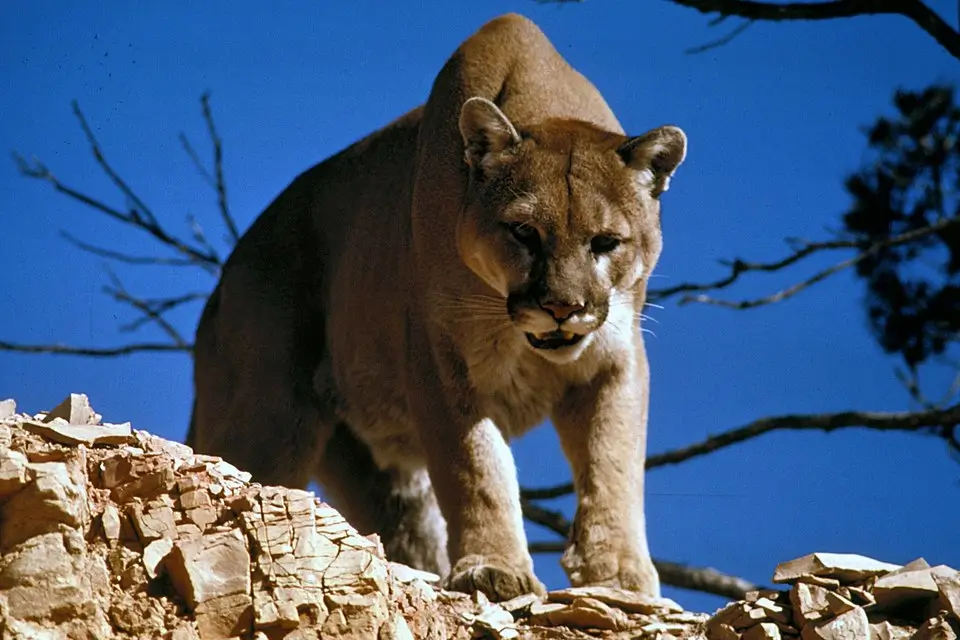
Few animals capture the imagination quite like the cougar. Known by more common names than perhaps any other mammal in the Western Hemisphere — mountain lion, puma, panther, catamount — this magnificent wild cat has prowled the landscapes of the Americas for millennia. Sleek, powerful, and supremely adapted to its environment, the cougar (Puma concolor) represents one of nature's most extraordinary predators. From the snow-dusted peaks of the Canadian Rockies to the dense subtropical swamps of Florida, and from the rugged canyon lands of the American Southwest to the sweeping grasslands of Patagonia, this animal's range is nothing short of remarkable. For wildlife enthusiasts, hunters, and conservationists alike, the cougar stands as a symbol of wildness, resilience, and the enduring power of nature.
In Oklahoma, the cougar occupies a particularly fascinating status. As a landlocked state sitting at the crossroads of the South Central and Southwestern United States, Oklahoma provides a complex mosaic of habitats that occasionally intersects with the wide-ranging movements of this great cat. Understanding the cougar — its biology, its behavior, its ecological role, and its relationship to human activity — is essential for anyone who appreciates the rich wildlife heritage of the region.
Biological Traits
The cougar (Puma concolor) is the largest member of the subfamily Felinae, which distinguishes it from the so-called "big cats" of the genus Panthera, such as lions, tigers, and leopards. Despite its impressive size, the cougar is more closely related to smaller domestic cats than it is to a lion. This classification means that, unlike a lion or leopard, a cougar cannot roar. Instead, it communicates through a remarkable repertoire of sounds — chirps, whistles, purrs, growls, and a haunting, high-pitched scream that has startled countless campers and hikers over the years.
Adult male cougars are considerably larger than females, a trait known as sexual dimorphism. Males can weigh anywhere from roughly 115 to over 200 pounds in some regions, while females are typically lighter and more slender. The body is built for explosive athleticism — long, muscular limbs, a deep chest, a small rounded head with powerful jaws, and a long, thick tail that aids in balance during high-speed pursuits. The coat is typically a tawny, uniform tan or buff color across most of the body, fading to lighter tones on the underside, with darker markings around the face. Kittens are born with spots, which gradually fade as they mature.
Cougars are obligate carnivores, meaning their diet consists entirely of meat. They are classic ambush predators, relying on stealth, patience, and explosive short bursts of speed rather than endurance chasing. Deer are the primary prey species across most of their range, but they are highly adaptable hunters capable of taking everything from elk and bighorn sheep to smaller mammals such as raccoons, rabbits, and porcupines. Their hunting method typically involves a stalking approach followed by a swift, powerful leap onto the prey's back, delivering a precise bite to the base of the skull or throat.
Reproduction in cougars is relatively slow compared to many other wildlife species. Females, called queens or lionesses depending on the region, reach sexual maturity between two and three years of age. They have no fixed breeding season, though births tend to peak in late winter and spring in many areas. Litter sizes typically range from one to four kittens. The mother raises the young entirely on her own, with no assistance from the male. Kittens stay with their mother for up to two years, learning critical hunting skills before striking out to establish their own territories. This extended period of maternal dependence means that cougar populations recover more slowly from pressures like habitat loss than faster-reproducing species.
One of the cougar's most defining characteristics is its extraordinary territorial behavior. Males in particular maintain vast home ranges that can span hundreds of square miles. These territories are marked with scrapes — piles of leaves, dirt, and debris scratched together and scent-marked — as well as claw marks on trees. Females typically occupy smaller ranges that may overlap with those of a resident male. Young males dispersing from their mothers' ranges can travel astonishing distances, sometimes hundreds of miles, in search of unoccupied territory. It is precisely this dispersal behavior that occasionally brings cougars into unexpected contact with human communities and into states like Oklahoma.
Habitat and Range
The cougar boasts the largest natural range of any terrestrial mammal in the Western Hemisphere, stretching from the Yukon Territory of Canada all the way to the southern tip of South America. Within the continental United States, established breeding populations are primarily found in the western states — states like California, Colorado, Utah, Montana, Idaho, Wyoming, Washington, Oregon, Nevada, and Arizona. The iconic Florida panther (Puma concolor coryi) represents a small, critically important population persisting in the wilds of southern Florida.
The cougar's habitat flexibility is truly remarkable. It thrives in coniferous forests, tropical rainforests, high-altitude grasslands, deserts, swamps, and everything in between. The common thread across all these environments is the availability of adequate prey and sufficient cover for stalking and resting. Rocky terrain, dense brush, and forested areas with good deer populations tend to be favored.
In Oklahoma, cougars are not considered to have an established, self-sustaining resident population. However, Oklahoma's diverse landscape — encompassing the rugged Ouachita Mountains in the southeast, the rolling Ozark highlands in the northeast, the mixed-grass prairies of the west, the Red River valley along the Texas border, and the canyon lands of the panhandle — theoretically offers suitable cougar habitat in several regions. Confirmed cougar sightings in Oklahoma have been documented over the years, largely attributed to young dispersing males traveling eastward from established western populations. These wide-ranging individuals can traverse enormous distances and occasionally appear in states well outside the core of the species' current range. Oklahoma's proximity to Texas, which does have a resident cougar population in the Trans-Pecos region and the Hill Country, makes such appearances plausible.
Hunting Information
In states with established cougar populations, regulated hunting has long been a management tool used by wildlife agencies to help maintain healthy predator-prey dynamics, reduce conflicts between cougars and livestock or humans, and generate conservation funding through license sales. States such as Colorado, Idaho, Montana, Oregon, Washington, and Utah have structured cougar hunting seasons managed by their respective wildlife agencies.
For Oklahoma specifically, the Oklahoma Department of Wildlife Conservation (ODWC) serves as the state's official wildlife management authority, overseeing hunting regulations, licensing, and conservation programs. Because cougars are not recognized as having an established resident population in Oklahoma, there is no regulated cougar hunting season in the state. Anyone interested in pursuing cougars through legal, regulated hunting would need to travel to one of the western states where seasons are established and consult the regulations issued by that state's wildlife agency.
It is always advisable for hunters and outdoor enthusiasts in Oklahoma to stay informed through the ODWC's official resources, including published hunting regulations and official agency communications, for any updates regarding cougar status in the state. Wildlife populations and their management classifications can change over time as new data becomes available.
Conservation
The cougar's conservation story is one of both challenge and resilience. Historically, cougars were extirpated from the vast majority of the eastern United States through a combination of unregulated hunting, predator control programs, and habitat destruction that began in earnest during the European settlement era. By the early twentieth century, cougars had largely disappeared from the eastern two-thirds of the country, surviving primarily in the remote wilderness areas of the American West and in the dwindling wildlands of southern Florida.
Today, western cougar populations are generally considered stable, a testament to the effectiveness of modern wildlife management, habitat conservation efforts, and the species' own remarkable adaptability. Hunting regulations in western states are carefully calibrated based on population surveys, harvest data, and ongoing research to ensure sustainable management. In Florida, intensive conservation efforts have helped stabilize the panther population, though it remains one of the most endangered mammals in North America.
Cougars play a vital ecological role as apex predators. By regulating deer and other prey populations, they contribute to the health and balance of entire ecosystems — reducing overgrazing, supporting vegetation recovery, and influencing the behavior and distribution of prey species in ways that cascade through the food web. Their presence or absence can have profound effects on the landscapes they inhabit.
Public attitudes toward cougars have evolved significantly in recent decades. While conflict with livestock operations remains a legitimate concern in some areas, many ranchers, farmers, and rural communities have developed greater appreciation for coexistence strategies. Wildlife agencies across the country invest in research, public education, and conflict-mitigation programs to foster a balanced relationship between humans and this magnificent predator.
For wildlife enthusiasts in Oklahoma and across the country, the cougar represents something profound: the persistence of wildness in an increasingly human-dominated world. Whether glimpsed as a fleeting shadow at dusk or tracked across a remote canyon by a skilled hunter, the cougar commands respect, admiration, and a deep appreciation for the natural world it so masterfully inhabits.