Overview
Few animals capture the spirit of American wildlife quite like the cottontail rabbit. With its distinctive fluffy white tail, twitching nose, and lightning-quick reflexes, the cottontail is one of the most recognizable and widely distributed mammals on the continent. Whether darting through a brushy hedgerow at the edge of a farm field, bounding across an open meadow at dusk, or freezing motionless in a thicket as a predator passes nearby, the cottontail rabbit is a constant and cherished presence in the American outdoors.
Belonging to the genus Sylvilagus, cottontail rabbits represent one of the most successful rabbit lineages in the Western Hemisphere. They are found from Canada all the way to South America, inhabiting an extraordinary variety of environments and demonstrating a remarkable adaptability that has allowed them to thrive even in landscapes heavily modified by human activity. For hunters, naturalists, wildlife photographers, and casual backyard observers alike, the cottontail occupies a special place in the outdoor tradition.
In Oklahoma, a state renowned for its diverse landscapes — stretching from the rolling prairies of the west to the dense Ouachita forests of the southeast — the cottontail rabbit is both an ecological cornerstone and a beloved small game target. Understanding this animal's biology, behavior, and habitat requirements enriches the experience of every person who encounters one, whether through a pair of binoculars or over the barrel of a shotgun.
Biological Traits
The cottontail rabbit belongs to the family Leporidae, the group that includes all rabbits and hares. Within this family, the genus Sylvilagus contains numerous distinct species spread across North and South America. In North America, several species are recognized, including the Eastern cottontail (Sylvilagus floridanus), the desert cottontail (Sylvilagus audubonii), the New England cottontail (Sylvilagus transitionalis), the mountain cottontail (Sylvilagus nuttallii), and several others. In Oklahoma, the Eastern cottontail is the most commonly encountered species, though range maps suggest some overlap with related species in certain parts of the state.
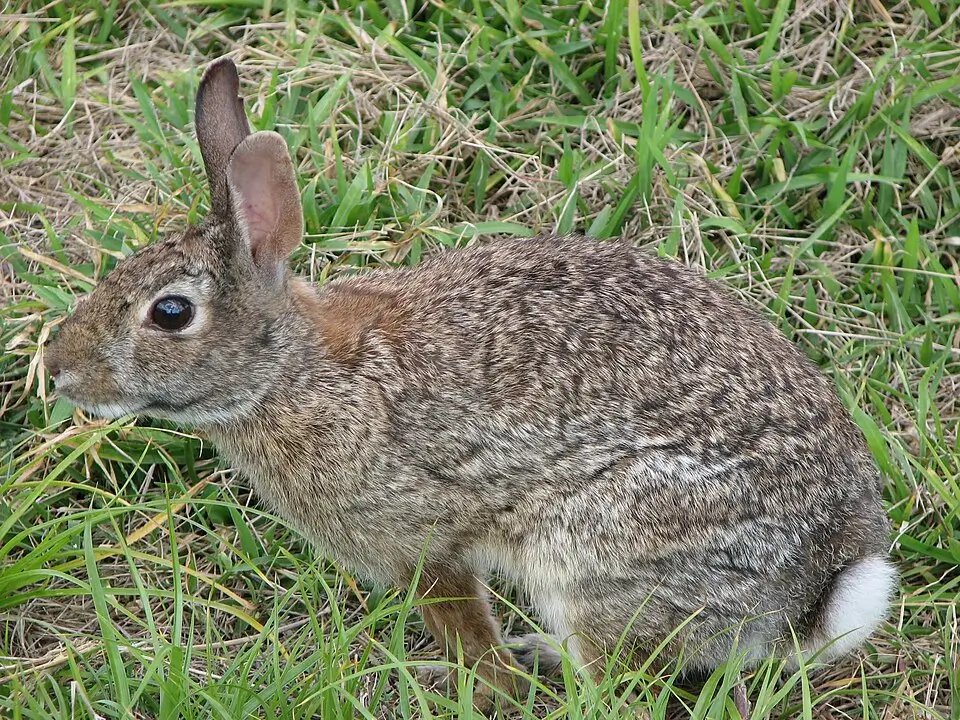
The name "cottontail" derives from the animal's most striking visual feature: a short, rounded tail with a distinctly white underside that flashes conspicuously when the rabbit runs. This telltale flash of white is often the first — and sometimes only — glimpse a hunter or hiker gets of a cottontail before it disappears into cover.
Cottontails are medium-sized lagomorphs. Adults typically weigh between two and four pounds, with body lengths ranging from roughly fourteen to nineteen inches, though exact measurements vary by species and geographic location. Their fur coloring is generally a grayish-brown or tawny hue on the back and sides, blending beautifully with the dried grasses, leaf litter, and brush that characterize their preferred habitats. The belly is typically white or pale, and many individuals display a rusty-orange patch at the nape of the neck.
Like all lagomorphs, cottontails are not rodents, despite a superficial resemblance to mice and rats. They possess a distinctive dental formula that includes a second, small pair of upper incisors directly behind the larger front pair — a feature that distinguishes them from true rodents. Their large, powerful hind legs are built for explosive acceleration and rapid changes of direction, making them formidable escape artists in the field.
One of the most fascinating aspects of cottontail biology is their reproductive strategy. Cottontails are prolific breeders, capable of producing multiple litters per year during the warmer months. Females, called does, can begin breeding at a very young age and may produce anywhere from three to seven young per litter. The young, called kittens or kits, are born in shallow nests lined with grass and fur. Unlike hares, which are born fully furred and with open eyes, cottontail kits are altricial — born blind, hairless, and entirely dependent on their mother. They develop rapidly, however, and are typically weaned and independent within a few weeks.
This high reproductive rate is not accidental. Cottontail rabbits occupy a critical position near the base of most food chains where they live. They are preyed upon by a vast array of predators, including hawks, owls, foxes, coyotes, bobcats, snakes, and domestic dogs and cats. Their ability to reproduce quickly compensates for this heavy predation pressure, ensuring that populations can rebound rapidly even after significant losses.
Cottontails are crepuscular and nocturnal animals by nature, meaning they are most active during the low-light hours of dawn and dusk, though they may also move during the day — particularly in winter or in areas with lower predator pressure. Their senses are extraordinarily well developed. Their large eyes are positioned on the sides of their heads, giving them a nearly panoramic field of vision that makes it difficult for predators to approach undetected. Their long ears, while not as exaggerated as those of jackrabbits or hares, provide acute hearing across a wide range of frequencies.
Habitat & Range
The genus Sylvilagus is impressively wide-ranging, with species found across virtually every major habitat type in the Americas. In the United States, cottontails are common across most of the country, from the Atlantic coast to the Great Plains and into the intermountain West.
Cottontails tend to favor edge habitats — the transitional zones between open areas and dense cover. Brushy fence lines, overgrown fields, woodland margins, shrubby creek bottoms, and areas with dense thickets of briars or shrubs all provide ideal conditions. This preference for edge habitat is driven by a need to balance two competing demands: access to open foraging areas where grasses, forbs, and agricultural crops provide food, and proximity to dense cover that offers protection from predators.
Oklahoma's varied landscape makes it exceptional cottontail country. The state encompasses multiple distinct ecological regions, including the Cross Timbers, the Osage Plains, the Red Bed Plains, the Ouachita Mountains, and the High Plains of the Panhandle. Each of these regions offers different but often suitable habitats for cottontail rabbits. The brushy edges of Oklahoma's agricultural lands — particularly fields bordered by native grass, cedar thickets, or riparian shrubs — can support healthy cottontail populations. River bottoms lined with dense vegetation, including willows, cottonwoods, and stands of native shrubs, are particularly productive habitats.
Cottontails do not dig their own burrows in most cases. Instead, they rely on natural depressions, brush piles, hollow logs, and the abandoned burrows of other animals such as groundhogs for shelter and escape cover. In Oklahoma, the availability of such cover varies considerably by region, and habitat management efforts — including the creation and maintenance of brush piles, native shrub plantings, and reduced mowing along field edges — can significantly benefit local cottontail populations.
Hunting Information
The cottontail rabbit holds a storied place in American hunting tradition. For generations, rabbit hunting has served as an accessible and enjoyable introduction to the outdoors for young hunters, offering fast-paced action and a tangible connection to the land. It requires minimal equipment, can be practiced on relatively small parcels of land, and provides excellent table fare.
Hunters typically pursue cottontails by walking slowly through suitable habitat and flushing the rabbits from their hiding spots, or by using dogs — particularly beagles — whose exceptional nose and musical voices make them legendary rabbit hunters. The sound of a beagle pack working a fresh rabbit track through a brushy hillside is one of the iconic sounds of American small game hunting.
In Oklahoma, cottontail rabbit hunting falls under the jurisdiction of the Oklahoma Department of Wildlife Conservation. Oklahoma is a state with a rich hunting heritage and a diverse array of public lands available to hunters, managed through programs such as the Oklahoma Land Access Program, which aims to connect hunters with available properties. Hunters interested in pursuing cottontails in Oklahoma are strongly encouraged to consult the Oklahoma Department of Wildlife Conservation's current hunting regulations for the most accurate and up-to-date information regarding season dates, bag limits, and licensing requirements, as these details can change from year to year.
Common hunting methods include still-hunting on foot with a .22 rimfire rifle or a small-gauge shotgun, as well as hunting with trained dogs. Cold, clear winter days following a fresh snowfall are often considered prime conditions for rabbit hunting, as tracks in the snow can reveal rabbit activity and help hunters locate productive areas.
Conservation
Despite their abundance across much of their range, cottontail rabbits have experienced population declines in some regions, particularly in areas where habitat quality has decreased due to changes in land use, agricultural intensification, and the elimination of brushy cover. The loss of hedgerows, field edges, brush piles, and shrubby habitat is among the most significant factors affecting cottontail populations at a landscape level.
Conservation organizations, state wildlife agencies, and private landowners can all play a meaningful role in supporting healthy cottontail populations. Habitat management practices such as maintaining native shrub borders, creating brush piles from downed timber, planting native warm-season grasses, and minimizing the mowing of field edges during the breeding season all contribute positively to cottontail habitat quality.
Hunting itself, when conducted within the framework of regulated seasons and bag limits established by state wildlife agencies, plays an important role in wildlife conservation. License fees and excise taxes on sporting equipment — collected under the Federal Aid in Wildlife Restoration Act, commonly known as the Pittman-Robertson Act — fund critical wildlife management and habitat restoration programs across the country, benefiting cottontails and countless other species.
The cottontail rabbit's resilience and adaptability give cause for optimism. With thoughtful habitat stewardship and well-managed hunting programs, this beloved small game animal can continue to thrive across the American landscape, including the diverse and beautiful state of Oklahoma, for generations to come.