Overview
Few sights in the natural world are as iconic as a V-formation of Canada geese cutting across an autumn sky, their resonant honking echoing across fields and wetlands. The Canada goose (Branta canadensis) is one of the most recognizable and celebrated birds in all of North America. Whether you encounter them gliding gracefully across a quiet lake, grazing in open meadows, or passing overhead during their seasonal migrations, these birds command attention and inspire a deep sense of connection to the rhythms of the natural world.
For hunters, wildlife enthusiasts, and conservationists alike, the Canada goose holds a special place of reverence. As a game bird with a rich hunting tradition, and as a conservation success story that speaks to the power of thoughtful wildlife management, the Canada goose is truly a species worth knowing intimately. For residents of Oklahoma — a state that lies along important migratory corridors and offers diverse waterfowl habitat — the Canada goose is a particularly meaningful part of the outdoor experience.
This article explores the biology, habitat, range, hunting traditions, and conservation history of this remarkable bird, with a specific look at what the species means to hunters and wildlife lovers in the Sooner State.
Biological Traits
The Canada goose (Branta canadensis) belongs to the family Anatidae, which encompasses all ducks, geese, and swans. It is one of the largest members of the genus Branta, a group commonly referred to as the "black geese" due to their characteristic dark plumage patterns.
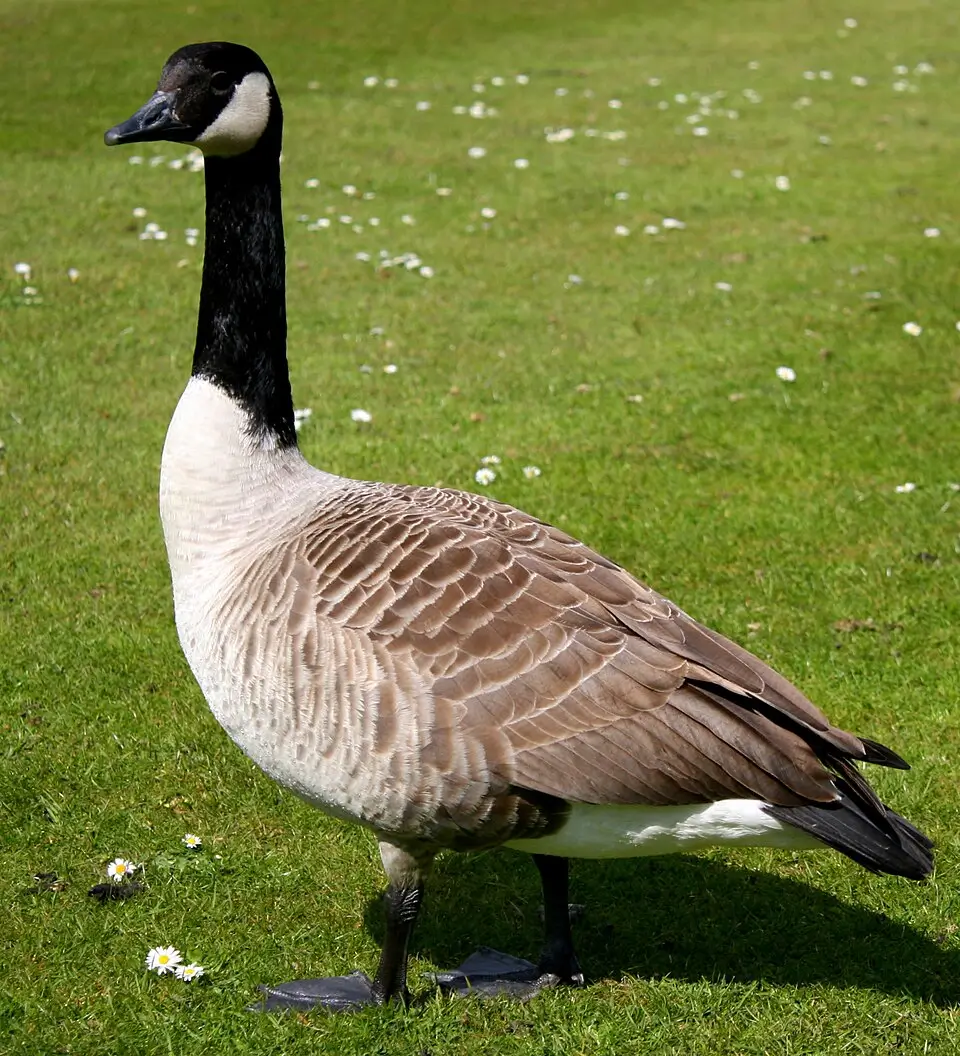
One of the most distinctive features of the Canada goose is its bold coloration. Adults display a striking black head and neck, a long black bill, and a signature white chin patch — often called a "chinstrap" — that extends from cheek to cheek beneath the throat. The body is primarily brown on the back and wings, with a lighter, often buff or cream-colored breast and belly. The tail and rump are black, contrasted sharply by white undertail coverts that are clearly visible in flight.
Canada geese are sizable birds. Depending on the subspecies, adults can weigh anywhere from just a few pounds in the smaller races to well over 20 pounds in the larger ones. Branta canadensis actually encompasses multiple recognized subspecies, which vary considerably in body size, though all share the classic black-and-white head pattern. Wingspan can be substantial, making these birds impressive in flight.
These geese are well known for their vocalizations. The classic "honk" of a Canada goose is one of the most immediately recognizable sounds in the avian world. Birds communicate constantly within flocks, using a variety of calls for coordination during flight, signaling danger, maintaining pair bonds, and keeping family groups together.
Canada geese are monogamous and typically form long-term pair bonds. Nesting generally occurs in early spring, with females selecting nest sites near water — often on slightly elevated ground with good visibility for predator detection. The female incubates a clutch of eggs while the male stands guard nearby. Goslings are precocial, meaning they hatch covered in down and are capable of walking, swimming, and feeding shortly after birth. Family units remain tightly bonded, with both parents actively protecting their young.
The species is also known for an impressive capacity for learning and adaptability. Canada geese have demonstrated a remarkable ability to thrive in a wide variety of environments, including heavily modified human landscapes such as golf courses, parks, airports, and agricultural fields. This adaptability has been both a triumph for the species and a point of ongoing discussion among wildlife managers.
Habitat & Range
The Canada goose is native to North America and boasts one of the broadest distributions of any waterfowl species on the continent. Historically, the species bred across the northern reaches of North America, from Alaska and Canada southward into the northern United States, and wintered across the southern and central portions of the continent.
Today, Canada geese can be found in every contiguous U.S. state and in much of Canada throughout the year. Some populations are highly migratory, traveling thousands of miles between breeding and wintering grounds along well-established flyways. Others — often referred to as "resident" or "giant" Canada geese — have established year-round populations in locations far south of traditional breeding ranges, taking advantage of urban green spaces, agricultural lands, and managed water bodies.
In Oklahoma, Canada geese are a familiar sight during the fall and winter months, as migratory birds move through the state following the Central Flyway. Oklahoma's geography, situated in the south-central United States and bordered by major river systems and reservoirs, makes it an important resting and feeding area for waterfowl traveling between northern breeding grounds and southern wintering areas. The state's varied landscape — including the eastern woodlands, the rolling plains of central Oklahoma, the shortgrass prairies of the Panhandle, and the river bottoms of the Red and Arkansas rivers — provides a mosaic of habitat types that can support geese throughout the season.
Canada geese are strongly associated with water, typically favoring areas near lakes, rivers, reservoirs, marshes, and wetlands. However, they frequently feed in adjacent upland areas, particularly in agricultural fields where corn, wheat, soybeans, and other grains provide abundant food resources. This combination of accessible water for resting and loafing, and open agricultural land for feeding, makes much of Oklahoma's landscape highly suitable for wintering Canada geese.
Hunting Information
Canada goose hunting is a beloved tradition across North America, representing one of the most popular and exciting forms of waterfowl hunting available to sportsmen and women. The pursuit of Canada geese brings together elements of scouting, calling, decoy placement, and skilled shooting in a way that makes it a deeply engaging and rewarding outdoor experience.
Hunters typically pursue Canada geese in field settings — setting large spreads of full-body or shell decoys in harvested grain fields — or in water setups near lakes, rivers, and marshes. Calling is an essential skill, with hunters using a variety of specialized goose calls to mimic the vocalizations of feeding and resting birds, drawing in circling flocks from considerable distances. Layout blinds, pit blinds, and natural vegetation concealment are all commonly used to hide hunters within decoy spreads.
In Oklahoma, waterfowl hunting falls under the jurisdiction of the Oklahoma Department of Wildlife Conservation (ODWC). The ODWC oversees hunting seasons, licensing requirements, and regulations for all migratory game birds, including Canada geese. Hunters are encouraged to visit the official ODWC website and consult the current year's Oklahoma Hunting Regulations for the most accurate and up-to-date information regarding season dates, bag limits, zone boundaries, and licensing requirements, as these details are subject to change from year to year.
It is important to note that Canada goose hunting in the United States is regulated not only at the state level but also federally, as migratory birds are protected under the Migratory Bird Treaty Act. All waterfowl hunters are required to comply with both federal and state regulations, and federal duck stamps are among the documentation requirements for waterfowl hunters. Hunters should always verify current requirements with the ODWC and the U.S. Fish and Wildlife Service before heading afield.
Oklahoma's position along the Central Flyway makes it a prime destination for goose hunting, and many hunters find success pursuing Canada geese alongside snow geese, white-fronted geese, and other waterfowl species during the season. Public land opportunities, as well as private land programs like the Oklahoma Land Access Program administered by the ODWC, can provide hunters with access to productive hunting areas throughout the state.
Conservation
The conservation story of the Canada goose is one of the great wildlife management successes of the 20th century. By the mid-1900s, some subspecies — most notably the giant Canada goose (Branta canadensis maxima) — were believed to be extinct or severely depleted due to habitat loss, market hunting in earlier eras, and other pressures. Dedicated conservation efforts, including habitat protection, regulated hunting seasons, and captive breeding and reintroduction programs, helped bring these populations back from the brink.
Today, Canada goose populations across North America are robust and, in many regions, thriving. Wildlife managers work continuously to monitor population levels, adjust hunting seasons and bag limits accordingly, and balance the needs of the species with the interests of hunters, landowners, and the general public. The Canada goose serves as a symbol of what thoughtful conservation and science-based wildlife management can achieve when stakeholders work together.
In Oklahoma, the ODWC plays an active role in monitoring waterfowl populations and participating in the cooperative management frameworks established across the Central Flyway. The agency's efforts, combined with the contributions of hunters through license fees and federal excise taxes on hunting and shooting equipment — funds channeled through programs like the Federal Aid in Wildlife Restoration Act — help ensure that Canada goose populations remain healthy for future generations of hunters and wildlife enthusiasts.