Overview
Few animals embody the raw, adaptable spirit of North American wildlife quite like the American mink (Neogale vison). With its glossy, water-resistant coat, razor-sharp instincts, and extraordinary versatility as a predator, the American mink has long captured the imagination of naturalists, wildlife enthusiasts, and hunters alike. Found across a vast swath of the continent — including the waterways and wetlands of Oklahoma — this small but tenacious carnivore plays a vital role in maintaining healthy aquatic and semi-aquatic ecosystems.
Whether you're a trapper with decades of experience, a wildlife observer hoping to catch a fleeting glimpse along a creek bank, or simply someone curious about the remarkable creatures that share our wild spaces, the American mink offers a fascinating subject of study. Its combination of physical adaptations, hunting prowess, and ecological significance make it one of the most compelling members of the weasel family in North America.
This article explores the biology, habitat, hunting traditions, and conservation status of the American mink, with particular attention to what hunters and wildlife enthusiasts in Oklahoma should know about this captivating species.
Biological Traits
The American mink belongs to the family Mustelidae — the weasel family — a group renowned for producing some of nature's most efficient and athletic predators. Closely related to weasels, ferrets, and otters, the American mink shares the family's characteristic long, sinuous body plan, which allows it to navigate tight spaces, burrow through underbrush, and pursue prey into dens and crevices.
The species was formerly classified under the genus Mustela, but has since been reclassified to the genus Neogale, reflecting a more refined understanding of its evolutionary relationships. Its full scientific name, Neogale vison, distinguishes it clearly from the European mink (Mustela lutreola), a separate and largely unrelated species that occupies a different ecological niche across the Atlantic.
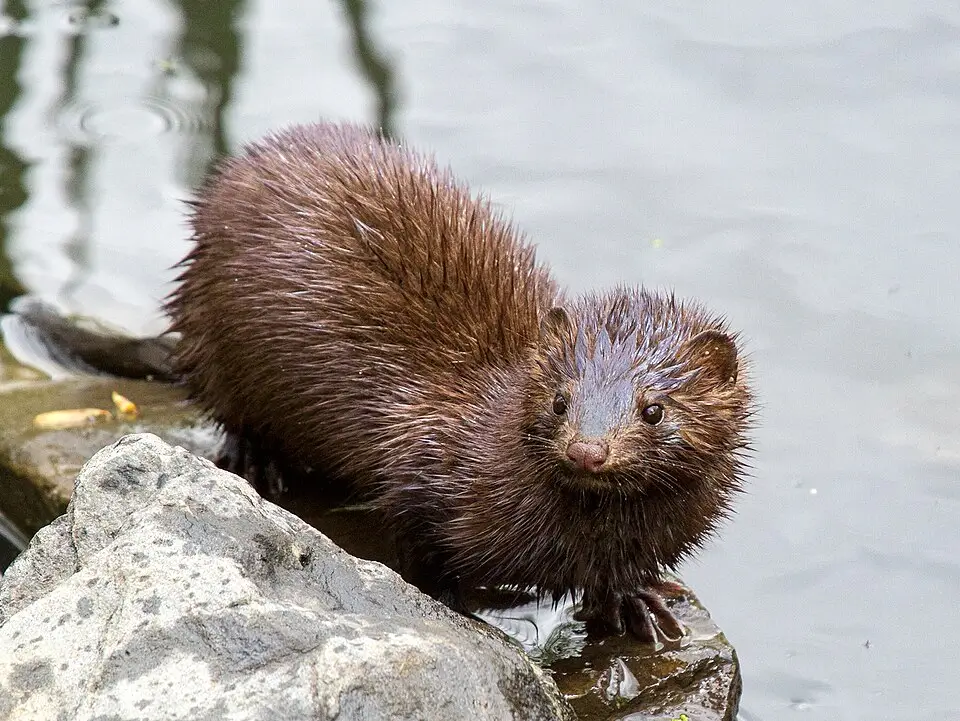
One of the American mink's most iconic features is its coat. The natural fur is typically a rich, uniform dark brown — sometimes nearly black — with occasional white patches on the chin, throat, or chest. The fur itself consists of a dense, soft underfur overlaid with longer, glossy guard hairs. This double-layered construction provides exceptional insulation and water resistance, allowing the mink to pursue prey in cold water and remain active during harsh winter conditions. It is precisely these qualities that historically made mink fur one of the most prized materials in the fur trade and, later, the commercial fur farming industry.
In terms of size, the American mink is a notably sexually dimorphic species, meaning males and females differ considerably in body size. Males are substantially larger than females, reflecting a common pattern among mustelids. They have a compact, muscular build, short legs, partially webbed feet, and a moderately bushy tail. Their semi-aquatic lifestyle is supported by a range of physical adaptations, including the webbed feet that aid in swimming and a streamlined body that cuts efficiently through water.
The American mink is a highly carnivorous animal with a broad and opportunistic diet. It is an apex predator within its immediate ecological niche and will prey on a wide variety of animals, including fish, frogs, crayfish, waterfowl, small mammals such as mice and muskrats, and various invertebrates. This dietary flexibility is one of the key reasons the species has proven so successful across diverse environments. The mink employs a quick, aggressive hunting style, often delivering a swift bite to the back of the skull to dispatch prey. It is capable of tackling animals considerably larger than itself, a testament to its strength and tenacity relative to its body size.
Mink are largely solitary and territorial animals. Individual animals maintain home ranges along waterways, which they mark and defend using scent glands that produce a strong, musky odor — a characteristic trait shared across the mustelid family. Mating typically occurs in late winter, with females giving birth to litters of several kits in the spring after a variable gestation period influenced by delayed implantation, a reproductive strategy common in mustelids. The young are born helpless and altricial, relying entirely on their mother for warmth, nutrition, and protection during the early weeks of life. By late summer or early autumn, young mink disperse to establish territories of their own.
The American mink is primarily crepuscular and nocturnal in its activity patterns, being most active at dawn, dusk, and through the night hours. However, it is not uncommon to observe mink during daylight hours, particularly in areas with abundant food resources or low human disturbance.
Habitat & Range
The American mink is a quintessentially semi-aquatic mammal, and its habitat preferences reflect this lifestyle. It is almost invariably found in close association with water — rivers, streams, creeks, lakes, ponds, marshes, swamps, and wetlands all provide the combination of food, cover, and denning opportunities that the species requires. Riparian corridors, where dense vegetation meets open water, are among the most productive mink habitats, offering abundant prey and shelter from predators.
The species boasts an impressive native range that encompasses much of North America, from Canada and Alaska southward through the continental United States. Mink are absent from arid desert regions and the highest mountain elevations, but they occupy an enormous variety of ecosystems within their range, from boreal forests to southern bottomland hardwoods.
In Oklahoma, the American mink finds suitable habitat along the state's many rivers, streams, and wetland areas. Oklahoma's diverse geography — which transitions from the flat, semi-arid plains of the western Panhandle region to the forested hills and river valleys of the eastern part of the state — supports a mosaic of habitat types. The rivers, creeks, and bottomland areas of eastern and central Oklahoma in particular offer the riparian and wetland habitats that mink prefer. Waterways flowing through the Ouachita Mountains and the Ozark Plateau in the eastern regions of the state are among the most productive areas for semi-aquatic mammals like the mink.
The presence of a healthy mink population in a given area is often taken as a positive indicator of overall ecosystem health, as it suggests adequate water quality, prey abundance, and habitat connectivity.
Hunting and Trapping Information
The American mink has been a prized quarry for trappers throughout North American history. Long before European settlement, Indigenous peoples harvested mink for both their fur and their practical value as a food source. The fur trade era elevated mink to a position of considerable commercial importance, and the species remains a legitimate and valued target for licensed trappers across much of its range today.
Trapping is the primary method used to harvest mink. Conventional approaches include the use of body-gripping traps and foothold traps set along waterways, near den sites, or at locations where mink activity — such as tracks, droppings, or characteristic sliding marks along muddy banks — has been observed. Bait such as fish, muskrat musk, or commercial mink lure can be used to attract animals to sets. Success in mink trapping often depends on a thorough knowledge of the animal's habits, home range patterns, and preferred travel routes.
For hunters and trappers in Oklahoma, the Oklahoma Department of Wildlife Conservation (ODWC) is the governing authority for all trapping and hunting regulations in the state. The ODWC manages hunting and trapping seasons, license requirements, and bag limits for furbearers including the American mink. Anyone interested in pursuing mink in Oklahoma should consult the most current ODWC hunting and trapping regulations directly, as season dates, license requirements, and specific rules can change from year to year. The ODWC's official website and published regulations guides are the authoritative sources for up-to-date information.
Oklahoma's landscapes offer genuine opportunity for trappers willing to invest time in scouting waterways and identifying productive mink habitat. Stream corridors, beaver pond complexes, and marshy areas throughout the state's eastern and central regions represent some of the most promising areas to focus trapping efforts.
Conservation
The American mink is currently classified as a species of least concern from a conservation standpoint across its native North American range. Its wide distribution, behavioral adaptability, and reproductive capacity have allowed it to maintain healthy populations across diverse environments despite historical pressures from the fur trade and ongoing habitat changes.
Wetland conservation is closely tied to the long-term wellbeing of the American mink. The protection and restoration of riparian corridors, wetlands, and stream habitats benefits not only mink but the entire community of wildlife species that depend on these ecosystems. Organizations and agencies working to preserve Oklahoma's waterways and wetland areas contribute directly to sustaining viable mink populations in the state.
It is worth noting that while the American mink is thriving within its native range, introduced populations in Europe — stemming from escapes and releases from fur farms — have raised significant ecological concerns for native wildlife there. Within North America, however, the species occupies its native ecological role and remains a valued part of the continent's biodiversity.
Responsible trapping, guided by science-based regulations established by wildlife management agencies like the ODWC, plays a meaningful role in the sustainable management of mink and other furbearer populations. Trappers who follow legal guidelines and ethical practices contribute to the conservation framework that keeps these populations healthy for future generations.