Overview
Few birds in North America command as much admiration and wonder as the wood duck (Aix sponsa). Known for its extraordinary plumage, its unusual nesting habits, and its remarkable comeback story following near-extinction, the wood duck stands as one of the continent's most celebrated waterfowl species. Whether you are a passionate birdwatcher, a dedicated hunter, a wildlife enthusiast, or simply someone who has caught a glimpse of this stunning bird gliding silently across a quiet woodland pond, the wood duck is a creature that leaves a lasting impression. In New York State — a region rich with wetlands, forested river corridors, and sprawling lakes — the wood duck holds a special place in the ecological tapestry and the outdoor sporting tradition alike.
The species name Aix sponsa is derived from Latin and Greek roots, with sponsa roughly translating to "betrothed" or "promised bride," a poetic nod to the bird's breathtaking, almost ornamental appearance. The wood duck belongs to the family Anatidae, which encompasses all ducks, geese, and swans, and it is placed within the tribe Cairinini, the perching ducks — a group well adapted to life in forested, wooded wetland environments. Its closest relative is the Mandarin duck (Aix galericulata) of East Asia, another species famous for its spectacular coloration.
The wood duck's story is one of resilience, natural beauty, and the power of effective conservation. It is a species that rewards careful observation and respectful pursuit, and understanding it deeply enriches any outdoor experience.
Biological Traits
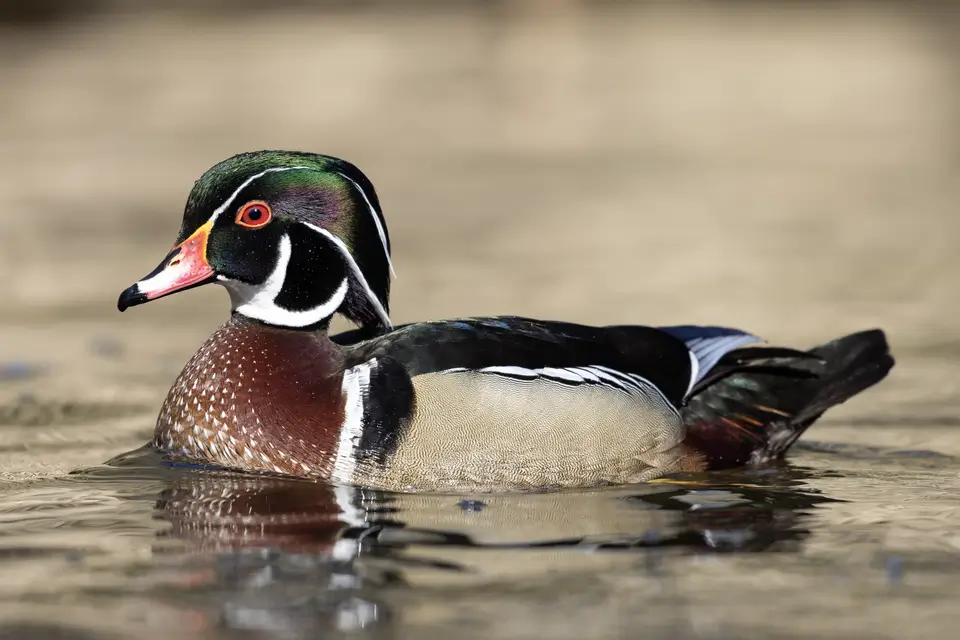
The wood duck is widely regarded as one of the most visually stunning birds in all of North America, and arguably the world. The adult male in breeding plumage is a masterpiece of natural color. His head is adorned with an iridescent green and purple crested helmet, accented with bold white stripes that trace the contours of his face and throat. A rich chestnut breast, separated from his golden-yellow flanks by crisp white and black borders, gives way to a sleek body finished in iridescent blues and greens. His bill is distinctively patterned in red, white, and black, and his eyes glow a vivid red. The overall effect is so elaborate it almost appears artificial — as if nature herself were showing off.
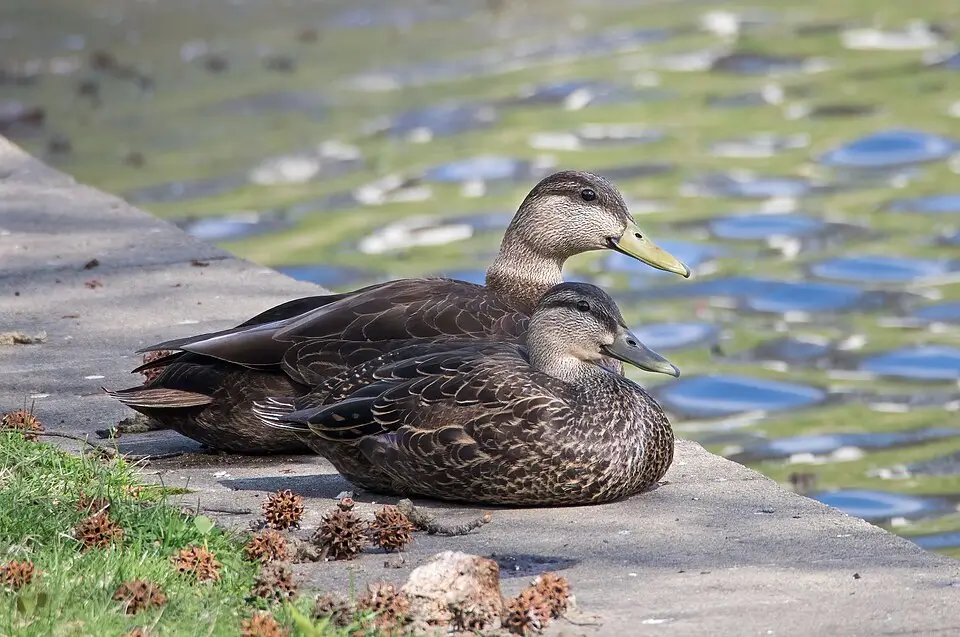
Females, as is common in many waterfowl species, are more subtly colored, dressed in soft gray-brown tones with a distinctive white eye-ring that tapers into a teardrop streak behind the eye. Though less flamboyant than their male counterparts, female wood ducks possess an elegant beauty of their own, and their cryptic coloring serves a vital purpose during nesting.
Wood ducks are medium-sized ducks, generally smaller than mallards. Both sexes share the characteristic large, squared-off crested head that gives the species a distinctly regal silhouette. Their feet are equipped with sharp claws — a unique adaptation among North American waterfowl that allows them to perch and grip tree branches and nest cavities with ease.
As perching ducks, wood ducks are among the very few North American waterfowl that regularly nest in tree cavities. Females will seek out natural hollows in large, mature trees, sometimes at considerable heights above the ground — or well above the water in flooded woodlands. They also readily adopt artificial nest boxes, a characteristic that has played an enormous role in the species' conservation recovery.
One of the most dramatic moments in a wood duck's early life comes shortly after hatching. Within the first day or two of life, the downy ducklings must leap from the nest cavity — sometimes from heights of 30 feet or more — to reach the ground or water below. Their light weight and downy feathers cushion these extraordinary falls, and the calls of their mother guide them safely to the water. It is one of nature's most astonishing spectacles.
Wood ducks are omnivores, feeding on a varied diet that includes aquatic plants, seeds, berries, acorns, insects, and other invertebrates. Acorns in particular are an important food source in autumn, providing the energy reserves needed for migration. Their diet shifts seasonally, reflecting the availability of food in their wetland and forest-edge habitats.
The species is known to be partially migratory, with northern populations moving south in winter, while some southern populations remain resident year-round. Wood ducks that breed in the northeastern United States and Canada typically migrate to the southeastern United States for the winter months.
Habitat & Range
True to their name, wood ducks are intimately connected to wooded wetland environments. They favor forested swamps, beaver ponds, wooded river backwaters, marshes lined with trees, and the calm, vegetated edges of lakes and slow-moving streams. The presence of mature trees — both for nesting cavities and for the acorns and other mast they produce — is a key habitat requirement. Similarly, dense aquatic and emergent vegetation provides cover, foraging opportunities, and protection from predators.
The wood duck's breeding range covers much of the eastern United States and extends into parts of Canada, as well as a separate population along the Pacific Coast from British Columbia south through California. In the eastern range, birds nest from the Gulf Coast states northward through New England and into southern Canada.
New York State, with its diverse landscape of hardwood forests, river floodplains, beaver wetlands, and freshwater marshes, provides outstanding wood duck habitat. The Hudson River Valley, the Adirondack foothills, the Finger Lakes region, and the many river systems and wetland complexes throughout the state all support healthy wood duck populations. New York's combination of agricultural land, mature forest, and abundant water creates a mosaic of habitats that wood ducks thrive in throughout the spring, summer, and early fall.
Hunting Information
The wood duck is one of the most sought-after game birds in North America, prized both for its exceptional beauty and for its qualities as a table bird. Waterfowl hunting, including wood duck hunting, is a deeply rooted tradition in New York State, where generations of hunters have pursued ducks along the state's rivers, marshes, and wetland corridors.
Wood duck hunting typically occurs in the early portions of the waterfowl season, as these birds begin to stage and move ahead of the main fall migration. Hunters often pursue wood ducks in wooded swamps, beaver ponds, and along forested creek corridors — the very habitats where the birds spend their days feeding on acorns, berries, and aquatic vegetation. The early morning and late afternoon hours are generally the most productive, as wood ducks move between roosting and feeding areas during these periods.
Because wood duck hunting in New York is regulated by both federal and state wildlife agencies, hunters are required to hold the appropriate licenses and stamps, including a state hunting license, a New York State waterfowl license, and a Federal Duck Stamp. Season dates, bag limits, and other specific regulations are set annually by the New York State Department of Environmental Conservation (NYSDEC) in coordination with the U.S. Fish and Wildlife Service (USFWS), and hunters are strongly encouraged to consult the most current NYSDEC waterfowl hunting regulations before heading afield, as these details can change from year to year.
Decoys, calls, and careful concealment are all important elements of wood duck hunting. Hunters often use small, portable boat blinds or natural vegetation for concealment in the tight, wooded environments these birds frequent. Timber duck hunting — as it is sometimes called — has a character all its own, distinct from the open-water mallard hunting more commonly depicted in popular culture.
Conservation
The wood duck's conservation story is one of the most inspiring chapters in North American wildlife management. By the late 19th and early 20th centuries, unregulated market hunting and widespread habitat destruction had reduced wood duck populations to dangerously low levels, leading many observers to fear the species could face extinction. The passage of the Migratory Bird Treaty Act of 1918 provided crucial federal protection and marked a turning point for the species.
In the decades that followed, the installation of artificial nest boxes by wildlife managers, conservation organizations, and individual landowners helped support breeding populations as natural cavity-bearing trees became scarcer due to logging and land clearing. Wood ducks took readily to these artificial structures, and nest box programs proliferated across the eastern United States. Today, the wood duck is considered one of the great conservation success stories in North American wildlife history, with populations that have rebounded strongly from their historic lows.
Wetland conservation remains critical to the wood duck's continued prosperity. Organizations such as Ducks Unlimited, the USFWS, and state wildlife agencies continue to protect, restore, and enhance wetland habitats that wood ducks and countless other species depend upon. In New York, ongoing efforts to conserve forested wetlands, manage beaver habitat, and install nest boxes on public and private lands all contribute to healthy, sustainable wood duck populations.
The wood duck reminds us that dedicated conservation effort, sound science, and regulatory protection can reverse even the most dire wildlife declines. It is a living symbol of what is possible when people choose to act as stewards of the natural world.