Overview
Few animals embody the raw, untamed spirit of North America's wilderness quite like the American mink. Scientifically classified as Neogale vison, this small but fierce semi-aquatic mammal has captivated hunters, trappers, naturalists, and wildlife enthusiasts for centuries. With its lustrous fur, lightning-quick movements, and remarkable adaptability, the American mink occupies a special place in both the natural world and the cultural heritage of outdoor pursuits across the continent. From the remote boreal forests of Canada to the wooded stream corridors of New York State, the American mink is a living testament to nature's capacity to craft a truly exceptional predator in a compact and elegant package.
The American mink's story is one of evolutionary success. As a member of the family Mustelidae — the same family that includes otters, weasels, badgers, and wolverines — the mink shares many of the hallmark traits of this group: a long, sinuous body, a ferocious appetite relative to its size, and an almost supernatural agility in the environments it calls home. Understanding this animal, its biology, its habits, and its place in the ecosystems of the northeastern United States and beyond, is a rewarding endeavor for anyone who spends time in the outdoors.
Biological Traits
The American mink (Neogale vison) is a medium-sized carnivorous mammal belonging to the order Carnivora and the family Mustelidae. Historically, the species was classified under the genus Mustela, but modern taxonomic revisions have placed it in the genus Neogale, a distinction that reflects its closer genetic relationship to the neotropical minks and certain other New World mustelids.
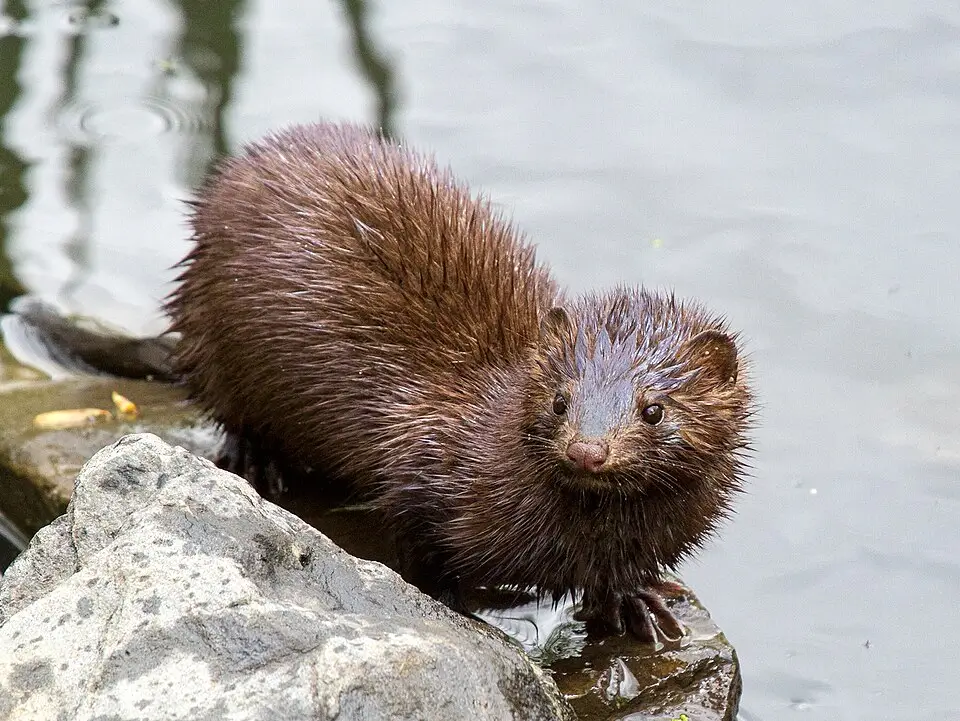
In terms of physical appearance, the American mink is a striking animal. Its body is long and lean, perfectly adapted for navigating through dense aquatic vegetation, along rocky stream banks, and into the burrows and dens of prey animals. The coat is one of the mink's most recognizable features — typically a rich, deep brown that can range from chocolate to nearly black, often with small patches of white on the chin or chest. The underfur is dense, soft, and water-resistant, an adaptation that allows the mink to remain insulated and agile even during cold-water forays in winter months.
Males are noticeably larger than females, a characteristic common among mustelids known as sexual dimorphism. Males can reach lengths of roughly 13 to 18 inches for the body alone, with a bushy tail adding several more inches, while females tend to be considerably smaller and lighter. The mink's legs are short but powerful, equipped with partially webbed feet that make it an exceptionally capable swimmer. In the water, the mink moves with remarkable grace and speed, capable of pursuing fish and other aquatic prey with lethal efficiency.
The mink is a strict carnivore. Its diet is diverse and opportunistic, reflecting the animal's intelligence and adaptability. Muskrats represent one of the most significant prey species for American mink, but the mink's menu also includes fish, frogs, crayfish, small mammals such as mice and rabbits, birds, and waterfowl. This broad dietary range makes the mink a keystone predator in many wetland ecosystems, helping to regulate populations of smaller animals throughout its range.
Reproduction in American mink follows a pattern common to many mustelids, including the phenomenon of delayed implantation. Mating typically occurs in late winter or early spring, but the fertilized eggs do not immediately implant in the uterine wall. Instead, implantation is delayed for a variable period before active gestation begins. Kits — the term for young mink — are born in spring, usually in litters of several individuals. The young are born helpless and rely entirely on their mother for warmth and nourishment. They grow rapidly, and by late summer or early autumn, young mink are largely independent and begin to disperse to establish their own territories.
American mink are largely solitary animals outside of the breeding season. Both males and females maintain home ranges, which they actively defend and mark with scent glands. Males generally maintain larger territories than females, and their ranges may overlap with those of several females.
Habitat & Range
The American mink is a quintessentially North American species, native to nearly the entire continent with the exception of the driest desert regions and the highest mountain elevations. Its range extends from Alaska and northern Canada southward through the contiguous United States into the northern parts of the Gulf Coast states. The species has also been introduced — intentionally or as escapees from fur farms — into parts of Europe and South America, where it is now considered an invasive species in some regions.
Within its native range, the American mink is almost always found in close association with water. Streams, rivers, lakes, ponds, marshes, and coastal wetlands all serve as prime mink habitat. The mink thrives where there is abundant cover along the water's edge — dense riparian vegetation, fallen logs, undercut banks, and rocky shorelines all provide the shelter and hunting opportunities that this predator requires. A clean, healthy watercourse with abundant prey populations is the gold standard of mink habitat.
In New York State, the American mink finds an exceptionally rich landscape. New York's diverse geography encompasses the Adirondack Mountains, the Catskills, the Finger Lakes region, the vast wetland complexes of the St. Lawrence River valley, the Hudson River corridor, and numerous smaller streams and waterways throughout the state. This variety of aquatic habitats, combined with the state's extensive forested landscapes, creates ideal conditions for mink populations to thrive. The state's position in the northeastern United States also means that its waterways and wetlands support robust populations of muskrats, fish, and other prey species that sustain mink year-round.
Hunting and Trapping Information
The American mink has an extraordinarily rich history in North American hunting and trapping culture. Since the earliest days of European exploration and settlement on the continent, mink fur was among the most prized commodities in the North American fur trade. Indigenous peoples had long known the value of mink pelts for clothing and trade, and this tradition continued as commercial trapping became a cornerstone of frontier economies throughout the 17th, 18th, and 19th centuries.
Today, the American mink remains a sought-after species for trappers and hunters across much of its range, including in New York State. Trapping is by far the most common and effective method of harvest for mink. Trappers typically use bodygrip traps and foothold traps set along the water's edge, near muskrat runs, under overhanging banks, or at the entrances to culverts and other structures where mink are known to travel. Because mink are naturally curious and tend to investigate new objects and scents in their environment, well-placed traps with appropriate lures or bait can be highly effective.
For those interested in pursuing mink in New York, it is important to consult the New York State Department of Environmental Conservation (NYSDEC) for the most current and accurate information regarding trapping seasons, licensing requirements, bag limits, and permitted trap types. Regulations governing the trapping of furbearers like mink are updated periodically to reflect population data, conservation goals, and management priorities. Obtaining the proper licenses and adhering to all state regulations is both a legal requirement and an expression of respect for the resource and the tradition of ethical outdoor pursuits.
The value of mink fur varies with market conditions, but the pelt of a well-furred, properly prepared American mink remains a prized product for trappers. Beyond the economic dimension, many trappers pursue mink for the challenge it presents — reading the landscape, identifying sign, and successfully targeting a fast-moving, sharp-sighted predator demands real skill and woodsmanship.
Conservation
The American mink is currently considered a species of least concern from a global conservation standpoint, reflecting the robustness and adaptability of its populations across its native range. However, like all wildlife, mink are sensitive to changes in habitat quality, water quality, and prey availability.
One of the most significant factors influencing mink populations is the health of aquatic ecosystems. Because mink consume fish, frogs, crayfish, and other aquatic prey, they are vulnerable to bioaccumulation of environmental contaminants such as heavy metals and pesticides. Protecting clean waterways and healthy wetland systems is therefore essential to sustaining viable mink populations over the long term.
Habitat conservation efforts that protect riparian corridors, restore degraded wetlands, and maintain forested buffers along waterways all benefit mink and the broader community of wildlife that depends on healthy aquatic systems. In New York, ongoing conservation initiatives by the NYSDEC, private landowners, and conservation organizations contribute to maintaining the landscape connectivity and habitat quality that mink require.
Regulated trapping, conducted within the framework of science-based wildlife management, plays a constructive role in mink conservation. Harvest data collected through trapping seasons provides wildlife managers with valuable population indices, and license fees contribute directly to funding conservation programs. The North American Model of Wildlife Conservation — which emphasizes science-based management, public ownership of wildlife resources, and regulated harvest — has proven highly effective in sustaining furbearer populations, including American mink, across the continent.
For hunters, trappers, and wildlife watchers alike, the American mink represents one of North America's most fascinating and rewarding wild animals to pursue and observe. Its presence along a stream or wetland edge is a reliable indicator of a healthy, productive ecosystem — a sign that the land and water are in good order, and that the ancient rhythms of predator and prey continue to play out as they have for thousands of years.