Overview
Few waterfowl species command the respect and admiration of hunters and wildlife enthusiasts quite like the American black duck (Anas rubripes). A robust, darkly plumaged bird that thrives in some of the most demanding wetland environments in eastern North America, the American black duck has long been a symbol of wild places and wild weather. From the tidal marshes of the Atlantic Coast to the boreal forests of Canada, this species carves out a remarkable existence that has fascinated ornithologists, conservationists, and hunters for generations.
The American black duck holds a special place in the waterfowling tradition of the northeastern United States. States like New York — with its vast mosaic of freshwater lakes, coastal bays, river deltas, and inland marshes — provide critical habitat for this species during migration and winter. For anyone who has sat in a marsh blind on a gray November morning and watched a flock of black ducks trading against a pewter sky, the appeal of this bird is immediately and deeply understood. It is a bird that demands respect — wary, powerful in flight, and intimately tied to the health of North America's wetland ecosystems.
This guide offers a thorough look at the American black duck: its biology, its habitat preferences, its role in the hunting tradition of New York and the broader Northeast, and the ongoing conservation story that surrounds one of eastern North America's most iconic waterfowl.
Biological Traits
The American black duck is a large dabbling duck in the family Anatidae, closely related to the mallard (Anas platyrhynchos). It is one of the heavier dabbling ducks found in North America, with a sturdy, broad-shouldered body profile that gives it an authoritative presence on the water and in flight.
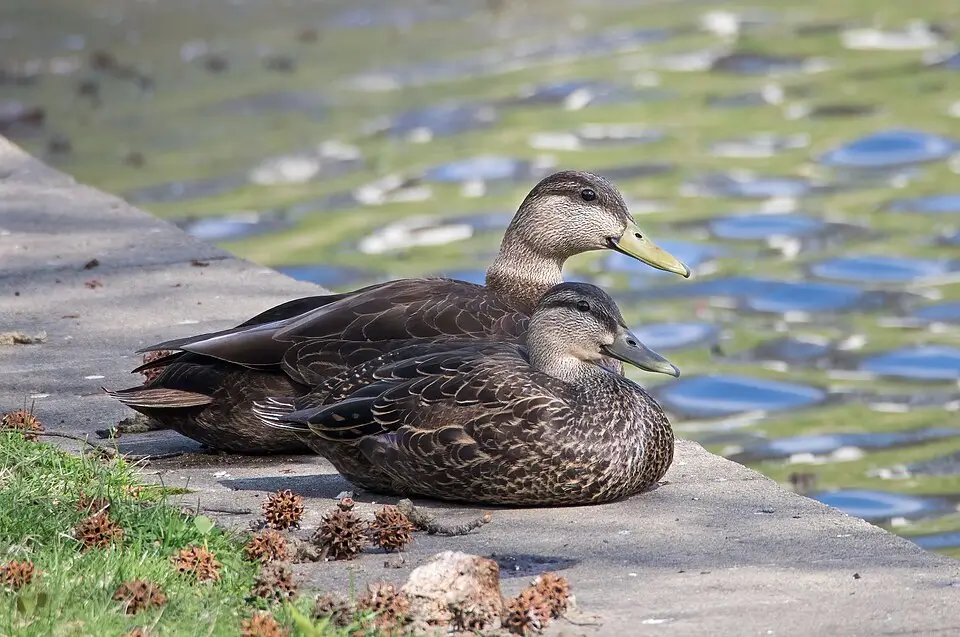
Despite its name, the American black duck is not truly black. Its plumage is a rich, sooty brown — often described as dark chocolate or dark mahogany — that appears nearly black in low light, particularly when viewed against pale sky or bright water. Both males and females share this dark body coloration, making the species somewhat unique among North American ducks, where sexual dimorphism (visible differences between sexes) is typically much more pronounced.
Distinguishing between males and females requires close observation. The male, or drake, typically displays a yellow-green bill, while the female's bill tends to be more olive-drab to orange-mottled in coloration. The head of both sexes is notably paler — a buffy, streaked tan — contrasting with the darker body and creating a distinctive two-toned appearance. In flight, the underwings flash bright white, a field mark that stands out sharply against the dark body plumage. Like the mallard, the American black duck displays a bright violet-blue speculum (a patch of iridescent feathers on the secondary wing feathers), though it typically lacks the white borders that frame the mallard's speculum prominently.
The American black duck is well known for hybridizing with the closely related mallard. This hybridization has been a subject of significant scientific and conservation interest, as expanding mallard populations have introduced increasing genetic overlap with black duck populations across much of the species' range.
Vocally, the American black duck closely resembles the mallard. The female produces the classic loud, descending quack associated with dabbling ducks, while males give a softer, reedy call.
Like all dabbling ducks, the American black duck feeds primarily by tipping forward in shallow water to reach submerged aquatic vegetation, seeds, invertebrates, and small aquatic animals. During migration and winter, they readily utilize agricultural fields, feeding on waste grain and other food sources.
Habitat & Range
The American black duck is fundamentally an eastern North American species. Its breeding range extends across much of eastern Canada — from Manitoba east through Ontario, Quebec, and the Maritime Provinces — and into the northeastern United States, including New England, New York, Pennsylvania, and parts of the Great Lakes region. It is one of the few dabbling duck species that breeds extensively in the boreal forest zone, nesting near ponds, lakes, bogs, and streams in forested landscapes.
During the breeding season, American black ducks seek out a wide variety of wetland habitats. They are notably adaptable nesters, placing their nests in dense upland vegetation, marsh grass, shrubby cover near water, and even elevated locations such as tree cavities or elevated stumps in flooded forests. The female incubates a clutch of eggs and leads her ducklings to water shortly after hatching.
In winter and during migration, American black ducks concentrate along the Atlantic Coast and in major inland wetland systems. Coastal habitats — including tidal marshes, estuaries, coastal bays, and salt meadows — are particularly important for wintering birds. The Chesapeake Bay, the coastal marshes of New England, and the numerous bays and estuaries of New York's coastline are among the most significant wintering areas for the species.
New York State, given its geographic position and its extraordinary diversity of wetland habitats, is a key piece of the American black duck's annual cycle. The state's coastal areas — Long Island's bays and marshes, the Hudson River estuary, and the waters of New York Harbor — offer rich wintering habitat. Inland, the Finger Lakes, the St. Lawrence River valley, the Adirondack wetlands, and numerous other freshwater systems serve as both migration stopover and wintering habitat for black ducks. New York's location along the Atlantic Flyway, one of the four major North American bird migration corridors, ensures that the state sees significant black duck numbers each fall and winter.
Hunting Information
The American black duck has a long and storied history as a prized game bird in the northeastern United States. Its wariness, speed, and association with challenging coastal and wetland environments have made it a particularly respected quarry among waterfowlers. Hunting black ducks has traditionally been synonymous with serious, skilled waterfowling — the birds are notoriously difficult to decoy and require hunters to be well-concealed and patient.
In New York State, waterfowl hunting is managed under both federal frameworks (administered by the U.S. Fish and Wildlife Service) and state regulations overseen by the New York State Department of Environmental Conservation (NYSDEC). American black ducks are regulated migratory birds, meaning their harvest is governed by the federal Migratory Bird Treaty Act and set through annual regulatory processes that establish season dates, bag limits, and other rules.
Hunters in New York pursuing American black ducks will generally find opportunities in the state's coastal zones, river systems, and inland marshes during the fall and winter migration season. Hunting methods commonly used for black ducks include layout hunting in open bays, marsh hunting from blinds, and jump-shooting along rivers and streams. Because of the black duck's inherent wariness, hunters typically use high-quality, realistic decoys and take great care with concealment. Calling can be effective, particularly early in the season.
It is important to note that specific season dates, bag limits, and licensing requirements for American black duck hunting in New York are established on an annual basis by the NYSDEC and the U.S. Fish and Wildlife Service. Hunters should always consult the most current New York State Migratory Bird Hunting regulations before heading afield to ensure full compliance with all applicable rules.
Conservation
The conservation story of the American black duck is one of both challenge and cautious optimism. Populations of this species declined significantly during the latter half of the 20th century, driven by a combination of factors including wetland loss and degradation, changes in land use, and the effects of hybridization with the expanding mallard population.
Wetland conservation has proven to be one of the most powerful tools for supporting American black duck populations. Programs that restore and protect coastal marshes, inland wetlands, and boreal breeding habitats directly benefit black duck populations. Organizations such as Ducks Unlimited, the North American Wetlands Conservation Act program, and numerous state and federal agencies have invested substantially in wetland conservation efforts that support black ducks and the full suite of wetland-dependent wildlife.
Waterfowl hunters themselves have historically been among the most committed supporters of black duck conservation, contributing through hunting license fees, federal Duck Stamps, and donations to conservation organizations. The Duck Stamp program, established under the Migratory Bird Hunting and Conservation Stamp Act, has funded the protection of millions of acres of wetland habitat across North America.
Ongoing monitoring of American black duck populations — conducted through breeding surveys, winter surveys, and banding programs — provides wildlife managers with the data needed to make informed, science-based regulatory decisions. The collaborative approach between federal agencies, state wildlife agencies, conservation organizations, and the hunting community continues to be the foundation of American black duck management.