Overview
Few animals capture the imagination of hunters, wildlife enthusiasts, and casual nature observers quite like the white-tailed deer. Known scientifically as Odocoileus virginianus, the white-tailed deer is one of the most recognized and beloved wildlife species in North America. Whether you're catching a fleeting glimpse of a graceful doe stepping out of the tree line at dusk, or watching a massive, wide-racked buck work a scrape line in the crisp October air, the white-tailed deer commands respect and admiration from all who encounter it. In a state as diverse and dynamic as New York — with its sprawling forests, productive agricultural lands, and richly varied terrain — the white-tailed deer holds a place of special prominence in both the natural landscape and the outdoor sporting tradition.
This article explores the biology, habitat preferences, hunting culture, and conservation story of Odocoileus virginianus, offering a comprehensive look at why this animal continues to fascinate generations of outdoor enthusiasts across the country.
Biological Traits
The white-tailed deer belongs to the family Cervidae — the deer family — and is one of the most studied large mammals in North America. The species name virginianus reflects its early scientific documentation in the Virginia region of colonial America, though the animal's range extends far beyond that single state.
Physical Characteristics
White-tailed deer are medium to large ungulates, with a body size that varies considerably across their range. Generally speaking, northern populations — including those found in New York State — tend to be larger than their southern counterparts, following a well-known biological principle called Bergmann's Rule, which suggests that animals in colder climates tend to develop larger body masses to conserve heat. Adult bucks in the northeastern United States can weigh anywhere from 150 to over 300 pounds in exceptional cases, while does are typically smaller and lighter.
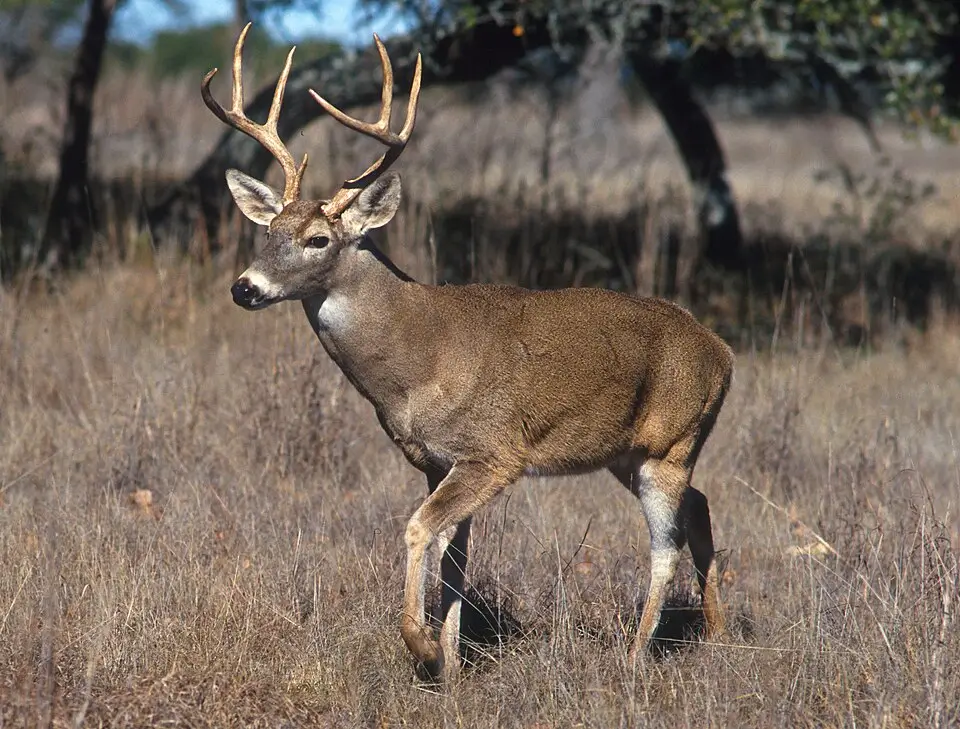
The animal's most distinctive feature — the one that gives it its common name — is the bright white underside of its tail, which is raised and displayed like a flag when the deer is alarmed or fleeing from danger. This behavior serves as a warning signal to other deer in the area. The body coat changes with the seasons: a reddish-brown hue in summer that transitions to a thicker, grayer coat in winter, providing excellent insulation against cold temperatures.
Antlers
Only male white-tailed deer (bucks) grow antlers, which are shed and regrown annually. This makes them one of the fastest-growing tissues in the animal kingdom. Antler development is heavily influenced by genetics, age, and nutrition. Young bucks typically grow small "spike" antlers or simple forks in their first year, gradually developing more complex and impressive racks as they mature. Fully mature bucks with access to quality food sources can grow truly spectacular sets of antlers, a fact that drives much of the passion behind trophy deer hunting.
Senses
White-tailed deer are extraordinarily well-adapted to detecting danger. Their large, expressive ears can rotate independently to pick up sounds from multiple directions simultaneously. Their sense of smell is considered their primary defense mechanism — it is estimated to be many times more acute than that of a human — and hunters often go to great lengths to control their scent in the field. Their eyes are positioned on the sides of their head, giving them a wide field of view that makes it easy to detect movement, though their ability to see fine detail or distinguish colors (particularly in the red spectrum) is more limited than human vision.
Reproduction
The breeding season, commonly known as "the rut," is one of the most dramatic and eagerly anticipated events in the white-tailed deer calendar. Triggered by shortening daylight hours in the fall, bucks become increasingly active, aggressive, and wide-ranging as they search for receptive does. Bucks will spar with rival males, create scrapes on the ground, and rub their antlers against trees to mark territory and communicate their presence. After a gestation period of approximately 200 days, does give birth — often to twins — in late spring or early summer. Fawns are born with a spotted coat that provides excellent camouflage during their vulnerable early weeks of life.
Habitat & Range
One of the key reasons the white-tailed deer is so abundant and widespread is its remarkable adaptability. Odocoileus virginianus thrives in a tremendous variety of habitats, from dense northern forests and swampy bottomlands to brushy agricultural edges, suburban woodlots, and even the outskirts of major cities.
The species' range covers a vast swath of the Americas, extending from southern Canada through the continental United States, Mexico, and into Central and South America. In the United States, it is absent only from a handful of western states and Alaska.
In New York State, white-tailed deer can be found in virtually every county. The state's remarkable geographic diversity — encompassing the Adirondack Mountains in the north, the Catskill Mountains to the south, the agricultural heartland of the Hudson Valley and Finger Lakes region, and the mixed forests and farmlands of the Southern Tier — creates a mosaic of habitat types that supports robust deer populations. Edge habitat, where forests meet open fields or agricultural land, is particularly productive for deer, as it provides both food and cover in close proximity. Deer are generalist herbivores, browsing on a wide variety of vegetation including leaves, twigs, grasses, agricultural crops, acorns, and various fruits and berries.
Their ability to adapt their diet to seasonal availability, combined with their tolerance of human activity in suburban and semi-rural environments, has allowed white-tailed deer populations to flourish across New York's varied landscape.
Hunting Information
White-tailed deer hunting is deeply embedded in the cultural and sporting heritage of New York State, as it is across much of the eastern United States. Hunters pursue deer through a variety of methods, including archery hunting with compound bows, crossbows, and traditional longbows, as well as firearm seasons using rifles, shotguns, and muzzleloaders. Each method demands a different set of skills and strategies, offering unique challenges and rewards.
The rut period — typically falling in October and November in the northeastern United States — is widely considered the most exciting and productive time to hunt mature bucks. During this period, bucks abandon much of their usual caution as they actively seek does, making them more vulnerable to skilled hunters who understand deer behavior.
Hunting Strategies
Many deer hunters in New York and across the northeast favor hunting from elevated tree stands or ground blinds positioned near known travel corridors, food sources, water, or scrape lines. Understanding the wind direction and thermals is critical, given the deer's extraordinary sense of smell. Scouting prior to the season — studying topographic maps, searching for deer sign such as rubs, scrapes, and tracks, and using trail cameras — dramatically improves a hunter's chances for success.
Still-hunting, where the hunter moves slowly and deliberately through the woods while searching for deer, is another time-honored technique that rewards patience and field-craft. Deer drives, where groups of hunters push deer toward waiting "standers," remain a traditional and social method employed in many parts of New York.
Licensing and Regulations
Prospective hunters in New York State should always consult the New York State Department of Environmental Conservation (NYSDEC) for the most current and complete information regarding license requirements, season dates, bag limits, legal weapons, and any applicable special regulations. Regulations are updated annually and can vary by region, zone, or management unit. Purchasing the appropriate licenses and following all applicable regulations is not only a legal requirement but also an essential part of ethical sportsmanship and wildlife stewardship.
Conservation
The conservation story of the white-tailed deer in North America is one of wildlife management's great success stories. By the early twentieth century, market hunting, habitat loss, and unrestricted harvest had drastically reduced deer populations across much of their range. Through the efforts of state wildlife agencies, conservation organizations, and the adoption of science-based hunting regulations, white-tailed deer populations have recovered spectacularly over the past century.
Today, regulated hunting plays an essential role in deer population management. Without natural predators in many parts of their range, deer populations can grow rapidly and, if left unchecked, can lead to overbrowsing of native vegetation, increased deer-vehicle collisions, and the spread of disease within herds. Hunting provides a sustainable, science-guided check on population growth while simultaneously generating significant funding — through license sales and excise taxes on sporting equipment — that supports wildlife management and habitat conservation programs.
In New York State, the NYSDEC manages white-tailed deer populations using a system of Deer Management Units (DMUs) that allows managers to tailor harvest objectives to local population levels and habitat conditions. This localized, data-driven approach helps ensure that deer populations remain healthy and sustainable for future generations of both wildlife and hunters.
The white-tailed deer also holds significant ecological importance as a prey species. In areas where predators such as coyotes, bobcats, and black bears are present — all of which exist in New York — deer contribute to the health and function of the broader food web. Their role as herbivores also shapes plant communities and forest regeneration patterns, making them a true "keystone" species in many North American ecosystems.
Conclusion
The white-tailed deer, Odocoileus virginianus, is far more than a game animal. It is a symbol of wild North America, a cornerstone of healthy ecosystems, and the subject of a rich and enduring hunting tradition that connects people to the land and to one another. In New York State, with its abundant and varied habitat, deer hunting represents a meaningful outdoor heritage shared by hundreds of thousands of participants each year. Whether you are a seasoned hunter pursuing a trophy buck or a first-time observer catching a glimpse of a spotted fawn in a forest clearing, the white-tailed deer offers an experience that is genuinely unforgettable.