Overview
Few creatures in the North American wilderness capture the imagination quite like the snowshoe hare. Known scientifically as Lepus americanus, this remarkable mammal has carved out a successful existence across some of the continent's most challenging and cold-weather environments. Recognized by its oversized hind feet, seasonal coat changes, and critical role in boreal food webs, the snowshoe hare is both a fascinating subject for wildlife enthusiasts and a beloved quarry for small game hunters throughout its range — including the forests and uplands of New York State.
The snowshoe hare is not simply a rabbit that lives in the snow. It is an evolutionary masterpiece, fine-tuned by millennia of natural selection to thrive where winters are long, predators are many, and survival demands constant adaptation. From its iconic white winter coat to the sprawling hind feet that give the species its common name, every characteristic of this animal tells a story of purpose and resilience. Whether you're a hunter pursuing small game in the Adirondacks, a wildlife photographer hoping for a glimpse of a white-coated hare against a snowy hillside, or simply a nature enthusiast curious about the creatures sharing the landscape, the snowshoe hare deserves your attention.
Biological Traits
The snowshoe hare belongs to the family Leporidae and the genus Lepus, placing it firmly among the "true hares" rather than the rabbits — a distinction that carries meaningful biological weight. Unlike cottontail rabbits, which are born blind and helpless in a fur-lined nest, hares are born fully furred, open-eyed, and capable of moving independently within hours of birth. This trait, known as precocial development, is characteristic of the genus and reflects the hare's evolutionary adaptation to open and exposed environments where early mobility is a survival advantage.
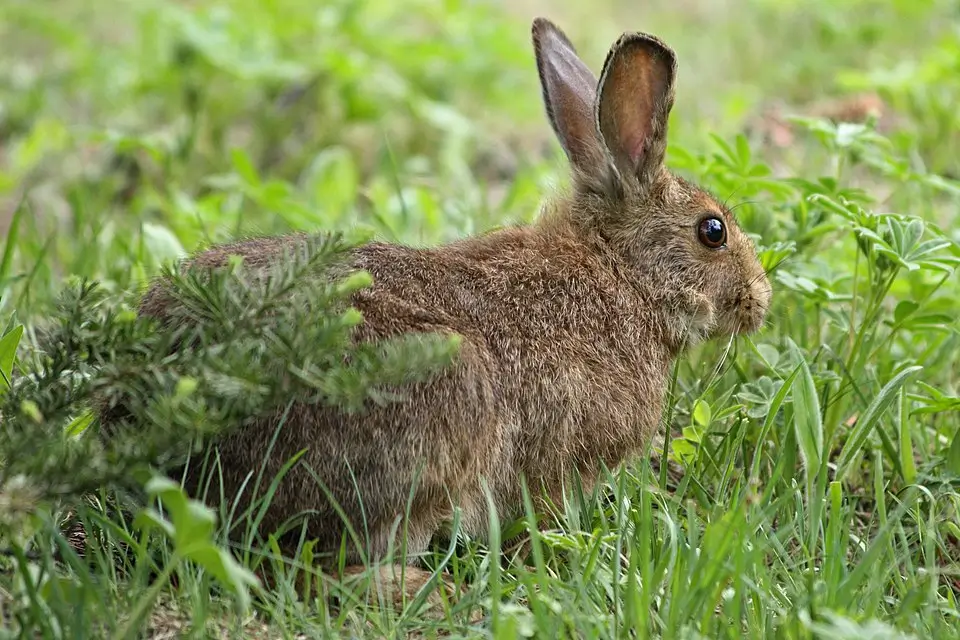
One of the most striking features of Lepus americanus is its seasonal coat change, known scientifically as molting or pelage transition. During the warmer months, the snowshoe hare sports a brown or grayish-brown coat that blends seamlessly with the forest floor, leaf litter, and understory vegetation. As daylight hours shorten in autumn, a hormonal response triggers a gradual replacement of this brown fur with brilliant white winter fur — a transformation that typically aligns with the arrival of snowfall in the animal's habitat. By midwinter, most snowshoe hares are almost entirely white, with only the tips of their ears retaining dark coloration. Come spring, the process reverses, and the animal transitions back to its warm-season brown coat.
This camouflage strategy is critically important for a species that faces predation pressure from a wide array of hunters. Canada lynx, great horned owls, red-tailed hawks, coyotes, foxes, bobcats, and fishers all count snowshoe hares among their prey. In fact, the relationship between the Canada lynx and the snowshoe hare is one of the most well-documented predator-prey dynamics in ecological science. The two species are so tightly linked that their population cycles — which rise and fall roughly every eight to eleven years — have been studied by biologists for over a century as a textbook example of cyclical population dynamics.
The hare's namesake feature, of course, is its extraordinarily large hind feet. These feet are covered with dense fur and spread wide when the animal moves, distributing the hare's weight across a larger surface area and allowing it to move efficiently across deep, soft snow — much like a human wearing snowshoes. This anatomical adaptation gives the snowshoe hare a significant mobility advantage over many of its predators and competitors during winter months, allowing it to access food resources and escape danger in conditions that would bog down less-equipped animals.
Snowshoe hares are primarily herbivorous. During the warmer months, they feed on a variety of grasses, forbs, clovers, and herbaceous plants. As winter sets in and these food sources disappear beneath snow, hares shift to a diet of woody browse, consuming the bark, twigs, and buds of trees and shrubs such as willows, aspens, birches, and various conifers. This dietary flexibility is another key component of the species' survival strategy in harsh northern environments.
Reproduction in snowshoe hares is prolific, as befits a species under constant predation pressure. Females, called does, can produce multiple litters per year during the breeding season, which typically runs from early spring through late summer. Litters generally contain between one and eight young, called leverets, though litter sizes can vary based on population density, food availability, and environmental conditions. The leverets are independent early in life and disperse from the birth area relatively quickly, reducing competition among siblings and the risk of total litter loss to predators.
Habitat and Range
Lepus americanus is a species of the boreal and montane zones of North America. Its range extends from Alaska and Canada southward through the Rocky Mountains, the Great Lakes region, and the Appalachian Mountains. This distribution closely tracks the presence of dense coniferous or mixed forests, where thick understory vegetation provides both food and cover.
In New York State, the snowshoe hare finds habitat primarily in the Adirondack Mountains and select portions of the Catskill Mountains, where the elevation, climate, and forest composition create conditions suitable for the species. The Adirondacks in particular — with their vast expanses of spruce-fir forest, dense alder thickets, and cold winters — represent some of the best snowshoe hare habitat in the northeastern United States. Young forest regeneration areas, conifer plantations, and wetland edges with shrubby growth can also serve as valuable habitat within New York's northern tier.
The species shows a strong preference for areas with dense low cover. Thickets of young conifers, alder swamps, and brushy clearcuts all attract hares seeking both feeding opportunities and protection from aerial and terrestrial predators. In the Adirondacks, spruce and balsam fir stands are particularly important winter habitat, offering thermal cover, browse, and concealment. Understanding these habitat preferences is essential for both wildlife managers seeking to support hare populations and hunters hoping to locate animals in the field.
Hunting Information
The snowshoe hare is a beloved small game animal across its range, pursued by hunters with a variety of techniques. The tradition of hunting snowshoe hares with beagles or other small hounds is deeply rooted in American hunting culture. When a hound picks up a hare's scent and gives chase, the hare typically runs a large, circular route before returning close to where it started — a behavioral tendency that hunters exploit by positioning themselves along likely return paths and waiting for the hare to circle back. This style of hunting combines the excitement of working with hounds, the challenge of reading the terrain, and the satisfaction of a hard-earned harvest.
Still-hunting and tracking are also effective methods for pursuing snowshoe hares, particularly after a fresh snowfall when tracks are easy to follow. Moving slowly and quietly through likely habitat — dense spruce thickets, alder runs, brushy hillsides — can produce close-range encounters with hares holding tight to their forms. The white winter coat that camouflages hares so effectively against snow can, paradoxically, make them visible against the dark backdrop of tree trunks and brush when a hunter's eye is trained to pick out the rounded, white shape of a resting hare.
For hunters in New York State, the snowshoe hare represents an excellent small game opportunity, particularly in the Adirondack region where populations are established. As with all hunting in New York, prospective hunters should consult the New York State Department of Environmental Conservation (NYSDEC) for current season dates, bag limits, and licensing requirements, as these regulations can change from year to year and specific information was not available in the source data consulted for this article. A standard New York small game hunting license is typically required for pursuing hares, and hunters should familiarize themselves with any special regulations applicable to the specific Wildlife Management Units or state lands they intend to hunt.
Small-caliber firearms are the traditional choice for snowshoe hare hunting. The .22 LR rimfire rifle is a classic option favored for its accuracy, affordability, and minimal meat damage, while a 20-gauge or 12-gauge shotgun loaded with small shot is well-suited to hounds-assisted hunting where shots may be taken at moving targets in dense cover. Some hunters also pursue hares with archery equipment, adding an additional layer of challenge to the pursuit.
Conservation
The snowshoe hare is currently classified as a species of least concern by major wildlife conservation organizations, reflecting its wide range and generally stable populations across most of its North American habitat. However, the species is not without conservation considerations, particularly at the southern edges of its range and in areas where forest management practices affect habitat quality.
Climate change represents a growing concern for snowshoe hare populations, particularly in the context of the species' coat-color adaptation. As winters become shorter and snowfall less predictable in some regions, hares that have already transitioned to their white winter coat may find themselves conspicuous against bare ground — a phenomenon sometimes called a "color mismatch" that can increase predation risk and reduce survival rates. Researchers are actively studying whether hare populations can adapt to changing seasonal conditions quickly enough to keep pace with climate shifts.
Forest management also plays an important role in snowshoe hare conservation and population management. The species thrives in young, regenerating forests and dense early-successional habitats — conditions that result from natural disturbances like fire and blowdown as well as from timber harvesting. Maintaining a mosaic of forest ages and structures within the landscape is widely recognized as beneficial for hare populations, as well as for the many other species of wildlife that depend on similar habitat conditions.
In New York, the Adirondack Park's vast protected forests provide a secure stronghold for snowshoe hares within the state. Active forest management on state and private lands outside the park's core preserve areas can complement habitat availability and support healthy hare populations for generations of hunters and wildlife enthusiasts to come.