Overview
Few birds capture the imagination of hunters and wildlife enthusiasts quite like the Ruffed Grouse (Bonasa umbellus). Known affectionately as the "king of upland game birds" by generations of hunters, this remarkable forest-dwelling species has earned a reputation as one of the most challenging and rewarding quarry in North American hunting culture. Whether you hear the explosive flush of a Ruffed Grouse bursting from a tangle of alder thickets or the deep, drumming resonance of a territorial male echoing through the early morning forest, an encounter with this bird is an experience that stays with you long after the day is done.
The Ruffed Grouse occupies a unique and important place in the ecological fabric of North America's forested landscapes. From the boreal forests of Canada to the Appalachian highlands and the mixed hardwood forests of the northeastern United States — including New York State — this bird thrives in woodland environments that offer a complex mix of structure, food, and cover. For New York hunters and wildlife observers alike, the Ruffed Grouse represents one of the state's most treasured natural resources.
This guide explores everything you need to know about the Ruffed Grouse, from its fascinating biological traits and preferred habitats to its role in hunting tradition and conservation efforts. Whether you are a seasoned bird hunter, a curious naturalist, or someone taking their first steps into the world of upland hunting, the story of Bonasa umbellus is one well worth telling.
Biological Traits
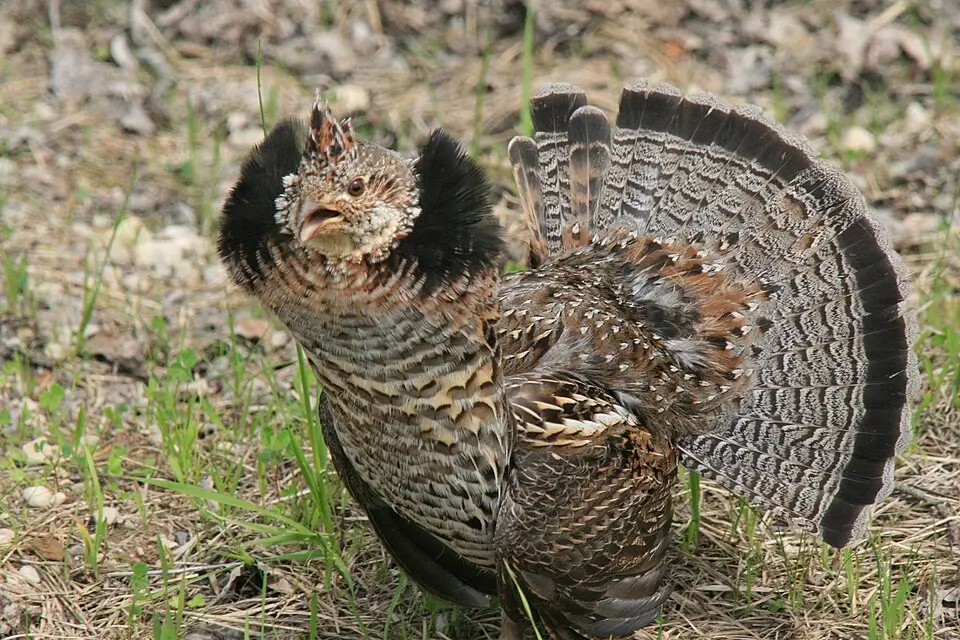
The Ruffed Grouse is a medium-sized bird belonging to the family Phasianidae, the same family that includes pheasants, turkeys, and quail. The species name umbellus is derived from the Latin word for "umbrella" or "parasol," a reference to the distinctive ruff of dark, iridescent feathers that encircles the neck of adult birds, particularly males. The genus name Bonasa is thought to derive from the Latin word for "bison," possibly referencing the booming, thunderous sound produced during courtship displays.
Ruffed Grouse display cryptic plumage that is masterfully adapted for concealment in the forest understory. Their feathers present a complex mosaic of browns, grays, blacks, and rufous tones, allowing them to blend seamlessly into the leaf litter, bark, and dappled light of their woodland homes. There are two primary color morphs — a brown morph and a gray morph — with geographic variation influencing which coloration predominates in a given population. In general, the gray morph tends to be more common in northern and more heavily forested regions, while the brown morph is frequently encountered in the Appalachian zone and the northeastern United States.
One of the most iconic behaviors of the Ruffed Grouse is the drumming display performed by males. A male grouse will perch atop a favored log — often called a drumming log — and beat his wings in a rapid, accelerating sequence that creates a deep, resonant thumping sound. This drumming serves as both a territorial declaration to rival males and a courtship signal to nearby females. The sound carries remarkably well through dense forest and is often heard before the bird is ever seen. Drumming activity is most intense during spring, though males may drum at various times throughout the year.
Ruffed Grouse are non-migratory birds and rely heavily on their immediate environment year-round. In winter, they are remarkably well adapted to cold conditions. They grow specialized projections called pectinations along the sides of their toes in autumn, which function as natural snowshoes to help them walk across snow. They also exhibit a fascinating behavior of diving headfirst into soft, deep snow to roost overnight, using the insulating properties of snow to stay warm during frigid temperatures. Their winter diet shifts heavily toward the buds and catkins of trees such as aspen, birch, and alder — foods that are readily available above the snowpack.
During the warmer months, Ruffed Grouse are omnivorous opportunists. Their diet includes a wide variety of berries, fruits, seeds, ferns, clover, insects, and other invertebrates. Chicks in particular depend heavily on insect protein in their first weeks of life to fuel rapid growth.
Ruffed Grouse are a cyclical species. Their populations are known to fluctuate on roughly 10-year cycles, a pattern that has been well-documented across much of their range — particularly in the northern portions of their habitat where populations of snowshoe hares and their predators may influence the broader ecosystem dynamics. These population cycles make the species both a fascinating subject for wildlife biologists and a dynamic target for hunters who track year-to-year changes in bird numbers.
Habitat & Range
The Ruffed Grouse is a bird of the forest, and understanding its habitat preferences is key to both finding it in the field and appreciating its ecological role. The species ranges broadly across North America, from Alaska and the Yukon in the northwest, across the boreal forests of Canada, and south through the Rocky Mountains, the Great Lakes region, New England, and the Appalachian Mountains as far south as Georgia and Alabama.
New York State, with its diverse mix of hardwood forests, regenerating clear-cuts, stream-side alder runs, and brushy second-growth timber, provides outstanding habitat for Ruffed Grouse. The Adirondack region, the Catskills, the Southern Tier, and the vast forested areas of central and western New York all support healthy populations of grouse in suitable years. As the fourth-most populous state in the nation, New York is an impressive example of how extensive wildlands and productive wildlife habitat can coexist with a large human population.
Ruffed Grouse are closely associated with early successional forest habitat — young, mixed woodlands that result from natural disturbance, timber harvesting, or forest succession following agricultural abandonment. Dense stands of young aspen are considered premier habitat across the northern portion of the bird's range. The aspen provides both food in the form of buds, catkins, and leaves, and cover in the form of dense, brushy thickets. However, Ruffed Grouse are habitat generalists to a meaningful degree and will also use mature forest edges, hemlock stands for winter thermal cover, alder carrs along stream corridors, and brushy woodland openings.
Interspersion is a key concept in Ruffed Grouse habitat management. The birds thrive where different habitat types are closely intermixed — where a young aspen stand borders a mature hardwood ridge, for instance, or where a brushy stream corridor winds between forested hillsides. This diversity of structure provides feeding areas, escape cover, drumming sites, brood habitat, and thermal protection all within a relatively compact home range.
Hunting Information
The Ruffed Grouse holds an honored place in North American upland hunting tradition. Hunting this bird requires skill, an intimate knowledge of the landscape, and — for those who hunt with pointing or flushing dogs — a well-trained canine partner. The explosive, twisting flush of a grouse through dense forest cover demands quick reflexes and confident shooting, and the bird's ability to use trees, brush, and terrain as natural shields makes clean kills a genuine accomplishment.
In New York State, the Ruffed Grouse is a regulated game species and a popular target for both resident and visiting hunters. Hunters planning to pursue Ruffed Grouse in New York should always consult the New York State Department of Environmental Conservation (NYSDEC) for current, up-to-date season dates, bag limits, and licensing requirements before heading afield, as regulations can change from year to year. Specific season dates and license information were not available in the source data consulted for this article, and hunters are strongly encouraged to verify all current regulations directly with the NYSDEC.
Traditionally, grouse hunters in New York focus on habitats like young aspen regeneration areas, alder-lined stream banks, wild apple thickets, and forest edges — the same structural features that define prime habitat across the species' range. Walking slowly through likely cover and listening for the telltale rustling of birds moving underfoot, or hunting behind a well-trained flushing or pointing dog, are the time-honored methods for pursuing this species.
The Ruffed Grouse season in the Northeast typically coincides with the brilliant colors of autumn, making grouse hunting not only a challenging pursuit but an aesthetically beautiful one. Many hunters consider the grouse woods to be among the most scenic and peaceful hunting environments available anywhere in North America.
Conservation
The conservation of Ruffed Grouse is closely tied to the health and management of forested habitats across North America. Habitat loss, forest maturation, and changes in land use are among the primary challenges facing grouse populations in many parts of their range. As forests age and the early successional habitat that grouse depend on becomes less abundant, populations can decline even in areas that were once productive.
Sustainable timber management, including the creation and maintenance of young forest habitats, is widely recognized as one of the most effective tools for supporting healthy grouse populations. Conservation organizations such as the Ruffed Grouse Society have worked for decades to promote habitat management practices that benefit grouse and the many other species — including American woodcock, white-tailed deer, and numerous songbird species — that share early successional forest ecosystems.
In New York, the NYSDEC and various conservation partners work to monitor grouse populations and manage state forest lands in ways that support wildlife diversity, including the Ruffed Grouse. Hunters themselves play a meaningful role in conservation through license fees and excise taxes on sporting equipment, which fund wildlife management and habitat programs across the state and the nation.
The Ruffed Grouse is not currently listed as a threatened or endangered species, and healthy populations persist across much of its range. Continued attention to habitat quality, sound wildlife management, and the involvement of hunters and conservationists alike will be essential to ensuring that future generations can enjoy the drumming of a spring grouse and the heart-stopping flush of a bird in autumn cover.