Overview
Few wild animals capture the human imagination quite like the red fox. With its flame-colored coat, bushy tail, and sharp, intelligent eyes, the red fox (Vulpes vulpes) has become one of the most recognized and beloved wildlife species on the planet. From ancient folklore and fables to modern wildlife photography, this resourceful canid has earned a permanent place in both the natural world and human culture. In North America, and specifically across the varied landscapes of New York State, the red fox is a thriving and fascinating presence — a creature that has demonstrated an extraordinary ability to adapt, survive, and even flourish alongside human civilization.
Whether you are a wildlife enthusiast hoping to catch a glimpse of one at dawn, a hunter pursuing one of the Northeast's most challenging quarry, or simply a curious naturalist, the red fox rewards attention. Understanding this animal — its biology, behavior, habitat preferences, and relationship with human land use — deepens our appreciation for the living world around us and helps us make informed, responsible decisions about how we share that world with wildlife.
Biological Traits
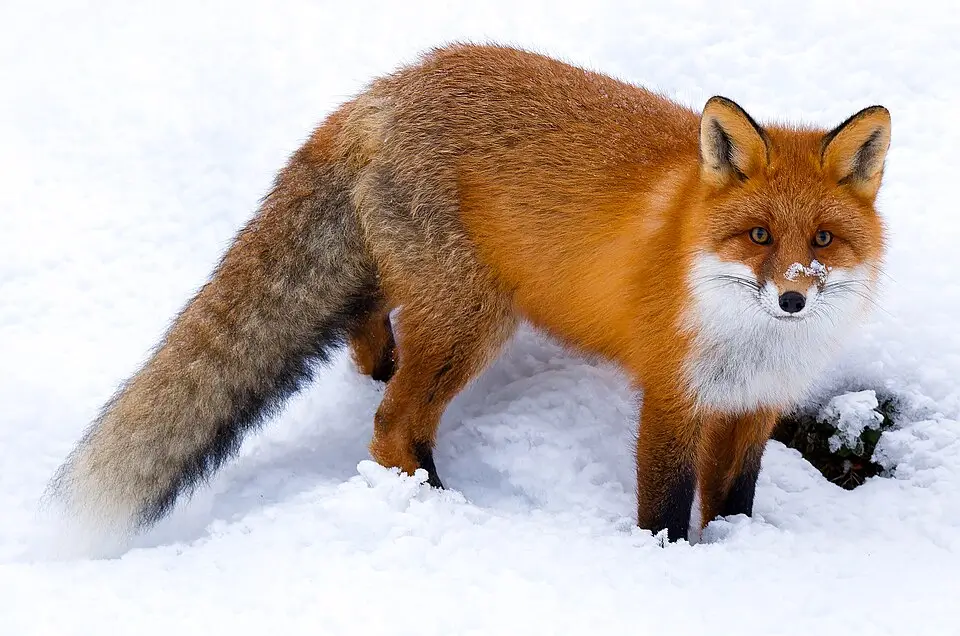
The red fox (Vulpes vulpes) is a member of the family Canidae, which also includes wolves, coyotes, and domestic dogs. It is the largest of the true foxes — the genus Vulpes — and also holds the distinction of being one of the most widely distributed carnivores on Earth. The species exhibits a remarkable degree of physical variation across its range, but the classic form is immediately recognizable: a rich reddish-orange coat on the back and sides, white underparts, and a long, full, white-tipped tail known as a "brush." The legs and backs of the ears are typically black, providing a striking contrast to the warm tones of the body.
It is worth noting that red foxes are not always red. Several natural color morphs occur within the same species, including the "cross fox," which displays a dark stripe running down the back intersecting with a stripe across the shoulders, and the "silver fox," which ranges from partially to entirely black with silver-tipped guard hairs. These color variations are genetic in origin and can appear in the same litter as classic red individuals.
Red foxes are medium-sized canids. Adults typically weigh between 6 and 15 pounds, with males (known as "dogs" or "reynards") being somewhat larger than females (known as "vixens"). The body is slender and athletic, built for speed, agility, and endurance. Their large, upright, pointed ears give them exceptional hearing, allowing them to detect the movements of small prey animals — even those moving under snow. Their eyes feature vertically slit pupils, which are highly effective for low-light vision, supporting their crepuscular and nocturnal hunting habits.
One of the most celebrated traits of the red fox is its intelligence. Foxes are widely regarded among mammalogists as among the most cognitively flexible of wild canids. They are adept problem solvers, capable of learning quickly from experience and adjusting their behavior in response to changing conditions. This cognitive flexibility is a major reason why foxes have thrived in environments as varied as arctic tundra, dense forest, open farmland, and suburban neighborhoods.
The diet of the red fox is famously omnivorous and opportunistic. Small mammals — particularly voles, mice, rabbits, and squirrels — form the core of the diet in most environments. However, foxes will also consume birds and their eggs, insects, earthworms, fruits, berries, carrion, and occasionally larger prey. In areas near human habitation, they may supplement their diet with food waste. This dietary flexibility is yet another expression of the fox's extraordinary adaptability.
Red foxes are generally solitary animals outside of the breeding season, though they maintain and defend territories that may overlap with those of related individuals. Breeding typically occurs in late winter — January through March across much of the northern range — and after a gestation period of approximately 52 days, vixens give birth to litters of typically four to six pups, though litters of up to twelve have been recorded. Pups are born blind and helpless in underground dens and are cared for by both parents. By late summer, the young foxes disperse to establish their own territories, sometimes traveling remarkable distances from their birthplace.
The vocalizations of the red fox are varied and often surprising to those who encounter them for the first time. Foxes produce a wide range of sounds, including barks, screams, and a distinctive howling call used during the breeding season — a sound that has startled many a rural homeowner on a winter night.
Habitat & Range
The red fox boasts one of the broadest geographical distributions of any wild terrestrial mammal. Vulpes vulpes is native across much of the Northern Hemisphere, spanning North America, Europe, Asia, and North Africa. It has also been introduced to Australia, where it has become established across much of the continent. This extraordinary range reflects the species' tolerance for diverse climates and habitat types.
In North America, red foxes are found from Alaska and northern Canada southward into the contiguous United States and into parts of Mexico. They inhabit tundra, boreal forest, mixed woodlands, grasslands, agricultural land, and increasingly, suburban and even urban environments.
In New York State — with its diverse geography encompassing the Adirondack Mountains, the Catskills, the Hudson Valley, the Great Lakes shoreline, and extensive agricultural lowlands — red foxes are found throughout the state. New York's patchwork of forests, fields, wetlands, and human-modified landscapes provides ideal conditions for a generalist species like the red fox. Edge habitats, where woodland meets open ground, are particularly favored, as they offer both cover for denning and open ground for hunting small mammals.
The red fox is also a notable presence in suburban and even urban portions of New York. Communities along the Hudson Valley, Long Island, and within the broader New York metropolitan area regularly report fox sightings, a testament to the species' comfort with human proximity when food and shelter are available.
Hunting Information
The red fox occupies a storied place in hunting tradition, both in North America and around the world. Fox hunting, in its various forms, is one of the oldest organized hunting pursuits in the Western world, with traditions dating back centuries in Europe and well-established roots in American colonial history.
In the United States, red foxes are pursued both for sport and, to a lesser extent, for their pelts. Fox hunting as a sport — whether on horseback with hounds in the classical tradition or as a modern predator hunting pursuit — emphasizes the challenge of the quarry. The red fox is a notoriously wary and evasive animal. Its keen senses, quick intelligence, and intimate knowledge of its home territory make it one of the most demanding animals to hunt on foot. Hunters pursuing red fox typically employ calling techniques — using electronic or mouth-blown calls that imitate the distress sounds of prey animals — combined with patient concealment and careful attention to wind direction.
For hunters in New York State, the red fox is a legal game species, and the state manages fox hunting as part of its broader furbearer program. However, specific season dates, licensing requirements, and bag limits for New York are subject to change and are regulated by the New York State Department of Environmental Conservation (NYSDEC). Hunters and trappers interested in pursuing red fox in New York are strongly encouraged to consult the most current NYSDEC hunting and trapping regulations guide before heading afield, as official specifics were not available in the source data reviewed for this article. General best practices for fox hunting in the Northeast include hunting during dawn and dusk hours when foxes are most active, learning to read tracks and sign in snow, and scouting edge habitats near agricultural fields and wetlands.
Trapping is another traditional method used to manage and harvest red fox populations. Leg-hold traps, foothold traps, and cage traps — when used in accordance with state regulations and ethical trapping standards — can be effective tools for both sport trappers and those managing fox populations on private land.
Conservation
The red fox is currently classified by the International Union for Conservation of Nature (IUCN) as a species of "Least Concern," reflecting its wide distribution, large population size, and adaptability. Globally, red fox populations are considered stable and in many areas have expanded in response to human landscape modification and the reduction of larger predators such as wolves and mountain lions, which historically limited fox populations through predation and competition.
In New York State and across the Northeast, red fox populations are generally healthy. The species has benefited from the region's mix of agricultural and forested land, and its comfort in suburban environments means that urbanization has not posed the same threat to foxes as it has to more specialized wildlife species.
Responsible wildlife management — including regulated hunting and trapping seasons, habitat conservation, and public education about coexistence with urban and suburban foxes — plays a meaningful role in maintaining healthy fox populations and the ecosystems they inhabit. Foxes are valuable components of local food webs, helping to regulate populations of rodents and rabbits and serving as prey for larger predators such as coyotes, bobcats, and raptors.
Wildlife observers and outdoor enthusiasts can support red fox conservation by respecting denning sites, avoiding the feeding of wild foxes (which can habituate animals to humans in ways that create problems for both foxes and people), and supporting land conservation efforts that preserve the edge habitats these animals depend upon.
Conclusion
The red fox is, in every sense, a success story of the natural world — a highly intelligent, adaptable, and beautiful animal that has found a way to thrive across millennia of environmental change and human expansion. In New York State's rich mosaic of landscapes, the red fox remains a vibrant thread in the fabric of wildlife, offering encounters that range from a fleeting glimpse at the field's edge to the thrill of a challenging hunt on a crisp winter morning. For hunters, naturalists, and wildlife lovers alike, Vulpes vulpes is a species that richly rewards attention and respect.