Overview
Few birds evoke the spirit of the American countryside quite like the Northern bobwhite. With its distinctive, whistled call that seems to announce its own name — bob-WHITE! — this small, charismatic game bird has captured the hearts of hunters, naturalists, and birdwatchers alike for generations. Scientifically classified as Colinus virginianus, the Northern bobwhite belongs to the family Odontophoridae, the New World quails, and stands as one of the most recognized and beloved upland game birds across the eastern United States.
The Northern bobwhite is more than just a familiar sound drifting across open farmland on a warm summer morning. It is a species deeply woven into the cultural and ecological fabric of rural America — a bird that has inspired a rich tradition of dog training, wing shooting, and conservation stewardship that spans more than a century. Understanding this bird, from its biology and habitat preferences to its complex relationship with humanity, is essential for anyone who appreciates North American wildlife.
For residents and outdoor enthusiasts in New York State — a state stretching from the Atlantic coastline to the shores of the Great Lakes, and home to over 20 million people — the Northern bobwhite represents a fascinating piece of natural heritage, one that intersects history, ecology, and sporting tradition in meaningful ways.
Biological Traits
The Northern bobwhite (Colinus virginianus) is a member of the order Galliformes, the same broad group that includes turkeys, pheasants, grouse, and domestic chickens. As a New World quail, it is more closely related to the California quail and Montezuma quail than to the Old World quails found in Europe and Asia.
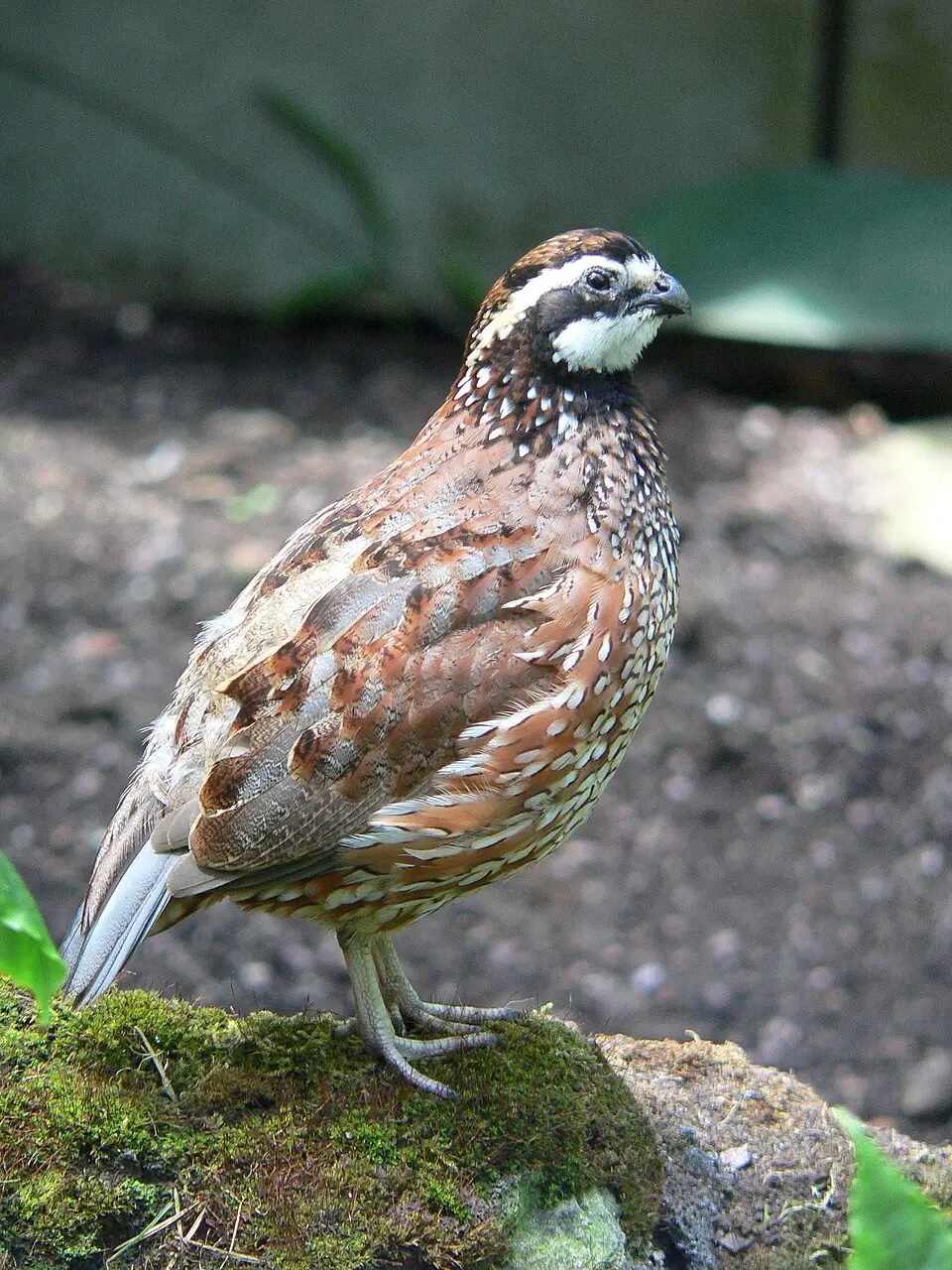
In terms of physical appearance, the Northern bobwhite is a compact, rotund bird with a short tail and rounded wings — a body plan perfectly suited for explosive, short-distance flight through dense vegetation. Males display a striking pattern of rich chestnut, black, white, and buff tones, with a bold white supercilium (eyebrow stripe) and throat that are instantly recognizable. Females share much of the same intricate, cryptic patterning, but their supercilium and throat tend to be buffy or tan rather than bright white, a subtle difference that helps distinguish the sexes in the field.
Like many ground-dwelling birds, bobwhites are well adapted for life close to the earth. Their legs are sturdy, built for scratching through leaf litter in search of seeds, insects, and other food items. Their coloration provides remarkable camouflage against the leaf litter and grasses of their preferred habitats, making them notoriously difficult to spot until they burst into flight with a loud, startling wingbeat.
One of the most fascinating aspects of bobwhite biology is their social structure. For much of the year, these birds live in small family groups known as coveys, typically composed of anywhere from a few individuals to a dozen or more birds. Covey life provides multiple benefits — more eyes to watch for predators, shared warmth during cold nights when birds roost in tight, outward-facing circles, and coordinated foraging behavior. During the breeding season, covey structure breaks down as birds pair off, though bobwhites exhibit a complex and somewhat flexible mating system. Both males and females may participate in incubating eggs and raising young, and multiple broods per season are not uncommon in areas with favorable conditions.
The Northern bobwhite's call is arguably its most defining characteristic. The male's loud, clear bob-WHITE! or bob-bob-WHITE! whistle is a quintessential sound of open country from spring through summer, serving as a territorial and mate-attraction signal. Other vocalizations include soft contact calls used within coveys and alarm notes that warn of approaching danger.
Diet in the Northern bobwhite is highly varied and shifts with the seasons. Seeds — particularly those of native legumes, grasses, and forbs — form the backbone of their diet throughout the year. Insects and other invertebrates become especially important during the summer months and are a critical protein source for rapidly growing chicks. Young bobwhite chicks, called chicks or poults in the first days of life, are precocial — meaning they hatch with open eyes and a coat of down, and are capable of following their parents and foraging within hours of hatching.
Habitat & Range
The Northern bobwhite's natural range covers a broad swath of eastern and central North America, extending from southern Canada through the eastern United States and into Mexico and parts of Central America. Historically, the species thrived wherever a patchwork of open fields, brushy edges, early successional shrublands, and open woodlands existed — exactly the kind of mosaic landscape that characterized much of rural America before the era of industrial agriculture.
Bobwhites are quintessential edge species. They favor the transitional zones between habitat types — where forest meets field, or where brushy thickets give way to open grassland. This preference for edge habitat reflects their need for a combination of resources: open ground for foraging, dense shrubs and briar patches for cover from predators, and tall herbaceous vegetation for nesting. Brushy fencerows, weedy field borders, young pine plantations, and native bunchgrass meadows have all historically supported healthy bobwhite populations.
In the northeastern United States, including New York, the Northern bobwhite occupies the northern fringe of its native range. The species has historically been found in the lower Hudson Valley, Long Island, and other areas of southeastern New York where suitable open and brushy habitats exist. The cooler climate and landscape characteristics of upstate New York are generally less favorable for bobwhites, though sightings have been recorded across a wider area.
Hunting Information
The Northern bobwhite holds a revered place in American hunting culture. Quail hunting, particularly in the southeastern United States, has long been synonymous with a specific and cherished tradition: hunting over pointing dogs — English pointers, setters, and Brittany spaniels — that lock on point when they detect the scent of a holding covey, allowing hunters to approach and flush the birds for shots with a shotgun. This style of hunting is considered by many upland bird hunters to be the pinnacle of the sport, combining the athleticism of well-trained dogs, the challenge of shooting fast-flushing birds in heavy cover, and the beauty of open countryside.
In states where robust bobwhite populations persist — particularly in the Southeast and portions of the Midwest — regulated hunting seasons provide opportunities for sportsmen and sportswomen to pursue these birds each fall and winter. Hunters typically use light, open-choked shotguns and fine-mesh hunting vests capable of carrying harvested birds and gear through dense brush.
For hunters and outdoor enthusiasts in New York State, the situation regarding Northern bobwhite hunting is more nuanced. Because New York sits at the northern edge of the bobwhite's natural range, and because populations across the northeastern United States have experienced significant declines over recent decades, prospective hunters in New York should consult the New York State Department of Environmental Conservation (NYSDEC) for current, up-to-date regulations, season dates, and licensing requirements before planning any hunt. Regulations can change from year to year based on population assessments and conservation priorities, and what may be permissible in one part of the state may not apply in another. At the time of this writing, specific season dates and license requirements for bobwhite in New York were not available from official sources, making it especially important for hunters to verify the latest information directly with state wildlife authorities.
Conservation
The Northern bobwhite's story over the past several decades is one of the most pressing conservation challenges in North American wildlife management. Across much of its range, bobwhite populations have declined substantially, driven primarily by large-scale changes to the agricultural and rural landscape. The consolidation of farmland, the loss of fencerows and brushy edges, the transition from diverse row crops to monoculture agriculture, the suppression of fire in fire-adapted ecosystems, and the intensification of land use have all reduced the patchwork habitat on which bobwhites depend.
In response, a wide coalition of conservation organizations, state wildlife agencies, federal programs, and private landowners has mobilized to address bobwhite declines. Habitat restoration efforts — including the planting of native bunch grasses, the restoration of brushy field borders, the use of prescribed fire to maintain open habitats, and the establishment of food plots — have demonstrated measurable benefits for local bobwhite populations. Programs such as the Natural Resources Conservation Service's (NRCS) Working Lands for Wildlife initiative have helped connect private landowners with resources to implement bobwhite-friendly practices on their properties.
Hunters have historically been among the most committed supporters of bobwhite conservation, funding research, habitat work, and public awareness through license fees, excise taxes under the Federal Aid in Wildlife Restoration Act (Pittman-Robertson Act), and donations to organizations like Quail Forever and the National Bobwhite Conservation Initiative. This tradition of hunter-funded conservation reflects a broader ethic within the sporting community that values the health of wildlife populations for both recreational and ecological reasons.
In New York and the broader Northeast, efforts to understand and support remnant bobwhite populations are ongoing. Citizen science programs, breeding bird surveys, and targeted research projects help wildlife managers track population trends and identify priority areas for habitat conservation. For residents of New York State who value this iconic bird, opportunities exist to contribute to its future — whether through supporting habitat-focused land trusts, participating in bird surveys, or advocating for land management practices that benefit bobwhites and a wide range of other wildlife.
The Northern bobwhite's future is not written in stone. With sustained commitment to habitat conservation, thoughtful wildlife management, and continued engagement from hunters, landowners, and the broader public, there is every reason to hope that the clear, whistled call of bob-WHITE! will continue to ring out across American fields and hedgerows for generations to come.