Overview
Few birds are as universally recognized across North America as the mourning dove (Zenaida macroura). Its soft, mournful cooing — a sound that drifts across fields at dawn and settles over quiet neighborhoods at dusk — has made it one of the most iconic birds on the continent. Whether you are a devoted bird watcher, a backyard nature enthusiast, or a seasoned wing shooter, the mourning dove holds a special place in the American outdoor experience. Graceful in flight, gentle in appearance, and remarkably adaptable in habitat, this species represents a fascinating intersection of natural history, ecological importance, and sporting tradition.
In New York State, a region that stretches from the Atlantic coastline through rolling farmlands and up into the Adirondack highlands, the mourning dove is a common and welcome presence. Its soft coos echo through suburban backyards, open meadows, and agricultural edges throughout much of the year, making it a cherished part of the northeastern landscape. Understanding this bird — its biology, behavior, range, and role in the sporting community — offers a richer appreciation for one of North America's most abundant and beloved species.
Biological Traits
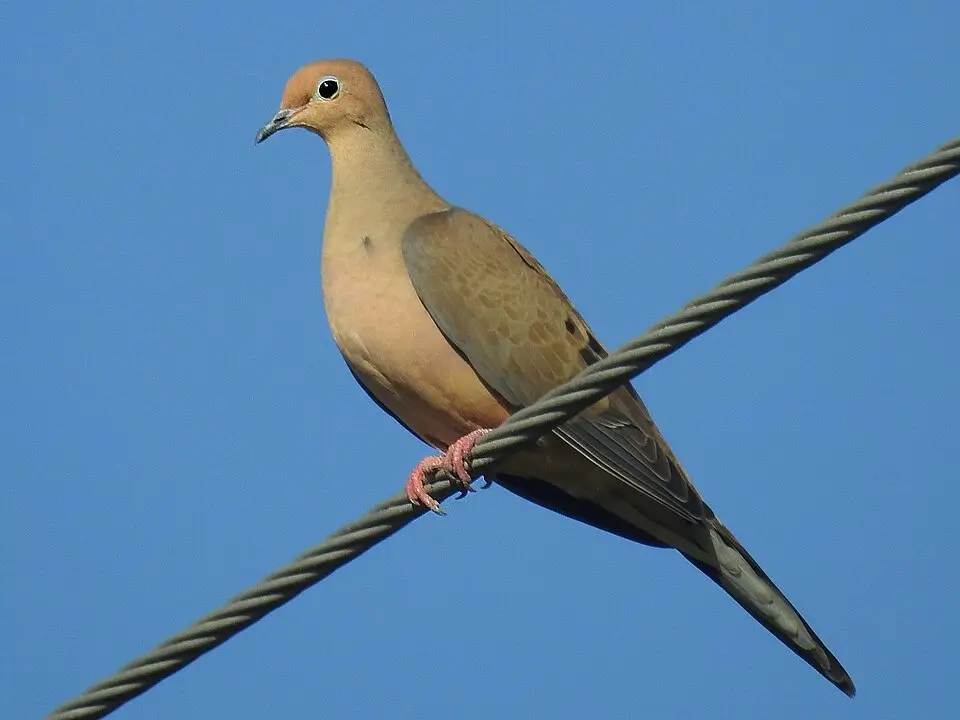
The mourning dove (Zenaida macroura) belongs to the family Columbidae, the same family that includes pigeons and other doves found worldwide. It is a medium-sized bird, slender and streamlined in body shape, with a small rounded head that bobs characteristically as it walks. The plumage is a soft blend of grayish-brown and buff tones, with subtle iridescent patches on the neck that shimmer faintly in sunlight. The tail is long and tapered — one of the bird's most distinctive features — and displays white-tipped outer feathers that fan outward in flight, creating a flash of white that helps identify the species in motion.
One of the mourning dove's most remarkable biological traits is the distinctive whistling sound its wings produce during takeoff. This is not a vocalization but rather a mechanical sound created by air passing over specialized wing feathers. Scientists have studied this "wing whistle" and believe it may serve as an alarm signal that alerts nearby birds to potential danger, an elegant example of non-vocal communication in the animal kingdom.
The mourning dove is a prolific breeder. Pairs can produce multiple broods per year — sometimes as many as five or six clutches under favorable conditions — though two eggs per clutch is the standard. Both parents share incubation duties, which typically last around two weeks. After hatching, the young, called squabs, are fed "crop milk," a highly nutritious secretion produced in the crops of both the male and the female. This remarkable adaptation allows mourning dove parents to nourish their young entirely on internally produced food during the earliest days of life, a trait shared with other members of the pigeon family.
The mourning dove is also notable for its lifespan. While most wild individuals live only one to two years due to predation and environmental pressures, banded birds have been recorded living well over ten years in the wild — a testament to the species' resilience when conditions are favorable.
Their diet consists almost entirely of seeds. Mourning doves are granivores, foraging primarily on the ground for seeds from grasses, weeds, and agricultural crops such as corn, sunflower, millet, and sorghum. They consume seeds in large quantities, storing them temporarily in an expandable portion of the esophagus called the crop before digesting them later. This behavior allows them to feed quickly and efficiently in open areas where predators may be present, then retreat to safer cover to digest their meal.
Habitat & Range
The mourning dove is one of the most widely distributed birds in North America. Its range extends from southern Canada through the contiguous United States, into Mexico, Central America, and portions of the Caribbean. It is found in virtually every type of open or semi-open habitat, including grasslands, agricultural fields, open woodlands, forest edges, scrublands, and suburban and urban environments. The species' adaptability to human-modified landscapes has been a significant driver of its continued abundance even as other bird species have declined.
In New York State, mourning doves are commonly encountered across a broad range of environments. The state's diverse landscape — encompassing the Hudson Valley, the Finger Lakes region, the agricultural plains of western New York, the suburbs of Long Island, and the Adirondack foothills — provides ample habitat for doves throughout the warmer months. Open farmland and rural edges are particularly favored, as these areas offer both abundant food sources and the low vegetation or bare ground the species prefers for foraging.
Mourning doves are partially migratory. Northern populations, including many of those that breed in New York, tend to move southward in the fall to escape harsh winter conditions, while southern populations may remain resident year-round. However, some mourning doves do overwinter in New York, particularly in milder areas with reliable food sources such as unharvested crop fields or well-stocked backyard feeders. This migratory behavior places the mourning dove under the jurisdiction of the federal Migratory Bird Treaty Act, which governs its management across the United States.
Nesting habitat preferences include trees, shrubs, vines, and occasionally ground-level sites. The nest itself is a famously flimsy structure — a loose platform of twigs assembled with what appears to be minimal engineering — yet it serves the species well enough to support its remarkably high reproductive output.
Hunting Information
The mourning dove is the most heavily hunted migratory bird in North America, with tens of millions of birds harvested annually by hunters across the country. This makes it a cornerstone of the upland and migratory bird hunting tradition, particularly in the southeastern and midwestern United States, where dove season openers on September 1st are celebrated as a social and sporting institution.
Dove hunting is prized for the fast, unpredictable flight of the birds, which presents a genuinely challenging target for wing shooters. Doves fly with speed and erratic direction changes that test even experienced shotgunners, making a successful hunt deeply satisfying. Hunters typically position themselves near feeding fields, water sources, or flight corridors and engage passing birds with lightweight shotguns loaded with small shot.
Regarding dove hunting specifically in New York State, prospective hunters should be aware that the mourning dove's status as a hunted species has varied by state over the decades. Because the mourning dove is a federally protected migratory bird under the Migratory Bird Treaty Act, individual states must apply for and receive federal authorization to hold hunting seasons. Hunters interested in pursuing mourning doves in New York are strongly encouraged to consult the New York State Department of Environmental Conservation (NYSDEC) directly for the most current and accurate information regarding season dates, bag limits, licensing requirements, and any applicable regulations. Regulations can change from year to year, and official state sources are always the most reliable reference for hunters planning a season.
General dove hunting best practices applicable in states with open seasons include scouting feeding fields in advance, setting up near water sources in warm weather, and practicing shooting on moving clay targets to prepare for the fast-flying birds. A valid hunting license and, where applicable, a federal migratory bird hunting stamp (commonly known as the Duck Stamp) are typically required for migratory bird hunting in the United States.
Conservation
Despite being hunted in large numbers, the mourning dove remains one of the most abundant bird species in North America, with population estimates frequently cited in the hundreds of millions. This abundance is supported by the species' exceptional reproductive capacity — the ability to produce multiple clutches per year means that populations can rebound quickly even when harvest pressure is significant.
The mourning dove is managed cooperatively at the federal level through the U.S. Fish and Wildlife Service, which conducts annual population surveys and sets harvest guidelines that individual states must work within. This science-based management framework has helped ensure that dove populations remain robust and sustainable over the long term.
Conservation efforts for mourning doves also benefit from the species' association with working agricultural landscapes. Farm fields, hedgerows, and weedy roadsides provide critical foraging and nesting habitat, meaning that conservation programs that support farmers in maintaining diverse, wildlife-friendly land practices also benefit dove populations. Initiatives like the Conservation Reserve Program (CRP) have been recognized as broadly beneficial to open-country bird species including mourning doves.
For backyard enthusiasts in New York and across the country, attracting mourning doves is as simple as offering millet, sunflower seeds, or cracked corn in or near ground-level feeders. The birds are gentle and unobtrusive at feeding stations, and their soft cooing provides a soothing natural soundtrack to any outdoor space. In this way, the mourning dove connects everyday Americans to the broader world of wildlife, fostering the appreciation and stewardship that ultimately underpins all conservation efforts.
The mourning dove's combination of biological resilience, ecological adaptability, sporting significance, and sheer aesthetic charm ensures that it will remain a beloved and prominent feature of the North American landscape for generations to come.