Overview
Few birds are as immediately recognizable as the mallard (Anas platyrhynchos). With its iridescent emerald-green head, chestnut breast, and characteristic curled tail feathers, the male mallard — known as a drake — has become the quintessential image of a duck for much of the world. Whether gliding across a quiet pond in a city park, splashing down into a flooded cornfield, or banking sharply over a cattail marsh at dawn, the mallard is a constant and beloved presence across the Northern Hemisphere. For wildlife enthusiasts and waterfowl hunters alike, this species holds a special place of reverence and fascination.
In New York State, the mallard is both a common year-round resident and a highly sought-after game bird. New York's diverse geography — encompassing coastal marshes, Adirondack lakes, Hudson River wetlands, and the shores of the Great Lakes — provides exceptional mallard habitat throughout the seasons. Understanding this remarkable bird, from its biology to its behavior and its role in both ecosystems and hunting culture, deepens our appreciation for one of nature's most adaptable and enduring species.
Biological Traits
The mallard (Anas platyrhynchos) belongs to the family Anatidae, the large and diverse group that includes all ducks, geese, and swans. It is classified within the genus Anas, which groups together the so-called "dabbling ducks" — birds that feed primarily at the water's surface or by tipping headfirst into shallow water, rather than diving beneath it.
Sexual Dimorphism
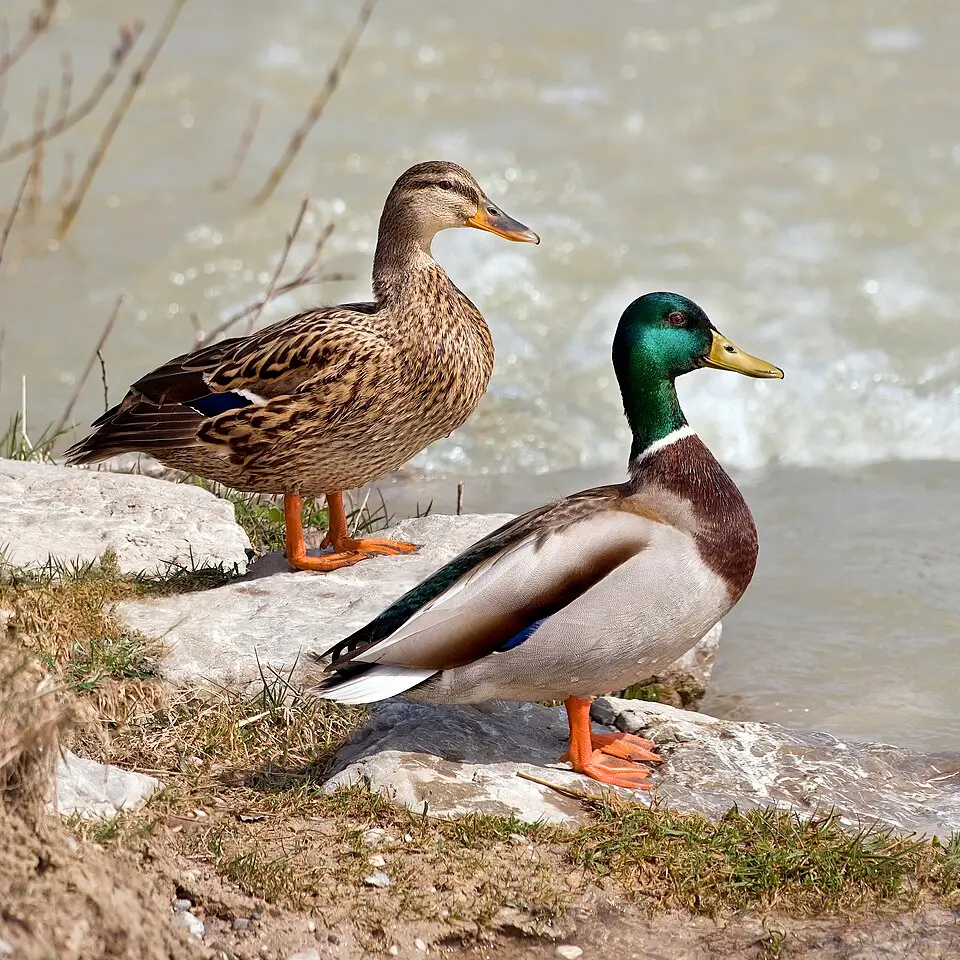
One of the most striking features of the mallard is the pronounced difference in appearance between males and females, a characteristic known as sexual dimorphism. The drake, during the breeding season, sports one of the most distinctive looks in the avian world: a glossy, iridescent green head that shimmers with blue and purple hues in the right light, separated from a rich chestnut-brown breast by a crisp white neck ring. His body is largely gray, his tail is white with those famous curled black central feathers, and his bill is a bright yellow-orange.
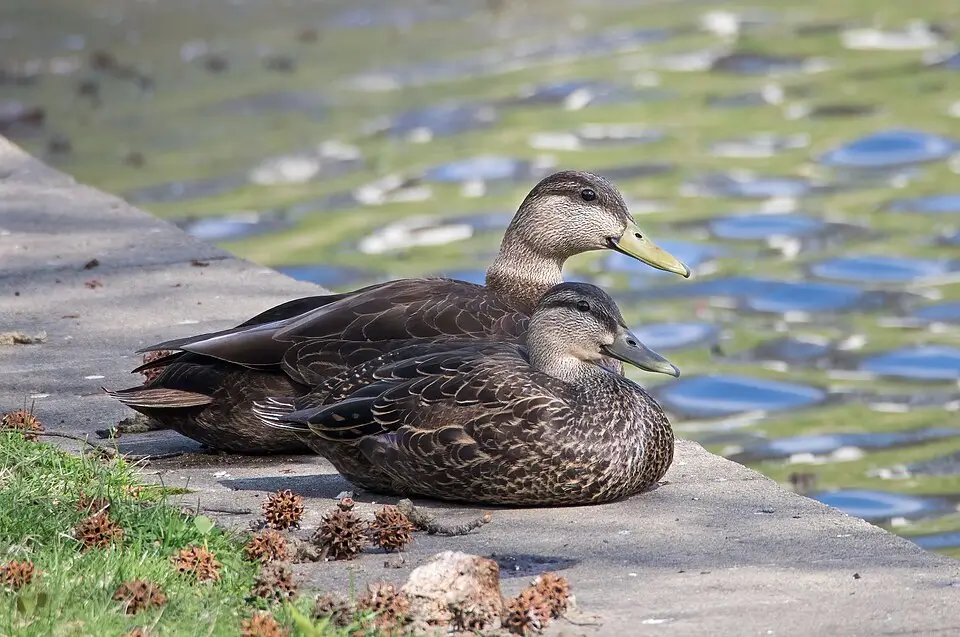
The female mallard, or hen, is far more subtly colored. She wears a mottled brown plumage that provides excellent camouflage while she incubates eggs and tends to her nest. Her bill tends toward orange with dark markings. Both sexes share a distinctive "speculum" — a patch of iridescent blue-violet feathers on the wing, bordered by white bars, that flashes brilliantly in flight.
Mallards are medium to large ducks. Adult males typically weigh between 2 and 3 pounds, though weights can vary significantly depending on the season and food availability. Their wingspan is broad and strong, enabling sustained flight and impressive migration distances.
Vocalizations
The classic "quack" so famously associated with ducks is, in fact, the call of the female mallard. Her loud, descending series of quacks serves as a contact call and a means of communication within the flock. Males, by contrast, produce a softer, raspier sound — a quieter, nasal note quite unlike the stereotypical duck sound most people imagine. This distinction is useful knowledge both for birdwatchers and hunters employing duck calls.
Diet and Feeding Behavior
As a dabbling duck, the mallard feeds in shallow water, marshes, and flooded fields. Its diet is highly omnivorous and opportunistic, including aquatic plants, seeds, grains, insects, small fish, and invertebrates. This dietary flexibility is a major contributor to the mallard's extraordinary success as a species. In agricultural landscapes, mallards readily exploit harvested grain fields, feeding on waste corn, wheat, and other crops. In wetlands, they consume aquatic vegetation, seeds of marsh plants, and a wide variety of invertebrates.
Reproduction
Mallards are seasonally monogamous, forming pair bonds typically during the late fall and winter months. Courtship displays involve elaborate head-pumping, preening, and vocalizations from competing drakes. Nesting occurs in spring, with hens selecting nest sites on the ground, often in dense vegetation near water but sometimes at surprising distances from it. A typical clutch contains between 8 and 13 eggs, and incubation lasts approximately 23 to 30 days. Ducklings are precocial — born covered in down and capable of leaving the nest and feeding themselves within hours of hatching. The hen alone tends the brood, leading her ducklings to water where they quickly begin foraging independently.
Habitat & Range
The mallard is one of the most widely distributed duck species on Earth. Its native range spans much of the Northern Hemisphere, including North America, Europe, Asia, and portions of North Africa. In North America, mallards breed from Alaska and Canada south through much of the continental United States, and they winter across the southern United States, Mexico, and beyond.
What makes the mallard so successful across such a vast range is its remarkable habitat adaptability. Mallards thrive in virtually any wetland environment: natural lakes and rivers, artificial ponds and reservoirs, estuaries, coastal marshes, prairie potholes, flooded agricultural fields, and even urban park ponds. They are as comfortable in the wilderness of the Adirondacks as they are paddling in Central Park's Conservatory Water.
Mallards in New York State
New York State offers an outstanding mosaic of mallard habitats. The St. Lawrence River valley and Lake Ontario shoreline in the north and west provide productive staging and wintering areas. The vast wetland complexes of the Finger Lakes region, the Hudson River corridor, and the coastal marshes of Long Island's South Shore attract large concentrations of mallards during migration and winter. The Adirondack and Catskill regions offer summer breeding habitat, with numerous ponds and lakes supporting nesting pairs.
Migration routes bring massive numbers of mallards through New York each autumn, with birds moving south and east from breeding grounds in the prairie pothole region of the upper Midwest and Canada. The state sits within the Atlantic Flyway, one of North America's four major migratory corridors for waterfowl, making it a critical stopover and wintering location for millions of ducks annually.
Hunting Information
The mallard is arguably the most important game duck in North America, representing a cornerstone of waterfowl hunting tradition and culture. Hunting mallards demands skill, preparation, and an intimate knowledge of the bird's habits — which is precisely why it has captivated hunters for generations.
Hunting Mallards in New York
New York State is a premier destination for waterfowl hunting, and mallards are the most sought-after species for duck hunters across the state. The Atlantic Flyway brings substantial mallard populations through New York each fall and early winter, concentrating birds along major river systems, coastal marshes, and inland lakes and wetlands.
For specific season dates, bag limits, and licensing requirements in New York, hunters are strongly encouraged to consult the New York State Department of Environmental Conservation (NYSDEC) website and the current New York Hunting & Trapping Regulations Guide. Regulations for waterfowl hunting — including season dates, daily bag limits, shooting hours, and required licenses and stamps — are established annually in coordination with the U.S. Fish & Wildlife Service and can vary by zone within the state. A federal Duck Stamp, in addition to a state hunting license, is typically required for waterfowl hunting in the United States.
Tactics and Traditions
Mallard hunting encompasses a rich array of tactics. Hunters commonly use decoy spreads set in ponds, marshes, flooded fields, or river backwaters to attract passing birds. Duck calls — replicating the hen mallard's distinctive quack and feeding chuckle — are an art form unto themselves, and skilled callers can coax circling birds into range with remarkable consistency.
Layout blinds, pit blinds, boat blinds, and natural vegetation concealment all play a role depending on the hunting environment. Jump-shooting — walking quietly along streams or ponds and flushing birds — is a more solitary and minimalist approach that requires stealth and opportunistic shooting. Retrievers, particularly Labrador Retrievers, Chesapeake Bay Retrievers, and Golden Retrievers, have long been the waterfowler's trusted partners, marking and recovering downed birds in cold water and thick cover.
The mallard's wariness and intelligence make it a challenging and rewarding quarry. Experienced birds — particularly late-season drakes that have been pressured throughout the fall — can be notoriously difficult to decoy and call, demanding the best from hunters in terms of concealment, calling technique, and decoy presentation.
Conservation
The mallard stands as one of the great conservation success stories of North American wildlife management. While many bird species face serious population pressures, mallard populations have remained robust across much of their range, a testament to effective science-based management and the conservation investments made by hunters and wildlife agencies alike.
Waterfowl conservation in North America is largely funded through the Federal Duck Stamp program, established in 1934, which directs funds toward the purchase and protection of wetland habitat. The North American Waterfowl Management Plan, a landmark international conservation agreement, has guided habitat restoration and population management for decades. Organizations such as Ducks Unlimited have partnered with government agencies to conserve millions of acres of wetlands critical to mallards and hundreds of other species.
Wetland preservation is the cornerstone of mallard conservation. The drainage of prairie potholes for agriculture, the degradation of coastal marshes, and the loss of riparian wetlands are the primary threats to mallard habitat. Ongoing efforts to restore and protect these critical areas benefit not only mallards but the entire community of wetland-dependent wildlife.
In New York, wetland conservation programs and the protection of the state's extensive network of rivers, lakes, and coastal marshes ensure that mallards will continue to thrive as both a wildlife resource and a game species for generations to come.