Overview
When most people think of foxes in North America, the vivid red fox often comes to mind first — a flame-colored blur darting across an open field at dusk. Yet sharing these same landscapes, and in many ways more ecologically fascinating, is the gray fox (Urocyon cinereoargenteus), a species that defies many of the assumptions we make about members of the dog family. Stealthy, adaptable, and possessing a suite of physical abilities that set it apart from nearly every other canid on the continent, the gray fox is a remarkable animal worthy of far greater attention from wildlife enthusiasts, hunters, and naturalists alike.
Found across a sweeping range that stretches from southern Canada through most of the contiguous United States and deep into Central America and parts of South America, the gray fox occupies an enormous and ecologically diverse territory. In a state as varied as New York — with its dense hardwood forests, brushy agricultural margins, rocky hillsides, and suburban woodlots — the gray fox finds ample opportunity to thrive alongside its more commonly discussed relative, the red fox. Understanding this animal more deeply enriches our appreciation of North America's wild places and the complex food webs that sustain them.
Biological Traits
The gray fox (Urocyon cinereoargenteus) belongs to the family Canidae and is placed in the genus Urocyon, which is considered one of the most primitive of the living canid genera in North America. The species name cinereoargenteus is derived from Latin, meaning roughly "ashen silver," a direct nod to the animal's distinctive coat coloration.
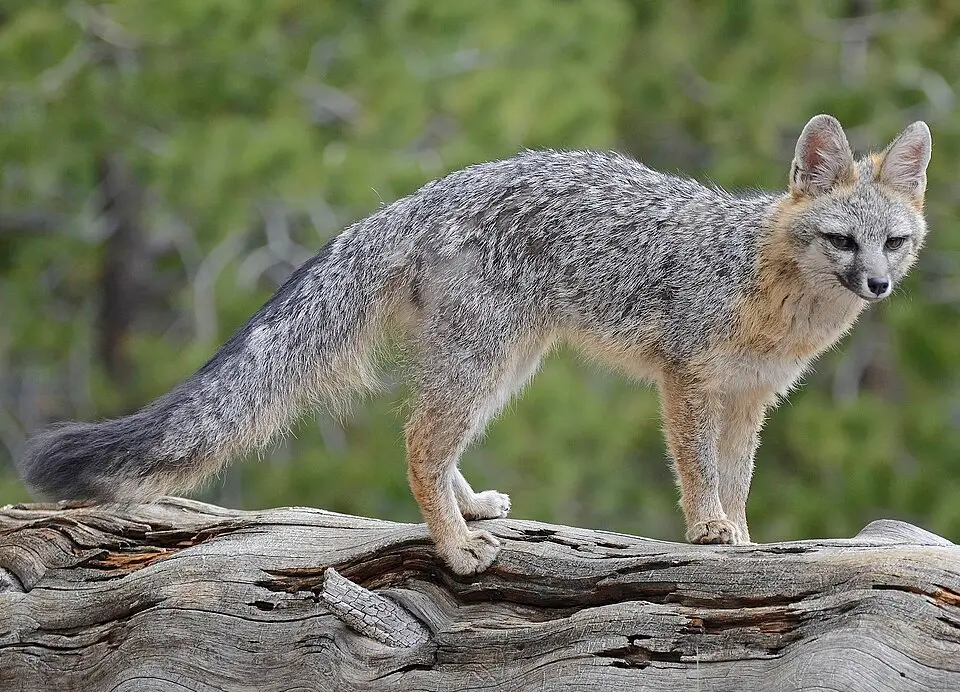
The gray fox is immediately recognizable by its salt-and-pepper grizzled gray coat along its back and sides, contrasted by warm rufous or reddish-orange patches along the sides of its neck, behind its ears, and on its flanks and legs. The underside is typically pale or whitish, and the tail features a distinctive black stripe running along its top surface and ending in a dark or black tip. This combination of gray, orange, and white gives the gray fox a uniquely beautiful and complex appearance that distinguishes it at a glance from the red fox.
One of the most extraordinary biological traits of the gray fox is its remarkable climbing ability. Unlike virtually every other member of the dog family in North America, the gray fox can climb trees. It accomplishes this feat using strong, hooked claws and powerful, rotating forefeet that allow it to grip and scale vertical tree trunks with surprising agility. Gray foxes will climb trees to escape predators, to access fruit and other food sources in the canopy, and even to rest on elevated branches. This behavior is so distinctive that the gray fox is sometimes informally referred to as the "tree fox."
In terms of size, the gray fox is a medium-sized canid, generally somewhat smaller and more compact than the red fox. Adults typically have a slender but sturdy build, with a relatively long, bushy tail. Their ears are moderately sized and pointed, giving them an alert, sharp expression. Their senses of smell and hearing are acute, as one would expect from a successful nocturnal and crepuscular predator.
Gray foxes are omnivores with a broad and opportunistic diet. They feed on small mammals such as mice, voles, cottontail rabbits, and squirrels, as well as birds, eggs, insects, and carrion. Importantly, they also consume a significant amount of plant material, including wild fruits, berries, nuts, and corn. This dietary flexibility allows them to exploit a wide variety of habitats and seasonal food sources, making them resilient in the face of environmental change.
The gray fox is generally a solitary animal outside of the breeding season. Mating typically occurs in late winter, with pups born in the spring after a gestation period of approximately 53 days. Litters commonly consist of three to five pups, though larger litters are possible. The pups are born in a den — often located in a hollow log, rocky crevice, or dense brush pile — and are raised by both parents. Young gray foxes develop rapidly and are typically independent by autumn of their first year.
Habitat & Range
The gray fox enjoys one of the broadest ranges of any North American canid. Its native territory spans from southern Canada through the United States, Mexico, Central America, and into northern South America, making it a truly continental species. Within the United States, it is found in virtually every state except for portions of the northern Great Plains and the Rocky Mountain region, where the red fox more firmly dominates.
In New York State, the gray fox occupies a variety of habitats but shows a clear preference for mixed hardwood forests, brushy edges, and areas with abundant cover such as thickets, rocky outcroppings, and woodland margins. Unlike the red fox, which is frequently associated with open agricultural lands and suburban areas, the gray fox tends to favor more densely wooded and brushy terrain. It is particularly well adapted to the mixed deciduous forests that cover much of the Hudson Valley, the Catskills, the Adirondack foothills, and the lower elevations of western New York.
The gray fox's preference for dense cover is closely tied to its evolutionary history and its unique position as a climbing canid. Wooded habitats offer both the food resources and the vertical escape routes — such as trees — that the gray fox relies upon. Rocky, broken terrain also suits this species well, as rocky dens provide secure locations for raising pups and escaping larger predators such as coyotes.
New York's diverse landscape, encompassing everything from the wild forests of the Adirondacks to the brushy margins of Long Island, supports a healthy population of gray foxes. The state's mix of agricultural land, second-growth forest, and suburban woodlots creates a mosaic of habitats that the gray fox can exploit effectively throughout the year.
Hunting Information
The gray fox has historically been valued in North American hunting culture for several reasons. Its fur, while not as commercially prominent as that of the red fox in all periods, has been sought for its unique coloration and texture. Predator hunting and fox hunting with hounds are traditional pursuits in many parts of the eastern United States, and the gray fox has long played a role in these activities.
In states like New York, where the gray fox is a recognized part of the furbearer community, hunters and trappers have pursued this species as part of regulated furbearer management programs. Gray fox hunting and trapping is generally conducted during regulated seasons established by state wildlife agencies, which set dates and methods based on population data and conservation objectives. However, specific season dates, bag limits, and licensing requirements for gray fox in New York are subject to change and are managed by the New York State Department of Environmental Conservation (NYSDEC). Hunters and trappers interested in pursuing gray fox in New York should always consult the most current NYSDEC regulations before heading afield, as official hunting information was not available in the source data used for this article.
Gray foxes are most commonly pursued through predator calling, trapping, and hunting with hounds. Their preference for dense cover means that hunters working brushy edge habitats and woodland interiors will have the greatest chance of encountering this species. Electronic and mouth calls that mimic the sounds of distressed rabbits or mice can be effective in attracting gray foxes, particularly during the early morning and late evening hours when this species is most active.
Hunters should be aware that the gray fox is more secretive and less likely to be observed in open areas than the red fox, making patience and knowledge of local habitat essential components of a successful hunt. Setting up along forest edges, near berry-producing shrubs, or adjacent to rocky outcroppings can increase the likelihood of a successful encounter.
Conservation
The gray fox is currently listed as a species of Least Concern by the International Union for Conservation of Nature (IUCN), reflecting its wide distribution and generally stable populations across much of its range. This broadly positive conservation status is a testament to the species' adaptability and resilience. Unlike some of North America's more specialized predators, the gray fox's omnivorous diet, flexible habitat requirements, and relatively high reproductive rate provide it with a degree of buffer against environmental pressures.
That said, gray fox populations are not without challenges. Habitat loss and fragmentation remain concerns, particularly in heavily developed regions where wooded and brushy habitats are increasingly converted to agricultural or urban land uses. In some areas of the northeastern United States, including parts of New York, gray fox populations are thought to have declined somewhat in recent decades, in part due to competition with and predation pressure from the expanding coyote population. Coyotes are dominant predators that can suppress smaller canid populations in areas where they occur at high densities.
Mange, caused by the parasitic mite Sarcoptes scabiei, is another significant health concern for gray foxes. Sarcoptic mange outbreaks can cause severe population declines at a local level, though populations typically recover over time. Canine distemper and rabies are also diseases known to affect gray fox populations.
Responsible wildlife management, including regulated hunting and trapping seasons, plays an important role in maintaining healthy gray fox populations. Hunters and trappers who participate in state furbearer programs contribute valuable harvest data that wildlife managers use to monitor population trends and set sustainable harvest levels. Habitat conservation efforts that protect and restore brushy, wooded areas also benefit the gray fox along with countless other species.
For wildlife observers and outdoor enthusiasts in New York and across the northeastern United States, the gray fox represents one of the region's most intriguing and underappreciated wild neighbors — a nimble, tree-climbing canid that carries the echoes of a deeper evolutionary history than most people realize.