Overview
Among the many fascinating wildlife species that inhabit North American forests, fields, and woodlands, the fox squirrel (Sciurus niger) stands out as a particularly captivating creature. Known as the largest tree squirrel native to North America, the fox squirrel combines impressive size, striking coloration, and adaptable behavior into a package that has long captured the attention of wildlife enthusiasts, naturalists, and hunters alike. Whether observed bounding across an open meadow, foraging along the edge of a hardwood stand, or caching food in preparation for winter, the fox squirrel commands attention wherever it roams.
This species carries a rich natural history that spans the continent, from the open pine savannas of the Southeast to the oak-hickory woodlands of the Midwest and beyond. Its scientific name, Sciurus niger, translates loosely from Latin as "black squirrel," a nod to one of its many color variations — though the fox squirrel's palette is far more diverse than that name might suggest. Understanding this animal in depth requires exploring its biology, its relationship with the landscape, and its role in both the ecosystem and the outdoor sporting tradition.
Biological Traits
The fox squirrel (Sciurus niger) belongs to the family Sciuridae, the broad family of squirrels that includes tree squirrels, ground squirrels, chipmunks, marmots, prairie dogs, and flying squirrels. Within this family, fox squirrels occupy the genus Sciurus, which they share with their close relative, the eastern gray squirrel (Sciurus carolinensis). Despite sharing a genus, the two species differ significantly in size, behavior, and habitat preference.
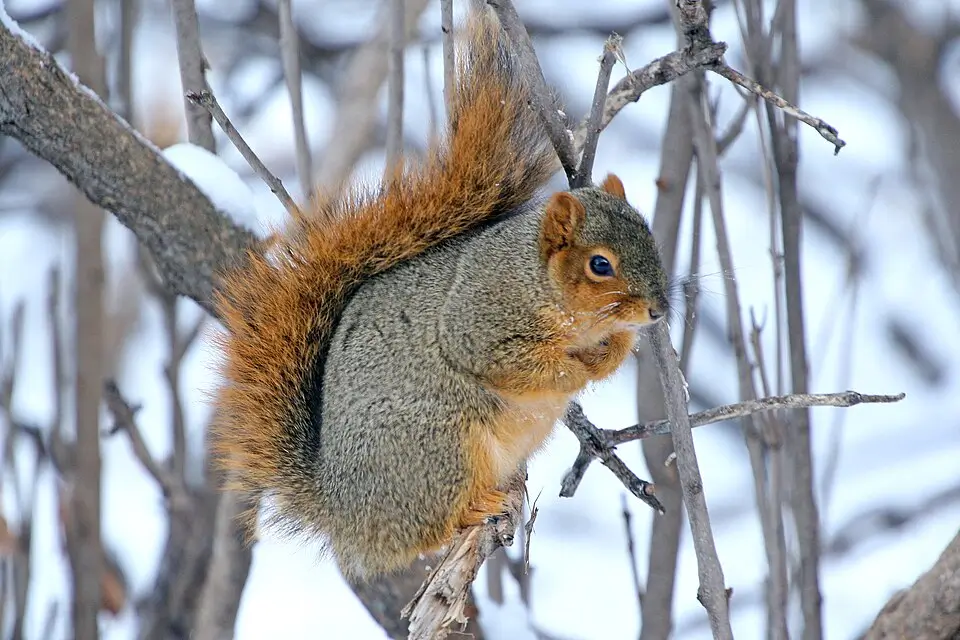
As the largest tree squirrel in North America, the fox squirrel is a robust, muscular animal. Adults are notably larger than gray squirrels, with longer, bushier tails and heavier bodies that give them a distinctly fox-like silhouette when seen bounding through the underbrush — a characteristic that almost certainly contributed to their common name. Their large, powerful limbs make them agile climbers and capable foragers.
One of the most remarkable biological features of the fox squirrel is its extraordinary color variation. Across its range, individuals may appear in combinations of orange, rust, brown, black, gray, and white. In some regions, entirely melanistic (black) individuals are common, while in others, the classic orange-buff underbelly and brownish-gray back predominate. This wide variation in coloration reflects both regional subspecies differences and local genetic diversity, making each population uniquely adapted to its environment.
Fox squirrels are diurnal animals, meaning they are active primarily during daylight hours, with peaks of activity in the morning and late afternoon. They do not hibernate in the strict sense, though they may reduce activity during particularly harsh winter weather. Like many members of the squirrel family, fox squirrels are scatter hoarders — they bury food items individually in many separate locations across their home range rather than storing everything in a single cache. This behavior, known as scatter caching, plays a crucial ecological role. Items that are never retrieved effectively become planted seeds, contributing meaningfully to forest regeneration and the dispersal of tree species such as oaks, hickories, and walnuts.
Fox squirrels are generally considered less social and more solitary than gray squirrels. They tend to occupy larger home ranges and tolerate more open habitat. Their diet is broadly omnivorous, centered on nuts, seeds, fungi, buds, fruits, and occasionally insects, bird eggs, or other protein sources. Acorns, hickory nuts, and walnuts form the cornerstone of their diet in most regions, particularly in autumn as they prepare for leaner winter months.
Breeding typically occurs twice per year in most populations, with litters averaging two to four young. Newborn fox squirrels are altricial — born blind, hairless, and entirely dependent on their mother — and spend the first several weeks of life in the nest before gradually developing the independence needed for survival in the wild. Nests, known as dreys, are constructed from leaves, bark, and twigs and are often built in the forks of large, mature trees.
Habitat & Range
The fox squirrel enjoys one of the broadest geographic distributions of any North American tree squirrel. Its range extends across much of the eastern and central United States, from the Atlantic coastal states westward through the Great Plains, and from southern Canada down through the Gulf Coast states. There are also introduced and isolated populations in parts of the western United States.
Within this broad range, fox squirrels demonstrate a preference for open, park-like woodland settings rather than the dense, closed-canopy forests favored by gray squirrels. They thrive in mature hardwood forests with open understories, pine-oak savannas, forest edges, and areas where woodlands transition into fields or agricultural land. This affinity for edge habitat and open woodland makes fox squirrels common sights along fence rows, in farm woodlots, and at the margins of agricultural fields — particularly where mature nut-producing trees are present.
The species is closely associated with mast-producing trees — trees that produce large quantities of hard-shelled nuts or seeds. Oaks, hickories, walnuts, and pecans are among the most important food sources, and fox squirrel populations tend to be densest in areas where these trees are abundant and mature. The availability of large, hollow den trees is also an important habitat component, as fox squirrels use tree cavities for nesting and rearing young.
In the context of New York State, the northeastern United States represents the northern and eastern edge of the fox squirrel's natural range. New York's diverse landscape — encompassing the Adirondack Mountains, the Catskills, extensive agricultural valleys, and the hardwood forests of the Hudson Valley and Western New York — offers a patchwork of habitats, some of which can support fox squirrel populations. However, the species is generally less common in the Northeast than in the Midwest or Southeast, where habitat conditions more consistently match the fox squirrel's preferred open woodland structure.
Hunting Information
The fox squirrel holds an honored place in the North American hunting tradition. Squirrel hunting is widely regarded as one of the most accessible and enjoyable forms of small game hunting, offering hunters an opportunity to spend time in the woods, sharpen their woodsmanship skills, and pursue a challenging and rewarding quarry. Fox squirrels, with their larger size and often more deliberate behavior compared to gray squirrels, are considered a prized target by small game hunters across the country.
Fox squirrel hunting is typically pursued in autumn, when the leaves begin to fall and squirrels are actively foraging and caching mast in preparation for winter. This period of heightened activity makes squirrels more visible and more predictable in their movements. Hunters commonly still-hunt through hardwood stands, pausing frequently to listen and watch for the telltale sounds of squirrels cutting nuts or moving through the canopy. Still-hunting, sitting quietly near productive mast trees, and hunting with trained squirrel dogs are all popular and effective techniques.
Both rimfire rifles and shotguns are traditional choices for squirrel hunting. A .22 LR rifle offers the precision to take clean shots at stationary squirrels, while a 20-gauge or 12-gauge shotgun loaded with small shot is versatile and forgiving in thicker cover. Many hunters consider squirrel hunting an excellent training ground for young or beginning hunters, as it requires patience, observation, and a thorough understanding of woodland behavior.
Regarding hunting regulations in New York State, hunters and prospective hunters are strongly encouraged to consult the New York State Department of Environmental Conservation (NYSDEC) for the most current and accurate information on season dates, bag limits, and licensing requirements. Regulations can change from year to year, and it is the responsibility of every hunter to verify current rules before heading afield. The NYSDEC website and the annual hunting guide are authoritative sources for this information.
Conservation
The fox squirrel presents an interesting conservation story. Across much of its range, the species has adapted reasonably well to a human-altered landscape, maintaining viable populations in fragmented woodlots, agricultural areas, and suburban parks where mature trees are present. However, certain subspecies and regional populations face more significant conservation challenges.
The loss and fragmentation of mature hardwood forests, particularly the decline of old-growth trees with natural cavities, poses a meaningful challenge for fox squirrel populations in some areas. The species' preference for open woodland habitats also means that natural forest succession — the gradual filling-in of open understories as forests mature — can reduce the suitability of otherwise productive habitat over time. Thoughtful forest management practices, including selective timber harvesting, prescribed burning in appropriate ecosystems, and the retention of large, mature den trees, can significantly benefit fox squirrel populations.
Hunters and wildlife managers have long recognized the fox squirrel as an important component of healthy woodland ecosystems. Their role as seed dispersers contributes directly to forest regeneration, and their presence serves as an indicator of mature, structurally diverse forest habitat. Responsible hunting, guided by science-based bag limits and season structures, supports conservation funding through mechanisms such as the Pittman-Robertson Federal Aid in Wildlife Restoration Act, which directs excise taxes on hunting equipment toward wildlife habitat and management programs.
For wildlife watchers and hunters alike, the fox squirrel represents the best of what North American wildlife has to offer: a species shaped by millions of years of evolution, perfectly suited to its environment, and intimately connected to the health of the forests and woodlands we all treasure.