Overview
Few wildlife species are as universally recognized and deeply woven into the fabric of North American outdoor culture as the Eastern gray squirrel (Sciurus carolinensis). Whether bounding through the canopy of a hardwood forest, industriously burying acorns in a suburban backyard, or presenting a nimble challenge to small-game hunters on a crisp autumn morning, this charismatic rodent has earned a place in the hearts and minds of naturalists, wildlife watchers, and hunters alike. Found across a sweeping range that stretches from the Atlantic Seaboard deep into the interior of the continent, the Eastern gray squirrel is one of the most abundant and ecologically significant mammals in the eastern United States — and in states like New York, it remains an iconic part of the natural landscape.
This guide takes a comprehensive look at the Eastern gray squirrel: its biology and behavioral traits, the habitats it calls home, its role in the broader ecosystem, and its long-standing tradition as a quarry for small-game hunters. Whether you are a first-time hunter looking to get into the field, an experienced outdoorsman revisiting a beloved pursuit, or simply a curious wildlife enthusiast, the Eastern gray squirrel offers something to appreciate at every level of outdoor engagement.
Biological Traits
The Eastern gray squirrel belongs to the family Sciuridae, the squirrel family, which encompasses a diverse group of small to medium-sized rodents including tree squirrels, ground squirrels, chipmunks, and flying squirrels. Sciurus carolinensis is a true tree squirrel, spending a significant portion of its life navigating the branches and canopy layers of deciduous and mixed forests.
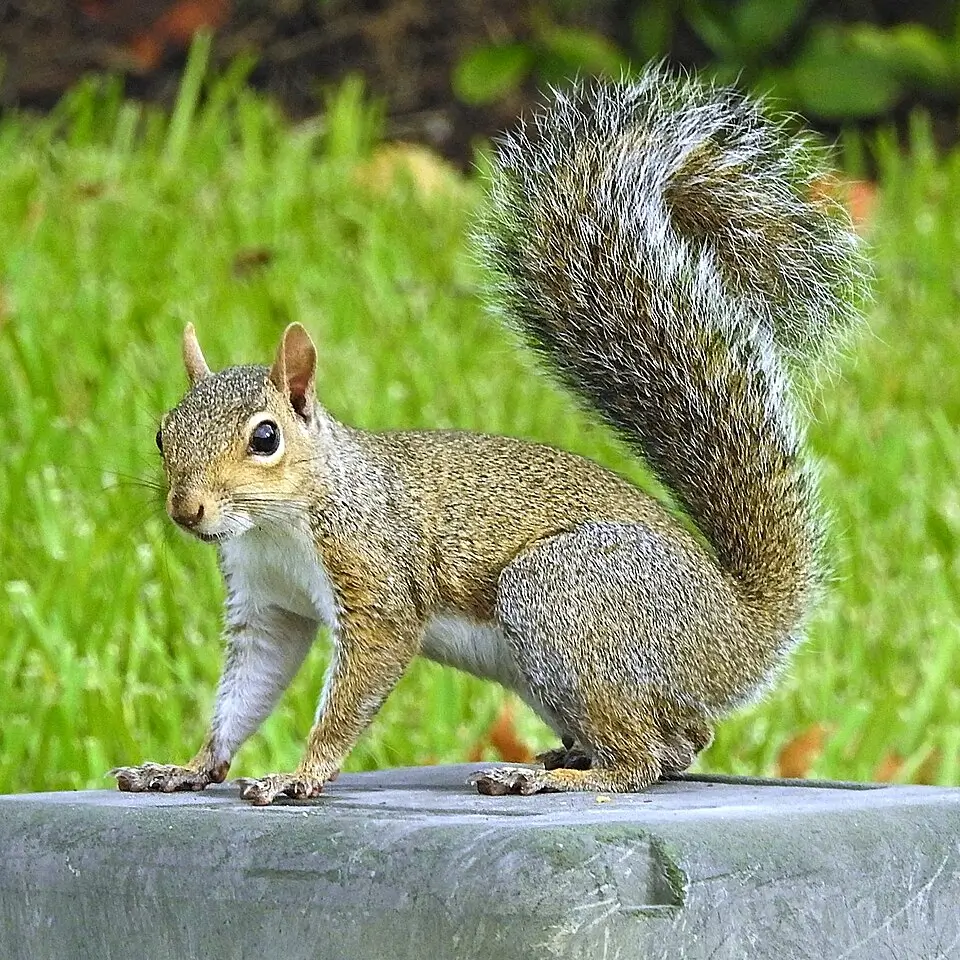
As the name suggests, the Eastern gray squirrel is predominantly gray in coloration, typically displaying a salt-and-pepper coat along its back and sides, with a lighter, often white or pale cream underside. The tail — one of the most distinctive features of the species — is large, bushy, and fringed with lighter-tipped hairs that give it an almost silvery appearance when caught in sunlight. This impressive tail serves multiple purposes: it acts as a counterbalance during acrobatic leaps between branches, as a communication tool during social interactions, and even as a sort of blanket during cold weather.
It is worth noting that color variations do exist within the species. Melanistic (all-black) individuals are not uncommon in certain populations, particularly in urban environments and some forest communities. Albino individuals, while rare, are also occasionally observed. These variations are the result of natural genetic diversity within the species rather than distinct subspecies.
Eastern gray squirrels are medium-sized rodents. Adults typically measure between 9 and 12 inches in body length, with the tail adding another 7 to 10 inches. Body weight generally falls in the range of 14 to 21 ounces, though this can vary seasonally, as squirrels tend to put on additional weight in preparation for winter. Males and females are similar in size, making visual sex determination in the field somewhat challenging without close observation.
One of the most fascinating biological features of this species is its relationship with food. Eastern gray squirrels are scatter hoarders — rather than storing all of their food in a single cache, they bury individual nuts and seeds in hundreds or even thousands of separate locations across their home range. This behavior, driven largely by the abundance of hard mast such as acorns, hickory nuts, and beechnuts, is a critical survival strategy for surviving the lean months of winter. Remarkably, squirrels are able to relocate a significant portion of their buried food through a combination of spatial memory and keen olfactory senses, even beneath several inches of snow. The nuts that are never recovered play an equally important ecological role — they germinate and contribute meaningfully to forest regeneration. In this way, the Eastern gray squirrel functions as a critical seed disperser and a genuine architect of the forests it inhabits.
Squirrels build two types of shelters. Leaf nests, known as dreys, are constructed high in the fork of a tree using leaves, twigs, and soft plant material. These nests are visible in winter once the leaves have fallen and are a familiar sight for anyone spending time in hardwood forests. Squirrels also readily use natural tree cavities, which offer superior insulation and protection from predators and harsh weather conditions.
Breeding in Eastern gray squirrels typically occurs twice per year, with the primary breeding seasons falling in late winter (January through February) and again in midsummer (June through July). After a gestation period of approximately 44 days, females give birth to litters of two to four young, known as kittens or pups. The young are born blind and hairless and are entirely dependent on their mother for the first several weeks of life. By approximately 10 to 12 weeks of age, juveniles are largely independent and begin to disperse to establish their own territories.
Predators of the Eastern gray squirrel include red-tailed hawks, Cooper's hawks, great horned owls, foxes, coyotes, weasels, bobcats, and domestic cats. Despite this impressive list of natural enemies, squirrels are well adapted to detect and evade predation through their keen senses of sight and hearing, their agility in the treetops, and their characteristic alarm calls — sharp, staccato barks and tail-flagging behaviors that communicate danger to nearby individuals.
Habitat & Range
The Eastern gray squirrel is, as its common name implies, primarily an eastern species. Its native range encompasses much of the eastern half of North America, from southern Canada south through the eastern United States and into parts of northern Florida. The species has also been introduced to various locations in the western United States, as well as parts of Europe, where it has established invasive populations.
Within its native range, the Eastern gray squirrel is most closely associated with mature deciduous and mixed deciduous-coniferous forests. It shows a particular affinity for areas dominated by oaks, hickories, beeches, and other hard mast-producing trees, as these species provide the dietary foundation that sustains squirrel populations through winter. Forest interior habitat, woodland edges, riparian corridors, and fragmented woodlots all support squirrel populations to varying degrees.
The species has also proven remarkably adaptable to human-modified landscapes. Parks, tree-lined neighborhoods, college campuses, and suburban green spaces all host thriving squirrel populations. In fact, Eastern gray squirrels are among the most commonly observed wild mammals in urban and suburban settings across the eastern United States, making them one of the most familiar wildlife species to everyday Americans.
In New York State, the Eastern gray squirrel is found throughout much of the state's forested and semi-forested landscapes. New York's diverse geography — encompassing the Adirondack and Catskill mountain regions, the Hudson Valley, the Great Lakes plain, and the heavily forested stretches of the Southern Tier — provides abundant and varied habitat for squirrel populations. New York's hardwood forests, particularly those rich in oak and beech, are especially productive squirrel habitat, and the state's approximately 18.6 million acres of forested land support robust populations across a wide geographic footprint.
Hunting Information
Squirrel hunting is one of the oldest and most time-honored small-game traditions in American outdoor culture. Long before white-tailed deer became the dominant focus of most hunters, generations of woodsmen sharpened their skills in the forest pursuing squirrels. This pursuit demands a genuine understanding of the quarry — knowing where squirrels feed, how they move through the canopy, how to read the signs of their activity, and how to move through the woods quietly and patiently. In many ways, squirrel hunting is one of the finest introductions to woodsmanship available to new hunters.
Eastern gray squirrels are considered a small-game species in New York State and across much of their range. Hunters pursuing squirrels in New York should consult the New York State Department of Environmental Conservation (DEC) for the most current and accurate information regarding season dates, bag limits, and licensing requirements, as these regulations can change from year to year and may vary by region. Always verify current regulations directly with the state agency before heading into the field.
From a practical hunting standpoint, the Eastern gray squirrel offers excellent opportunities for hunters using both firearms and archery equipment. A .22 caliber rimfire rifle is perhaps the most traditional and popular choice for squirrel hunting, offering precision and minimal pelt damage. Shotguns loaded with small shot sizes are also widely used, particularly when hunting in dense cover where shots tend to be fast and at shorter ranges. Some hunters also pursue squirrels with small-caliber air rifles, which can be highly effective in appropriate settings.
Early-season squirrel hunting — typically late summer and early fall — can be especially productive, as squirrels are highly active during the pre-winter mast-gathering period. At this time of year, focusing your efforts around stands of producing oak trees is an excellent strategy. The tell-tale sound of falling nut caps or cut stems dropping from the canopy is a reliable indicator of active squirrel feeding. Later in the season, after the leaves have fallen, squirrels become more visible and their leaf nests stand out clearly in the bare canopy, making it easier to locate areas of high squirrel activity.
Still-hunting — moving slowly and deliberately through the woods, pausing frequently to listen and observe — is one of the most effective and rewarding approaches. Patience is a virtue in squirrel hunting; sitting quietly near a productive mast tree and waiting for activity is often just as productive as actively moving through the timber. Many veteran squirrel hunters recommend going out on calm, clear mornings following a night of moderate temperature, as squirrel activity tends to peak under these conditions.
From a culinary standpoint, squirrel meat is a genuinely delicious and underappreciated wild game option. It is mild, lean, and finely textured, suitable for a wide range of preparations including braised dishes, stews, and even grilling. Squirrel hunting represents an excellent opportunity to connect with local food traditions that have deep roots in American history.
Conservation
The Eastern gray squirrel is currently classified as a species of Least Concern by the International Union for Conservation of Nature (IUCN), reflecting the species' broad distribution, large population size, and general adaptability to a wide variety of habitat conditions. Unlike many wildlife species that have faced dramatic population declines in the face of habitat loss and human development, the Eastern gray squirrel has demonstrated a remarkable capacity to thrive alongside human activity.
That said, healthy squirrel populations are not independent of broader forest health. The long-term abundance of Eastern gray squirrels is closely tied to the availability of hard mast, particularly acorns. Years of poor mast production — driven by late spring frosts, drought, or other environmental factors — can result in noticeable declines in squirrel populations the following year. Conversely, bumper mast years often produce population surges that are evident to any hunter or naturalist spending time in the woods.
Forest conservation, sustainable timber management, and the preservation of mature hardwood stands all benefit squirrel populations and the broader suite of wildlife species that depend on similar habitats. In New York State, ongoing efforts to protect and manage the state's extensive forest resources contribute positively to the long-term health of Eastern gray squirrel populations and the ecosystems they support.
Regulated hunting, managed through state wildlife agencies, plays a complementary role in maintaining healthy squirrel populations. Hunting seasons and bag limits are set based on population data and biological research, ensuring that harvest levels remain sustainable over time. Squirrel hunters are, in this sense, active participants in the conservation framework that helps sustain the species they pursue.