Overview
Few animals in North America inspire as much awe, reverence, and curiosity as the cougar. Known by more common names than perhaps any other wild mammal on the continent — mountain lion, puma, panther, catamount, and painter among them — this magnificent feline has captured the imagination of hunters, wildlife enthusiasts, and naturalists for centuries. The cougar (Puma concolor) holds the distinction of being the widest-ranging wild land mammal in the Western Hemisphere, a testament to its extraordinary adaptability and resilience as a species. From the snow-capped peaks of the Canadian Rockies to the dense jungles of Patagonia, and across the diverse landscapes of the American West, this apex predator has long played a vital ecological role in shaping the environments it inhabits.
In the northeastern United States, and particularly in New York State, the cougar occupies a special place in both natural history and cultural memory. Once a native resident of the region's forests and valleys, the eastern cougar's story is one of dramatic change — a narrative that reflects the broader arc of wildlife conservation in America. Today, conversations about the cougar in New York and the surrounding Northeast are ongoing, making this an especially compelling time to explore what we know about this remarkable animal.
Biological Traits
The cougar (Puma concolor) is a member of the family Felidae and is classified within the subfamily Felinae. Despite its impressive size — making it the second-largest cat in the Americas after the jaguar — the cougar is more closely related to smaller felines than to lions or leopards. This classification means that unlike true "big cats" of the genus Panthera, cougars cannot roar. Instead, they communicate through a range of vocalizations including chirps, whistles, purrs, and an eerie, high-pitched scream that has unnerved many a hiker or camper who has heard it echoing through the wilderness at night.
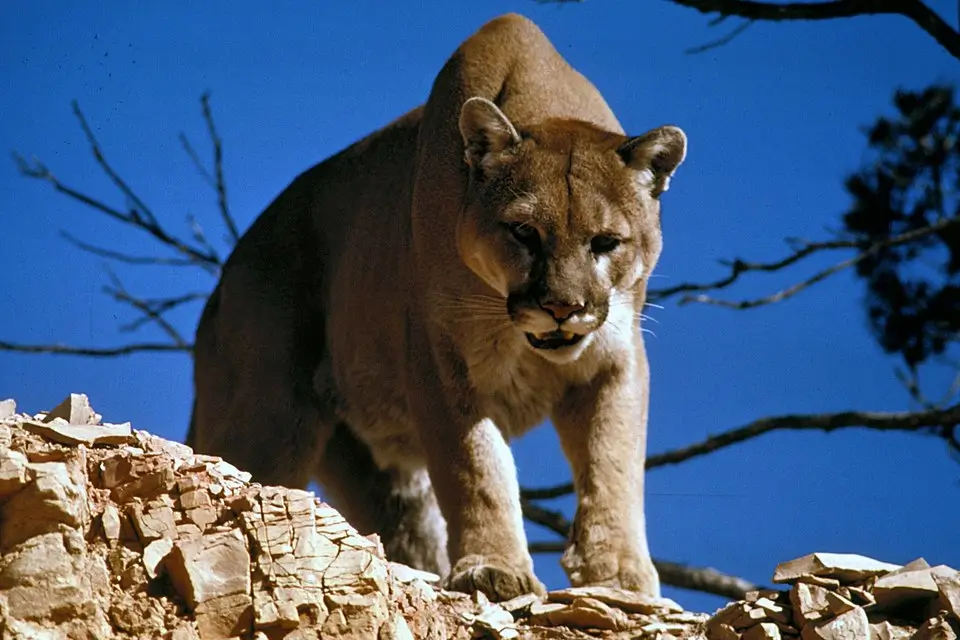
Adult male cougars are substantially larger than females, a trait known as sexual dimorphism. Males can weigh anywhere from around 115 to over 200 pounds in some populations, while females are generally lighter and more slender. Their bodies are built for explosive power and stealth — long, muscular hind limbs give them tremendous leaping ability, and their large paws, retractable claws, and flexible spine make them supremely agile hunters. The cougar's coat is typically a uniform tawny or buff color across most of its range, though this can vary somewhat depending on geography and season. Cubs are born with spotted coats that fade as they mature, and the tail is long and rope-like, often tipped with a darker shade.
The cougar is a strict carnivore and an obligate apex predator. Its primary prey throughout most of its range is deer — including white-tailed deer, mule deer, and other cervid species — though it is an opportunistic hunter capable of taking prey ranging from small rodents and rabbits to elk and even moose under certain conditions. Cougars are ambush predators, relying on patience, stealth, and a powerful burst of speed to close in on prey rather than pursuing it over long distances. A classic hunting technique involves stalking to within close range and then launching a surprise attack, often targeting the back of the neck or throat to quickly dispatch prey.
Cougars are solitary animals for the most part, with the exception of mothers raising cubs. Adult males maintain large home ranges that may overlap with the ranges of several females but will actively exclude other males. Home ranges can be enormous — spanning tens to hundreds of square miles depending on prey availability and terrain. Females give birth to litters typically consisting of two to three cubs, though litters of up to six have been recorded. Cubs remain with their mother for roughly one and a half to two years, learning the essential skills of hunting and survival before dispersing to establish their own territories.
The lifespan of a wild cougar typically ranges from eight to thirteen years, though individuals in captivity have been known to live considerably longer. Cougars are largely crepuscular and nocturnal, being most active during the hours around dawn and dusk, though they may be encountered at any time of day or night.
Habitat & Range
The cougar's scientific name, Puma concolor, translates roughly to "cat of one color," a reference to its relatively uniform coat. But if the name speaks to its physical uniformity, the species' range tells a far more varied story. The cougar is native to an extraordinary diversity of habitats — from tropical and subtropical forests to arid deserts, grasslands, scrublands, and high-altitude mountain environments. This ecological flexibility is one of the primary reasons the cougar has survived and, in some regions, thrived despite centuries of human pressure.
Historically, the cougar's range extended across virtually the entire North American continent, including the eastern United States and what is now New York State. The dense deciduous forests, river valleys, and rugged terrain of the Northeast once provided excellent habitat for this wide-ranging predator. However, as European settlement expanded and land was cleared for agriculture and development, cougar populations in the East declined sharply due to habitat loss and unregulated hunting. By the early twentieth century, cougars had been extirpated from most of the eastern United States.
Today, established breeding populations of cougars in the United States are found primarily in the western states, with Florida's endangered Florida panther (Puma concolor coryi) representing the only confirmed breeding population in the eastern part of the country. In recent decades, however, there have been increasing reports and documented sightings of individual cougars moving eastward from western populations — particularly young males dispersing in search of new territory. These wandering individuals have been confirmed as far east as the Midwest, and occasional reports emerge from the Northeast as well, though no established breeding population has been confirmed in New York State or the broader Northeast region outside of Florida.
New York State, with its mix of the Adirondack and Catskill mountains, expansive forests, and abundant white-tailed deer populations, represents theoretically suitable cougar habitat in many respects. The state's landscape has undergone significant ecological recovery over the past century, with forests regrowing and deer populations rebounding — conditions that could, in theory, support a returning predator. Whether cougars will naturally recolonize New York and the Northeast remains one of the most intriguing questions in American wildlife biology today.
Hunting Information
For hunters and sportsmen in New York State, the cougar is a topic that tends to generate significant interest and occasional debate. It is important to note clearly that there is no established cougar hunting season in New York State, and no official hunting regulations for cougars currently exist within the state. This is consistent with the species' protected or unrecognized status in the region — cougars are not recognized as a resident breeding population in New York, and the New York State Department of Environmental Conservation does not currently list a cougar hunting program.
In states and provinces where cougar populations are established and huntable — primarily in the American West and parts of Canada — cougar hunting is a traditional and regulated pursuit with a dedicated following. Western cougar hunters typically employ trained hounds to track and tree cougars, a method that requires significant skill, endurance, and partnership between hunter and dog. This style of hunting has deep roots in American sporting tradition and continues to be a meaningful part of the hunting culture in states such as Idaho, Montana, Utah, Wyoming, and Colorado, where wildlife management agencies carefully regulate harvest to maintain healthy cougar populations.
For New York hunters who are passionate about large predator hunting, pursuing cougars in western states through licensed outfitters and guided hunts is an option worth exploring. Such experiences offer not only a thrilling and demanding hunt but also a window into the natural world of America's most iconic wild feline. Always ensure that all licensing, tag, and permit requirements are met in the relevant state or province before pursuing any cougar hunt.
Conservation
The conservation story of the cougar is ultimately one of both challenge and hope. Across much of the American West, cougar populations are considered stable and are managed sustainably through regulated hunting and wildlife management programs. The recognition that apex predators like the cougar play a crucial ecological role — regulating prey populations, influencing vegetation through trophic cascades, and contributing to overall ecosystem health — has helped shift public and scientific attitudes toward these animals in recent decades.
The Florida panther, the last remnant population in the eastern United States, remains one of the most endangered mammals in North America and has been the subject of intensive conservation efforts, including a landmark genetic rescue program in the 1990s that introduced female cougars from Texas to bolster the small and inbred Florida population. This program is widely regarded as one of the most successful large mammal conservation interventions in American history.
In New York and the broader Northeast, conservation discussions around the cougar often touch on the potential ecological benefits of predator recovery, the challenges of human-wildlife coexistence in densely populated landscapes, and the scientific documentation of dispersing individuals. Wildlife advocates and researchers continue to monitor the situation closely, and the story of the cougar's potential return to eastern North America is far from finished.
For hunters, wildlife enthusiasts, and conservationists alike, the cougar represents something fundamental about the wild character of North America's landscapes. Whether glimpsed on a trail camera in the western wilderness or discussed around a campfire in the Adirondacks, the ghost cat endures as a symbol of wildness, power, and the enduring possibility of a continent still capable of sustaining its most magnificent creatures.