Overview
Few animals capture the imagination of wildlife enthusiasts, backyard observers, and hunters quite like the cottontail rabbit. With its distinctive fluffy white tail, alert eyes, and remarkable agility, the cottontail has become one of the most iconic mammals across North America. Whether darting through a brushy hedgerow at dusk, freezing motionless in a snowy field, or sprinting in zigzag patterns to evade a predator, the cottontail rabbit is a study in survival, adaptability, and natural elegance.
Belonging to the genus Sylvilagus, cottontail rabbits represent a diverse group of species that have successfully colonized an enormous range of habitats — from dense eastern forests and midwestern farmlands to desert scrublands and high-elevation meadows. In a state as ecologically diverse as New York, cottontails are a cherished part of the landscape, playing a vital ecological role and providing outstanding small game hunting opportunities for sportsmen and sportswomen of all experience levels.
This article takes a comprehensive look at the cottontail rabbit — its biology, behavior, habitat preferences, hunting traditions, and conservation status — with a particular eye toward what makes this remarkable animal such an enduring symbol of American outdoor life.
Biological Traits
The cottontail rabbit belongs to the genus Sylvilagus, which is part of the family Leporidae and the order Lagomorpha — the same order that includes hares and pikas. The name Sylvilagus derives from Latin and roughly translates to "forest rabbit," a nod to the woodland and brushy habitats that many species in this genus prefer.
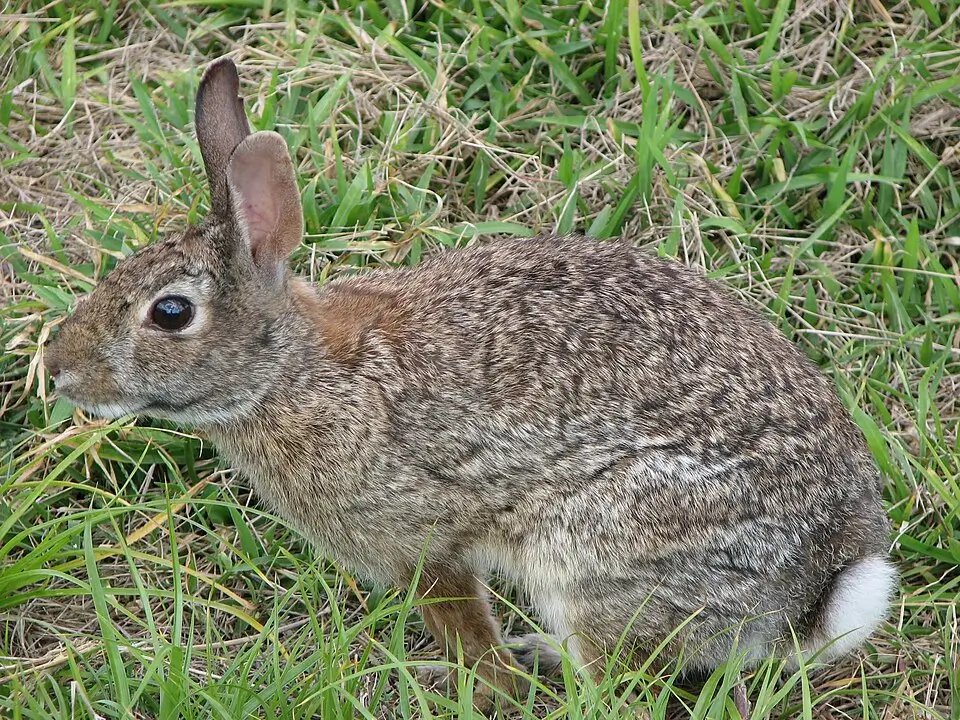
The most immediately recognizable feature of any cottontail is, of course, its tail. The underside of the short, rounded tail is pure white, resembling a small cotton ball — hence the common name "cottontail." When a rabbit flees from danger, this white patch flashes conspicuously, a trait that researchers believe may serve to confuse predators or signal alarm to nearby rabbits.
Cottontails are medium-sized rabbits with compact, muscular bodies built for explosive bursts of speed. Their powerful hind legs allow them to accelerate rapidly and execute sharp directional changes that frustrate even the most agile predators. Their large, upright ears are not merely for show — they serve as finely tuned acoustic instruments capable of detecting the faintest sound from a considerable distance, rotating independently to pinpoint the direction of a threat.
The eyes of a cottontail are positioned on the sides of its head, providing a near-panoramic field of vision that makes it exceedingly difficult to approach undetected. Their brown and gray fur provides excellent camouflage against leaf litter, soil, and dried grass, making a motionless cottontail virtually invisible to the untrained eye.
Cottontails are herbivores with a varied diet that shifts with the seasons. During warmer months, they feed on grasses, clovers, wildflowers, garden vegetables, and a wide variety of leafy plants. In winter, when green vegetation is scarce, they rely more heavily on woody browse — gnawing on the bark and twigs of shrubs and young trees. Like all lagomorphs, cottontails practice a behavior known as cecotrophy, in which they consume certain soft droppings directly from their hindquarters to extract maximum nutritional value from their food.
One of the most remarkable aspects of cottontail biology is their reproductive capacity. Cottontails are famous for their prolific breeding habits, which represent a natural adaptation to the intense predation pressure they face. Females, known as does, can produce multiple litters per year during the warmer breeding season, with each litter containing several young called kittens. Newborn kittens are born in a shallow nest depression in the ground, lined with the mother's fur. They develop rapidly and are weaned within weeks, soon becoming independent. This extraordinary reproductive rate allows cottontail populations to remain stable even in the face of heavy predation and harvest pressure.
Cottontails are primarily crepuscular and nocturnal, meaning they are most active during the twilight hours of dawn and dusk, as well as at night. During the day, they typically rest in forms — shallow depressions in dense cover — or in brushy tangles where they are well concealed from aerial and ground predators. They do not hibernate and remain active year-round, even in regions with harsh winters.
Habitat & Range
The genus Sylvilagus encompasses numerous species distributed across North and South America, making cottontails one of the most widespread rabbit groups on the continent. In the eastern United States, the Eastern Cottontail (Sylvilagus floridanus) is by far the most common and widely distributed species, thriving in a broad range of habitats.
Cottontails show a strong preference for edge habitats — areas where two different habitat types meet, such as the transition zone between a forest and an open field, or the brushy border along a farm hedgerow. These edge environments provide the two things a cottontail needs most: open feeding areas where grasses and forbs grow in abundance, and dense nearby cover to which they can retreat when threatened. Brushy fence lines, overgrown ditches, briar patches, thickets, and shrubby forest edges are classic cottontail haunts.
In a state like New York, which encompasses a tremendous variety of landscapes — from the rolling farmlands of the Hudson Valley and the Finger Lakes region, to the wild forests of the Adirondacks and the Catskills, to the suburban green spaces of Long Island — cottontails find suitable habitat in many corners of the state. Agricultural lands with mixed crops and weedy field borders are particularly productive, as are old orchards, abandoned farmsteads, and the edges of suburban woodlots.
Cottontails do not typically range far from reliable cover. Their home ranges tend to be relatively small, and they will often spend their entire lives within a limited area if food and shelter are adequate. This site fidelity makes scouting for cottontails a highly rewarding exercise — once you find a productive brush pile, briar patch, or hedgerow, you are likely to find rabbits there consistently throughout the season.
Hunting Information
Cottontail rabbit hunting has a long and storied tradition in North America, and it remains one of the most popular and accessible forms of small game hunting practiced today. The pursuit of cottontails serves as an excellent entry point for new hunters, offering action-filled outings that do not require expensive equipment or extensive travel. At the same time, experienced hunters find deep satisfaction in running well-trained beagles through snowy thickets or carefully still-hunting brushy edges for a wily old cottontail.
There are several popular methods for hunting cottontails. Still-hunting, in which the hunter moves slowly and quietly through likely habitat, stopping frequently to allow rabbits to reveal themselves, is a time-honored solo technique that demands patience and sharp observation. Many hunters prefer to work through cover in a group, with participants spread out to push rabbits into the open and within shooting range of their partners.
Perhaps the most beloved method of all is hunting with beagles — small, keen-nosed hounds bred specifically for rabbit hunting. When a beagle strikes a fresh cottontail track and opens up with its characteristic musical baying, the rabbit typically circles back around toward its home area, eventually presenting a shot to the waiting hunter. The combination of the hound's music, the crisp fall or winter air, and the anticipation of a flushing rabbit makes beagle hunting one of the most atmospheric experiences in all of small game sport.
Cottontails are typically pursued with a shotgun, with 20-gauge and 12-gauge being the most common choices. Smaller gauges such as the .410 and 28-gauge are popular for those seeking an added challenge. Shot sizes in the range of No. 6 through No. 4 are commonly used, providing adequate pattern density for the relatively small target presented by a running rabbit.
Hunters in New York should always consult the New York State Department of Environmental Conservation (NYSDEC) for the most current regulations, including season dates, bag limits, and any applicable licensing requirements before heading afield. Regulations can change from year to year, and it is every hunter's responsibility to be fully informed before participating in any harvest.
Conservation
The cottontail rabbit occupies an important ecological niche as both a herbivore and a prey species. As a consumer of grasses, forbs, and woody browse, cottontails influence plant community structure in subtle but meaningful ways. More significantly, they serve as a foundational prey species for a wide array of predators, including red foxes, coyotes, hawks, owls, bobcats, and weasels. The health of cottontail populations has direct implications for the predator communities that depend on them.
Cottontail populations are generally considered to be in good overall condition across much of their range, thanks to the species' remarkable reproductive capacity and adaptability. However, like many wildlife species, cottontails benefit from thoughtful habitat management. The loss of brushy edge habitats, overly tidy agricultural landscapes, and the removal of hedgerows and brushy cover can reduce the carrying capacity of an area for cottontails. Conservation programs that encourage landowners to maintain or restore native brush, briar patches, and weedy field borders provide tangible benefits for rabbit populations.
Hunters themselves have long been among the most passionate advocates for cottontail habitat. Through license fees, excise taxes on sporting equipment (as directed by the Federal Aid in Wildlife Restoration Act, commonly known as the Pittman-Robertson Act), and hands-on habitat work, hunters contribute meaningfully to the conservation of the landscapes that cottontails — and countless other wildlife species — depend upon.
For those who simply enjoy observing cottontails in the wild, maintaining a brush pile in a corner of the yard, planting native shrubs, or allowing a patch of ground to grow into a weedy tangle can provide valuable cover and foraging habitat for local rabbits. Small actions, multiplied across many properties, can add up to meaningful conservation outcomes at the landscape scale.
Conclusion
The cottontail rabbit — alert, agile, and endlessly fascinating — is one of the great wildlife success stories of North America. Whether you are a hunter pursuing them through frosted briars with a pack of beagles, a wildlife watcher delighted by their appearance at the garden's edge at dusk, or simply someone who appreciates the complexity of the natural world, the cottontail has something to offer. In New York and across the continent, this remarkable little animal continues to thrive, enrich ecosystems, and inspire generations of outdoor enthusiasts.