Overview
Few birds capture the imagination of hunters, wildlife enthusiasts, and naturalists quite like the Common pheasant (Phasianus colchicus). With its brilliant plumage, unmistakable crowing call, and explosive flush from cover, this bird has earned a place of distinction across the globe. Originally native to Asia, the Common pheasant has been introduced to nearly every corner of the world where suitable habitat exists, making it one of the most widely distributed game birds on the planet. In North America, and specifically in states like New York, the pheasant occupies a beloved and storied role in hunting tradition and wildlife management. Whether you are a lifelong upland bird hunter or simply an admirer of the natural world, the Common pheasant is a species that commands attention and respect.
The pheasant's journey from the river valleys and forests of Asia to the agricultural fields of New York is a fascinating story of human interaction with the natural world. Across centuries of deliberate introduction and careful management, Phasianus colchicus has woven itself into the cultural and ecological fabric of places far removed from its ancestral home. Today, it stands as both a prized game bird and a symbol of wild open country, connecting hunters and wildlife watchers alike to landscapes that might otherwise go unnoticed.
Biological Traits
The Common pheasant is a member of the family Phasianidae, which also includes turkeys, quail, partridges, peafowl, and grouse. It is a large, ground-dwelling bird characterized by strong legs built for running, a long sweeping tail, and — in males — one of the most spectacular plumage displays found among North American upland game birds.
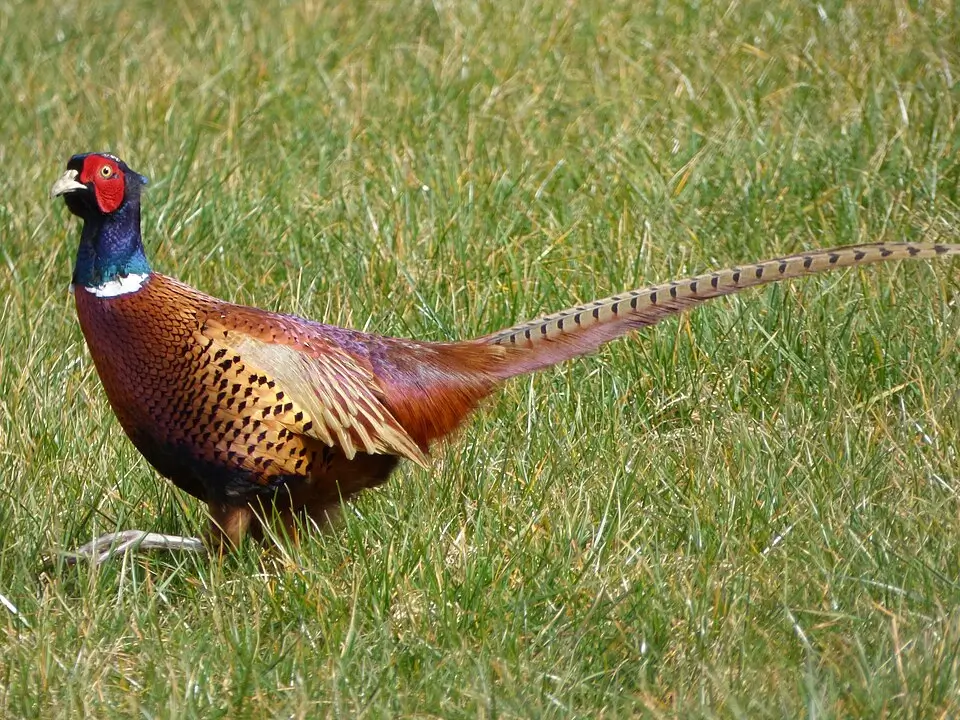
Male Common pheasants, known as roosters or cocks, are stunning creatures. They display a rich tapestry of colors: iridescent copper and bronze body feathers, a deep green head, a vivid red facial wattle, and a long, barred tail that can account for much of the bird's total body length. Many roosters also bear a distinctive white neck ring, a trait particularly common in the ring-necked pheasant strain, which is the subspecies most commonly found in North America. This white collar has become so synonymous with the species in North America that the bird is frequently referred to simply as the "ring-necked pheasant."
Female pheasants, called hens, are considerably more subdued in appearance — a biological strategy that serves them well during nesting. Their mottled brown and buff plumage provides excellent camouflage against the grasslands, crop fields, and brushy edges where they nest. While hens lack the dramatic coloring of the rooster, they are perfectly adapted to their role as incubators and protectors of the next generation.
Common pheasants are omnivores, feeding on a wide variety of seeds, grains, insects, berries, and plant material. This dietary flexibility contributes significantly to their success as an introduced species, as they can adapt their diet to whatever food sources are locally abundant across the seasons. In late summer and autumn, they tend to consume large quantities of seeds and agricultural grains, making crop fields and their edges prime foraging habitat.
Pheasants are strong runners and prefer to escape danger on foot rather than by flight. However, when pressed, they produce a startling, near-vertical flush accompanied by a loud, rapid wingbeat — an experience that has quickened the pulse of countless hunters over the years. Their flight speed can be impressive once airborne, and a flushing rooster with a tailwind presents a challenging and rewarding target for even the most experienced upland hunter.
Breeding behavior in Common pheasants is polygynous, meaning a single rooster typically mates with multiple hens. During the spring breeding season, roosters become highly territorial and vocal, delivering their distinctive two-note crow to establish dominance and attract females. Nests are simple scrapes in the ground, usually concealed beneath dense vegetation, where hens typically lay between 10 and 12 eggs. The incubation period lasts roughly 23 to 28 days, after which the precocial chicks hatch and are quickly able to follow the hen and begin foraging.
Habitat & Range
The Common pheasant's native range spans a vast swath of Asia, from the eastern shores of the Caspian Sea through China and into the Russian Far East. Within this natural range, the bird inhabits a variety of environments, including river valleys, forest edges, scrublands, and agricultural areas. It shows a clear preference for landscapes that offer a mosaic of open ground for foraging and dense vegetation for cover — a preference that has made it well-suited to the agricultural and semi-rural landscapes of Europe and North America, where it was introduced by human hands.
In North America, the Common pheasant was first successfully introduced in the late 19th century, with populations eventually establishing themselves across much of the northern United States and southern Canada. The species thrives particularly well in the agricultural heartland, where grain fields, brushy fence rows, wetland edges, and grassland buffers create the layered habitat structure it requires.
In New York State, pheasants are found primarily in agricultural regions, particularly in the western and central portions of the state where open farmland, hedgerows, and grasslands provide suitable cover and food. New York's diverse landscape — ranging from the rolling hills of the Finger Lakes region to the open plains of the Genesee Valley — offers pockets of excellent pheasant habitat. However, pheasant populations in New York, as in much of the northeastern United States, have experienced pressures from changing land use patterns, including the maturation of formerly open farmland into forest and the intensification of agricultural practices that reduce habitat diversity.
The New York State Department of Environmental Conservation (DEC) has historically supported pheasant hunting through stocking programs, in which farm-raised birds are released into suitable habitat ahead of hunting seasons. This practice helps maintain huntable populations in areas where wild breeding populations may be limited.
Hunting Information
The Common pheasant is one of the most popular upland game birds in North America, celebrated for the challenge it presents and the landscapes it inhabits. Pheasant hunting has a rich tradition in New York State, drawing hunters to open country with pointing dogs, flushing spaniels, and retrievers in pursuit of the colorful rooster.
Pheasant hunting in New York is regulated by the New York State Department of Environmental Conservation. Hunters are encouraged to consult the most current New York Hunting & Trapping Regulations Guide for up-to-date information on season dates, bag limits, and licensing requirements, as these details can change from year to year. At the time of this writing, specific season dates and license requirements for the current season were not available in the source data reviewed for this article, and hunters should verify all current regulations directly with the DEC before heading afield.
What is well-known among pheasant hunters is the value of working with a well-trained bird dog. Pointing breeds such as the German Shorthaired Pointer and English Pointer, as well as flushing breeds like the Labrador Retriever and English Springer Spaniel, are popular companions in the pheasant fields. Given the pheasant's preference for running ahead of hunters rather than holding tight to a point, a dog with a strong nose and the drive to work dense cover is a tremendous asset.
Shotguns in 12 or 20 gauge, loaded with appropriate upland loads, are the traditional choice for pheasant hunting. The bird's size and toughness relative to other upland species mean that adequate shot size and a well-placed shot are important considerations.
For New York hunters, DEC-operated public hunting areas and Wildlife Management Areas provide access to pheasant habitat, particularly during stocked bird seasons. Always check current regulations, acquire the appropriate licenses, and respect posted land boundaries to ensure a safe and legal hunt.
Conservation
The conservation status of the Common pheasant globally is listed as Least Concern by major wildlife authorities, owing to its vast introduced range and large overall population. However, the health of wild pheasant populations in specific regions — including the northeastern United States — is a subject of ongoing attention among wildlife managers and conservationists.
Habitat loss remains the primary challenge for wild pheasant populations. The conversion of grasslands and brushy edges into intensively managed cropland or maturing forest reduces the mosaic of cover types that pheasants depend upon throughout the year. Nesting success is particularly sensitive to habitat quality, as hens require dense, low vegetation to conceal their nests from predators.
Conservation efforts on behalf of pheasants often align closely with broader grassland and farmland habitat initiatives. Organizations such as Pheasants Forever have been instrumental in promoting habitat restoration practices — including the planting of native grasses, establishment of buffer strips, and maintenance of hedgerows — that benefit not only pheasants but a wide range of grassland wildlife.
In New York, habitat management on Wildlife Management Areas and cooperative programs with private landowners play an important role in supporting pheasant populations. Hunters themselves have long been champions of pheasant conservation, contributing through license fees, excise taxes on sporting equipment (under the Federal Aid in Wildlife Restoration Act), and direct participation in conservation organizations.
The future of pheasant hunting in New York and across North America depends on the continued commitment of hunters, wildlife managers, and landowners to maintaining and restoring the open, diverse landscapes that this extraordinary bird calls home.