Overview
Few birds command attention quite like the Canada goose. Whether honking overhead in a characteristic V-formation during their seasonal migrations, grazing peacefully on the manicured lawns of a city park, or splashing down on a quiet rural pond, Branta canadensis is one of the most familiar and widely recognized birds across the entire North American continent. For hunters, wildlife enthusiasts, and casual observers alike, the Canada goose occupies a unique space in the cultural and ecological landscape of North America — and particularly in a diverse, geographically rich state like New York.
From the tidal marshes of Long Island to the Adirondack lakes and the fertile farmlands of the Finger Lakes region, New York State provides exceptional habitat for Canada geese throughout the year. Whether you're a seasoned waterfowl hunter hoping to add a few birds to your game bag, or simply a nature lover captivated by the annual spectacle of goose migration, understanding this remarkable species on a deeper level only enhances the experience.
This article takes a thorough look at the Canada goose — its biology, habitat preferences, behavior, hunting traditions, and its place within the broader conservation story of North American wildlife management.
Biological Traits
The Canada goose, Branta canadensis, belongs to the family Anatidae, which encompasses ducks, geese, and swans. It is the largest goose native to North America and is widely considered one of the most adaptable birds on the continent. The species is broadly divided into several subspecies, which vary considerably in size, ranging from the relatively small cackling goose — once considered a subspecies but now classified separately — to the large "giant" Canada goose (Branta canadensis maxima), which can weigh upward of 14 pounds or more.
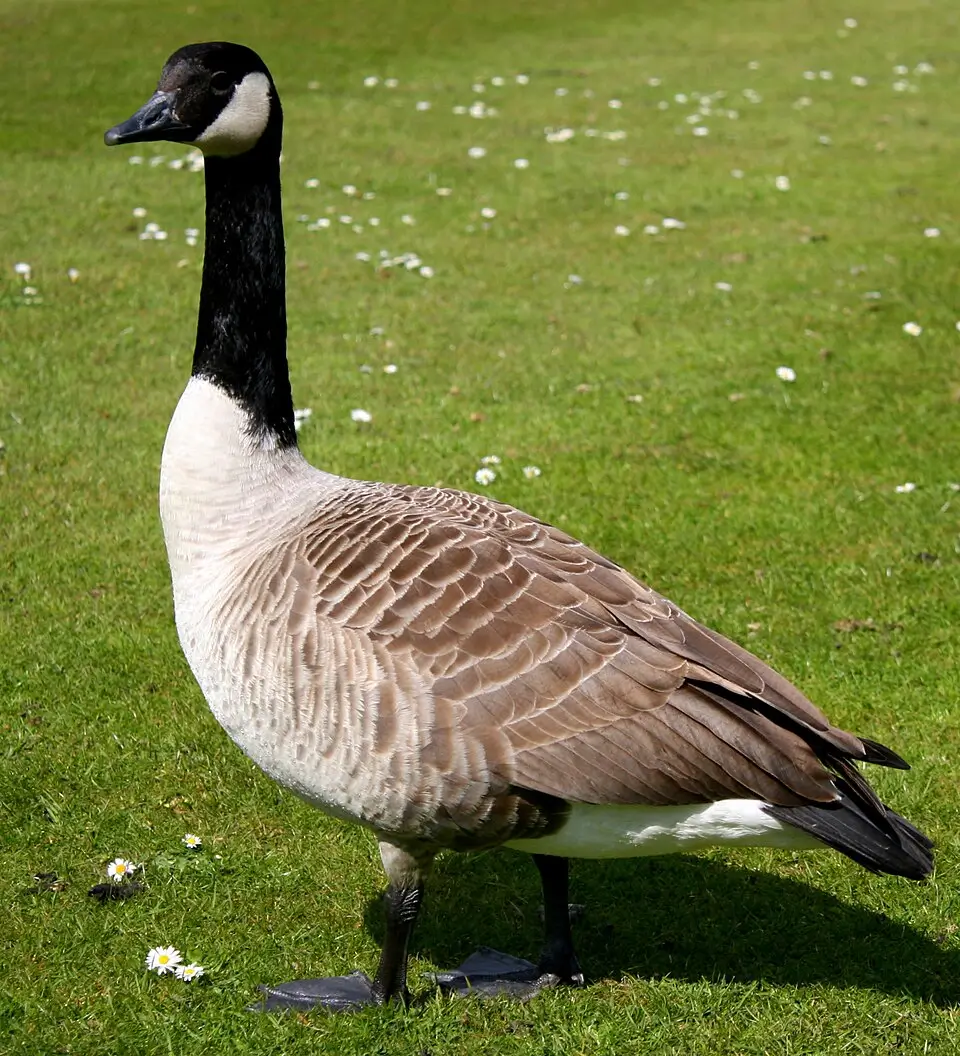
The Canada goose is immediately recognizable by its distinctive plumage. Adults sport a black head and neck, with a highly characteristic white "chinstrap" patch that runs from cheek to cheek beneath the bill. The body is typically a warm brown on the back and wings, with a lighter, creamy-tan breast and belly. The tail is black, and the rump is white. Both males (ganders) and females (geese) share this coloration, making visual sex differentiation challenging without close observation — males tend to be slightly larger.
Canada geese are long-lived birds. In the wild, individuals commonly live for 10 to 24 years, and some banded birds have been recorded surviving even longer. They are strong fliers capable of covering impressive distances during migration, often traveling at speeds of 40 miles per hour or more, and reaching altitudes of several thousand feet.
One of the most notable behavioral traits of the Canada goose is its strong pair bonding. Canada geese are monogamous and typically mate for life. Pairs work together to select nest sites, defend territory, and raise their young. Females typically lay clutches of two to eight eggs, which they incubate for approximately 25 to 28 days. The goslings are precocial — meaning they are mobile and relatively self-sufficient shortly after hatching — and are capable of swimming and feeding on their own within hours of birth, though they remain under the close protection of both parents.
Family bonds remain strong well into the fall, with goslings often migrating alongside their parents during their first year of life. Canada geese are highly vocal birds, and their loud, resonant honking serves a variety of communicative purposes — from warning calls to contact calls that help maintain flock cohesion during flight.
Feeding behavior is predominantly herbivorous. Canada geese graze heavily on grasses, sedges, aquatic vegetation, and agricultural grains, particularly corn and winter wheat. This dietary flexibility is a key reason for their extraordinary adaptability across a wide range of environments.
Habitat & Range
The Canada goose enjoys one of the broadest ranges of any waterfowl species in North America. Historically, the species bred across northern Canada and Alaska and wintered primarily in the southern United States and Mexico. However, due to conservation efforts, habitat adaptability, and the establishment of resident populations, Canada geese are now year-round residents across much of the contiguous United States, including New York State.
Canada geese thrive in environments that combine open water with accessible grasslands or agricultural fields for grazing. Lakes, ponds, rivers, coastal estuaries, reservoirs, and wetlands all serve as important habitat, providing the water access and security that geese require for roosting and raising young. The species is equally at home in wild, remote settings and highly urbanized environments — a testament to its remarkable behavioral plasticity.
In New York, the geographic diversity of the state creates a mosaic of exceptional Canada goose habitat. The Finger Lakes region, with its long glacially carved lakes and surrounding agricultural land, supports large resident populations. The St. Lawrence River valley in northern New York serves as an important corridor for migratory birds moving between Canadian breeding grounds and southern wintering areas. Long Island's coastal bays, estuaries, and open grasslands attract both resident and migratory geese throughout the year. Even within New York City and its suburbs, Canada geese have established thriving resident populations in parks, golf courses, corporate campuses, and along waterways.
There are essentially two distinct "types" of Canada geese that hunters and wildlife managers recognize in many parts of New York and the broader Northeast: resident geese, which live in an area year-round and breed locally, and migratory geese, which travel from Canadian breeding grounds and pass through or winter in New York. Understanding which birds are present during a given time of year can be critically important for hunters planning their seasons.
Hunting Information
Canada goose hunting is a cherished waterfowl tradition across New York State and throughout North America. The bird's wariness, sharp eyesight, and tendency to approach decoys cautiously make it a challenging and rewarding quarry for hunters of all experience levels. Goose hunting combines fieldcraft, calling skill, decoy setup, camouflage discipline, and knowledge of the birds' habits into a pursuit that many waterfowlers consider the pinnacle of the sport.
New York offers diverse opportunities to pursue Canada geese, from layout blind hunting in harvested agricultural fields where geese come to feed on leftover grain, to hunting over water from a boat blind or shore blind, to jump shooting birds on smaller ponds and streams. Field hunting, in particular, has become enormously popular as resident goose populations have expanded significantly in agricultural regions of the state.
Effective goose hunting typically involves the use of full-body or shell decoys spread in realistic feeding or resting configurations, combined with skilled calling using short-reed or flute-style goose calls. Hunters invest considerable time learning to replicate the clucks, moans, double-clucks, and greeting calls that Canada geese use to communicate with one another. When the calling and decoy setup are dialed in, watching a group of geese fold their wings and commit to a spread is one of the most thrilling sights in all of waterfowl hunting.
Because specific season dates, bag limits, and licensing requirements for Canada geese in New York can change from year to year based on population data and federal frameworks, hunters are strongly encouraged to consult the New York State Department of Environmental Conservation (NYSDEC) for the most current and accurate regulatory information before heading afield. Waterfowl hunting in New York generally requires a valid New York State hunting license and a state waterfowl permit, as well as a Federal Duck Stamp — requirements that support conservation funding for the very habitats that make goose hunting possible.
Conservation
The conservation story of the Canada goose is a remarkable chapter in North American wildlife management. By the mid-20th century, certain subspecies — particularly the giant Canada goose (Branta canadensis maxima) — had declined so significantly that they were feared extinct in portions of their range. Dedicated conservation efforts, including the reintroduction of breeding birds and strong protections under the Migratory Bird Treaty Act, led to one of the most dramatic wildlife recovery stories in American history.
Today, Canada goose populations are robust and, in many areas, thriving to the point where wildlife managers actively employ hunting seasons, nest and egg management programs, and other tools to maintain populations at levels compatible with both ecological health and human coexistence. Hunting plays a critical role in this management equation, providing both a sustainable harvest of a renewable resource and a meaningful source of conservation funding through license fees and the Federal Duck Stamp program — funds that directly support wetland protection and restoration.
The Migratory Bird Treaty Act, originally enacted in 1918, remains a cornerstone of waterfowl protection in the United States, providing the legal framework within which state and federal agencies cooperate to set hunting seasons, bag limits, and other regulations designed to ensure the long-term sustainability of migratory bird populations, including Canada geese.
For wildlife watchers, photographers, and hunters alike, the Canada goose represents something enduring and quintessentially North American — a resilient species that has adapted to an ever-changing landscape while remaining deeply connected to the wild places that sustain it.