Overview
Few animals capture the imagination of wilderness enthusiasts, hunters, and wildlife biologists quite like the wolverine (Gulo gulo). This compact yet formidable member of the weasel family has earned a reputation that far exceeds its modest physical size — a reputation built on ferocity, endurance, and an almost supernatural ability to thrive in some of the harshest environments on Earth. Often described as the "mountain devil" or the "glutton" (a nod to its Latin name, which literally translates to "glutton glutton"), the wolverine is one of the most elusive and least-understood large carnivores inhabiting North American wilderness.
In the rugged, expansive landscapes of Montana — the fourth-largest state by area and one of the most sparsely populated in the nation — the wolverine finds a fitting home. Montana's wild terrain, stretching from the dramatic peaks of the Rocky Mountains in the west to the sweeping plains in the east, provides exactly the kind of remote, undisturbed wilderness that this secretive animal demands. Understanding the wolverine means understanding something essential about wild places themselves: the untamed, uncompromising spirit of true wilderness.
This article explores the biology, behavior, habitat, conservation status, and hunting context of this remarkable animal, with a particular focus on what makes it such a compelling symbol of wild North America.
Biological Traits
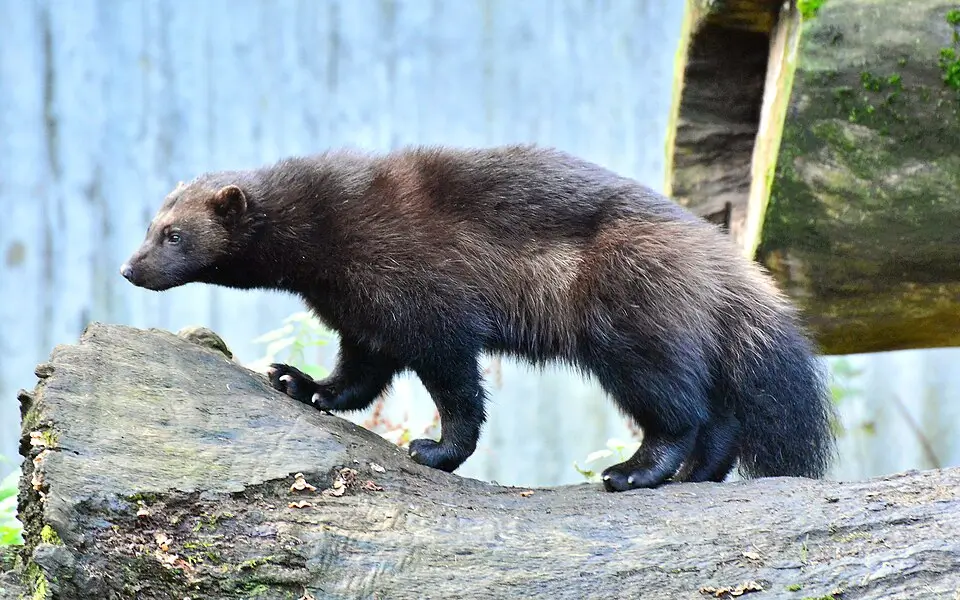
The wolverine (Gulo gulo) belongs to the family Mustelidae, which also includes otters, badgers, minks, and weasels. Despite being the largest terrestrial member of this family, wolverines are still relatively compact animals — typically resembling a small bear more than their weasel relatives. They possess a stocky, muscular build, broad rounded ears, small eyes, and a bushy tail. Their fur is thick and dark brown, often with a pale facial mask and distinctive yellowish stripes running along the flanks from the shoulders to the base of the tail.
One of the wolverine's most celebrated biological traits is its extraordinary strength relative to its body size. Pound for pound, wolverines are considered among the most powerful mammals in North America. Their powerful jaws and teeth are specially adapted to crush frozen carrion and bone — an adaptation that allows them to exploit food sources that most other predators cannot access during the brutal winter months. Their specialized carnassial teeth can tear through material as tough as frozen meat and bone with remarkable efficiency.
The wolverine's feet are another remarkable evolutionary feature. Large and semi-retractable clawed paws function almost like natural snowshoes, distributing the animal's weight across soft snow and allowing it to travel with surprising speed across terrain that would bog down many other animals. This adaptation makes the wolverine an exceptional traveler in deep snow environments, capable of covering vast distances in a single day in search of food.
Wolverines are solitary animals with strongly territorial behavior. Males maintain expansive home ranges that can span hundreds of square miles, overlapping with the smaller ranges of several females. Communication between individuals occurs primarily through scent marking — wolverines possess powerful musk glands that they use to mark territories, food caches, and potential mates. This characteristic musky odor is another reason they have earned colorful nicknames throughout history.
Reproduction in wolverines is notably slow. Females typically give birth to two or three kits, usually in late winter or early spring, in a den often dug deep into a snowpack. The young are born helpless and depend on their mother for several months before gradually becoming independent. This low reproductive rate, combined with large territory requirements, means that wolverine populations are naturally sparse and slow to recover from population pressures.
Despite their fearsome reputation, wolverines are omnivores in the practical sense — while they are skilled predators capable of taking prey much larger than themselves, including deer weakened by deep snow or harsh winter conditions, they also consume berries, roots, and other plant material seasonally. They are quintessential opportunists, and much of their diet consists of carrion — the remains of animals killed by other predators or harsh weather.
Habitat & Range
The wolverine is a circumpolar species, meaning its range extends across the northern boreal and arctic regions of North America, Europe, and Asia. In North America, wolverines are primarily found in Canada and Alaska, with a smaller and more fragmented population inhabiting the contiguous United States, particularly in the mountainous states of the American West.
Montana represents one of the most significant strongholds for wolverines in the lower 48 states. The state's vast stretches of high-elevation wilderness — including Glacier National Park, the Bob Marshall Wilderness, and the Greater Yellowstone Ecosystem — provide the remote, snow-covered terrain that wolverines depend upon. The western half of Montana, with its dramatic Rocky Mountain landscapes, is particularly important habitat. Deep, persistent snowpacks are critical for wolverines, as females rely on snow dens for giving birth and sheltering their young.
Wolverines are highly sensitive to habitat fragmentation and human disturbance. They require large, connected wilderness areas to maintain viable populations, and their dependence on late-lying snowpack makes them particularly vulnerable to changes in climate and land use patterns. Research has consistently shown that wolverines tend to avoid areas with significant human infrastructure, preferring remote backcountry terrain far from roads, towns, and other development.
In addition to Montana, wolverines inhabit portions of Idaho, Wyoming, Washington, Oregon, and California in the contiguous United States, though populations in these states are generally considered small and isolated.
Hunting Information
The wolverine occupies a unique and carefully considered place in the context of North American hunting. Due to its naturally low population density, slow reproductive rate, and the sensitivity of its habitat, the wolverine is a species that demands thoughtful wildlife management.
In Montana, wolverine hunting and trapping regulations are subject to oversight by Montana Fish, Wildlife & Parks. Based on available information at the time of this writing, there are no open general hunting or trapping seasons for wolverines in Montana, reflecting the state's commitment to responsible management of this species. Hunters and trappers interested in wolverine should always consult the most current regulations published by Montana Fish, Wildlife & Parks, as management decisions are subject to change based on ongoing population monitoring and scientific review.
At the federal level, the wolverine has been the subject of ongoing regulatory review regarding its status under the Endangered Species Act, particularly in light of concerns about snowpack availability. Wildlife managers continue to monitor wolverine populations carefully to inform future management decisions.
It is worth noting that in some parts of Canada and Alaska, wolverines have historically been legally harvested through regulated trapping programs. The dense, luxurious fur of the wolverine has long been prized by Indigenous peoples and northern communities for its unique frost-resistant properties — wolverine fur does not accumulate ice from condensation the way many other furs do, making it exceptionally valuable for cold-weather gear such as parka trim.
For outdoor enthusiasts in Montana, simply encountering a wolverine in the wild is considered an extraordinary privilege. These animals are rarely seen, and a fleeting glimpse of one crossing a remote alpine ridge or bounding across a snowfield is a moment that wildlife watchers and backcountry travelers remember for a lifetime.
Conservation
Conservation of the wolverine is one of the more complex and scientifically active areas of wildlife management in North America. Because wolverine populations are naturally low-density and dependent on intact, remote wilderness, they are considered sensitive indicators of ecosystem health — sometimes referred to as "umbrella species," meaning that protecting wolverine habitat tends to benefit a wide range of other species sharing the same ecosystems.
In Montana, wolverines benefit from the state's extensive system of protected wilderness areas and national parks. Glacier National Park, in particular, has been the site of important wolverine research, with biologists using remote cameras, GPS tracking, and genetic sampling to better understand population dynamics, movement patterns, and connectivity between subpopulations.
One of the primary conservation concerns for wolverines is the projected loss of reliable snowpack due to changing climate conditions. Research suggests that persistent, deep snow in spring is essential for denning success, and that significant reductions in snowpack could affect the reproductive success of wolverine populations over time. This has led to active scientific debate and regulatory discussion about whether the wolverine warrants additional federal protections.
Conservation organizations, state agencies, and federal partners continue to collaborate on wolverine monitoring programs across the American West. Citizen science efforts have also contributed valuable data, with trained volunteers and backcountry users submitting confirmed wolverine sightings to help build a more complete picture of where these animals live and move.
For hunters, trappers, and outdoor enthusiasts, supporting sound wildlife management through license purchases, habitat conservation initiatives, and responsible land stewardship all contribute to a future where wolverines continue to roam Montana's wild mountains.