Overview
Few animals embody the wild spirit of North America's wetlands and waterways quite like the American mink. Known scientifically as Neogale vison, this small but remarkably fierce carnivore has captivated the attention of naturalists, trappers, hunters, and wildlife enthusiasts for centuries. With its glossy, water-resistant coat, razor-sharp instincts, and surprising adaptability, the American mink occupies a unique and important niche in the ecosystems it calls home. From the reed-lined banks of prairie marshes to the rocky creek beds of mountain foothills, this animal is a true survivor — and a fascinating subject of study for anyone who spends time in the outdoors.
Montana, with its vast network of rivers, streams, wetlands, and glacially carved lake systems, provides some of the most ideal mink habitat in the American West. The state's wild and largely undeveloped landscape makes it a stronghold for this species, and encounters with mink — whether fleeting glimpses along a streambank or the tell-tale tracks pressed into riverside mud — are among the rewarding moments that outdoor enthusiasts in the Big Sky State cherish. Understanding the biology, behavior, and ecology of the American mink enriches any outdoor experience and deepens our appreciation for the intricate web of life that sustains healthy ecosystems.
Biological Traits
The American mink (Neogale vison) belongs to the family Mustelidae, which includes other well-known carnivores such as otters, weasels, badgers, and wolverines. This family is broadly characterized by elongated bodies, short legs, and in many species, the presence of musk-producing scent glands. The American mink shares many of these traits and is considered one of the more accomplished hunters within its family.
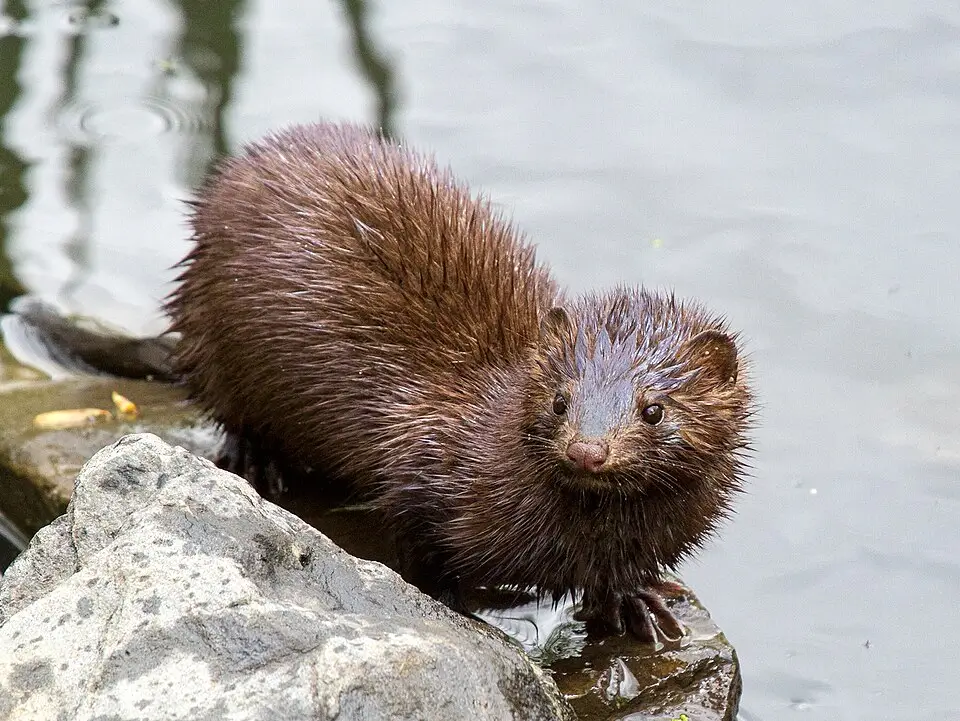
In terms of physical appearance, the American mink is a sleek, low-slung animal with a long neck, a somewhat flattened head, small rounded ears, and short, powerful legs. The fur, which has historically made this species so commercially valuable, is dense, soft, and naturally water-resistant — an essential adaptation for an animal that spends so much of its life hunting in and around aquatic environments. The coat typically ranges from a rich chocolate brown to nearly black, often with small patches of white fur on the chin or throat. This coloration provides effective camouflage along dark, shadowy riverbanks and among dense waterside vegetation.
Males are noticeably larger than females, a characteristic common among mustelids. Adult males can be considerably heavier and longer than their female counterparts, though both sexes share the same general body plan and hunting strategies. Like other members of the weasel family, mink possess anal scent glands that produce a pungent musk, which is used for territorial marking and communication with other individuals.
The American mink is an obligate carnivore with a diverse and opportunistic diet. It feeds on a wide variety of prey, including fish, frogs, crayfish, muskrats, mice, voles, rabbits, waterfowl, and various invertebrates. This dietary flexibility is one of the key reasons for the species' widespread success. Mink are active hunters year-round, and they do not hibernate even in harsh northern winters. Their semi-aquatic lifestyle means they are equally comfortable pursuing prey underwater as they are stalking it on land. They are capable swimmers and can dive to pursue fish and other aquatic prey with impressive skill.
Mink are largely solitary and territorial animals. Individual home ranges can vary greatly depending on habitat quality and prey availability. They are primarily nocturnal or crepuscular, meaning most active hunting occurs around dawn and dusk, though daytime activity is not uncommon. Dens are typically established in natural cavities — beneath tree roots along riverbanks, in rock crevices, or in burrows excavated by other animals such as muskrats.
Breeding occurs in late winter, typically between late January and March, depending on latitude and local conditions. Mink have a fascinating reproductive adaptation known as delayed implantation, where the fertilized embryo does not immediately attach to the uterine wall. This allows the female to time the birth of her young — called kits — to coincide with more favorable environmental conditions. Litters typically consist of several kits, which are born blind and helpless. The female raises the young alone, and the kits grow rapidly, becoming independent hunters by the time autumn arrives.
Habitat and Range
The American mink is a highly adaptable species with one of the broadest ranges of any semi-aquatic mammal in North America. It is found from the Atlantic Coast to the Pacific, and from the Gulf of Mexico north through Canada and into Alaska. As a general rule, wherever there is clean water, abundant prey, and sufficient riparian cover, mink can be found.
The species shows a strong preference for freshwater habitats. Rivers, streams, lakes, ponds, and marshes all serve as core habitat, with the animals generally staying within close proximity to water throughout their lives. Dense bankside vegetation, overhanging roots, fallen logs, and rocky substrates along the water's edge provide both hunting opportunities and shelter. Coastal and estuarine environments are also used in some parts of the range, where mink may exploit tidal areas and salt marshes.
In Montana, the species finds exceptional habitat across the state's diverse landscape. The western half of Montana is dominated by rugged mountain terrain, deep river valleys, and clear, cold streams fed by snowpack and glacial melt — environments that support healthy populations of fish and other aquatic prey on which mink depend. The state's major river systems, including the Clark Fork, Bitterroot, Blackfoot, Missouri, Yellowstone, and Flathead rivers, along with their numerous tributaries, provide extensive riparian corridors ideal for mink. Eastern Montana's prairies, river breaks, and reservoir systems also offer suitable habitat, particularly where wetlands and riparian zones are well-developed.
Montana's status as the fourth-largest state by area, combined with its relatively sparse human population — it is the eighth-least populous state in the nation — means that large expanses of mink habitat remain intact and relatively undisturbed. This is a significant advantage for wildlife populations that depend on clean water and undeveloped shorelines.
Hunting and Trapping Information
The American mink has long been one of the most prized furbearers in North America. Its dense, lustrous coat made it the centerpiece of the commercial fur trade for hundreds of years, and wild mink trapping remains a traditional outdoor pursuit practiced by licensed trappers across much of the continent today.
In Montana, as in other states, the pursuit of mink is governed by state wildlife regulations administered by Montana Fish, Wildlife & Parks (FWF). Hunters and trappers interested in pursuing mink in Montana should consult the most current regulations directly from the Montana FWF website or contact the agency directly, as season dates, bag limits, and licensing requirements can change from year to year and vary by region. Based on the information available for this article, specific current season dates and license requirements were not provided, and readers are strongly encouraged to verify all regulatory details before heading afield.
Traditionally, mink are pursued through trapping rather than conventional hunting with firearms. Common trapping methods include the use of body-gripping traps and foothold traps set along travel corridors near water, at the entrances to dens, or along runs and channels that mink are known to frequent. Effective trapping requires a thorough understanding of mink behavior, including their movement patterns, preferred prey, and denning habits. Scent lures, fish-based baits, and careful set placement are all important elements of a successful mink trapping strategy.
For those new to furbearer trapping in Montana, the state offers educational resources and trapper education courses that provide both the foundational knowledge and the ethical framework needed to pursue this tradition responsibly. Engaging with local trapping organizations and experienced mentors is also an excellent way to build skills and connect with a community that has a deep appreciation for wild places and the animals that inhabit them.
Conservation
The American mink is currently classified as a species of least concern by the International Union for Conservation of Nature (IUCN), reflecting its broad range and stable population across much of North America. Unlike many wildlife species that have suffered dramatic range contractions in recent decades, wild mink populations have shown considerable resilience.
That said, mink — like all wildlife — are sensitive to changes in habitat quality, particularly the health of aquatic ecosystems. Wetland drainage, riparian habitat degradation, water pollution, and the impacts of agricultural runoff on prey populations can all negatively affect local mink populations. Conservation of clean waterways and intact riparian zones is therefore essential for maintaining healthy mink numbers over the long term.
It is also worth noting that the American mink has been introduced to parts of Europe and South America through the escape or deliberate release of farm-raised animals, where it has in some cases become an invasive species with significant impacts on native wildlife. This is a reminder of the important role that wild, native populations play in balanced ecosystems — and the value of managing both wild populations and captive animals responsibly.
In Montana, the combination of strong wildlife management traditions, vast undeveloped landscapes, and clean river systems positions the state as an important refuge for mink and many other furbearer species. Responsible hunting, trapping, and habitat stewardship all contribute to ensuring that this remarkable animal remains a vibrant part of Montana's natural heritage for generations to come.