Overview
Few animals capture the rugged spirit of the American West quite like the bighorn sheep. With their massive curved horns, sure-footed grace on nearly vertical cliff faces, and commanding presence across some of the continent's most dramatic landscapes, bighorn sheep (Ovis canadensis) have long been regarded as one of North America's most iconic wildlife species. They are symbols of wilderness, resilience, and the untamed mountain terrain that defines so much of the Western United States — and nowhere is that symbolism more powerful than in the sprawling, mountainous state of Montana.
Whether you are a wildlife enthusiast, a serious hunter pursuing what many consider the ultimate North American big game trophy, or simply someone who appreciates the natural world, the bighorn sheep deserves your attention and admiration. From their extraordinary physical adaptations to their complex social behaviors, these animals represent the very best of what wild North America has to offer.
Biological Traits
The bighorn sheep (Ovis canadensis) belongs to the family Bovidae and is closely related to domestic sheep, though centuries of evolution in rugged mountain terrain have shaped a creature that is far more athletic and specialized than its barnyard cousins. The species name canadensis references Canada, where early scientific specimens were collected, though the animal's range extends well into the United States and even northern Mexico.
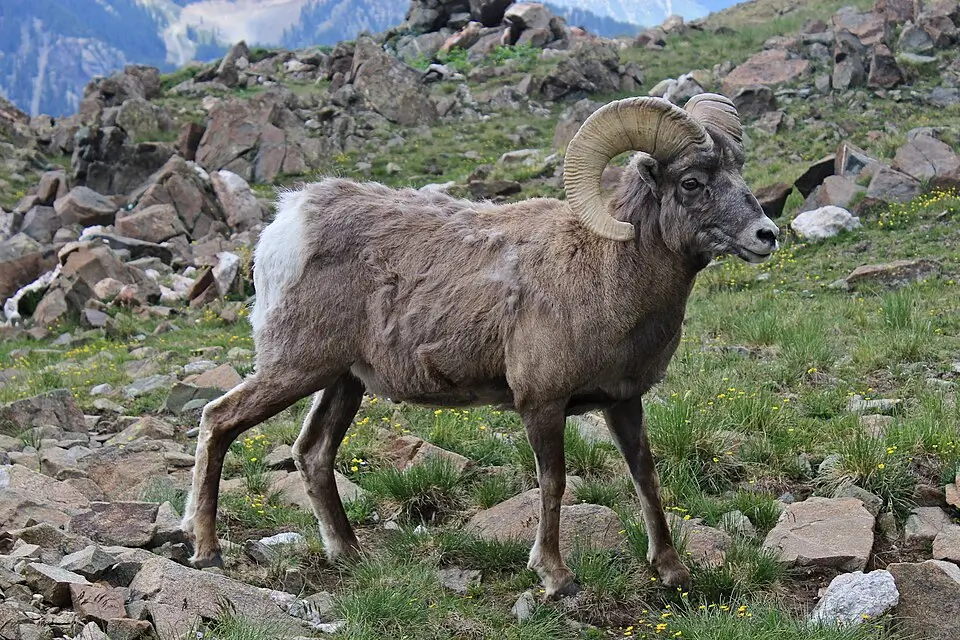
Perhaps the most immediately recognizable feature of the bighorn sheep is, unsurprisingly, its horns. In rams — the adult males — these horns can grow into enormous, tightly curled structures that sweep back from the skull, curl downward, and then sweep forward and upward again in a full curl. The horns are not shed annually like antlers; instead, they grow throughout the animal's lifetime and serve as a reliable indicator of age. A mature ram's horns can account for a substantial portion of its total body weight. Ewes also grow horns, but theirs are smaller, shorter, and only slightly curved in comparison.
The coat of a bighorn sheep is typically a brownish-gray or tan color, with a distinctive pale rump patch and lighter coloration on the muzzle and the backs of the legs. This coloration provides effective camouflage against the rocky, earthy tones of their mountain habitat. Seasonally, their coat may shift slightly in shade, helping them blend into the changing landscape.
Bighorn sheep are built for life on steep, rocky terrain. Their hooves are uniquely adapted for traction — the outer edges are hard and sharp, allowing them to grip narrow ledges, while the inner portions of the hoof are soft and rubbery, providing additional friction on smooth rock surfaces. This combination gives them the ability to navigate cliff faces and talus slopes that would be impassable for most other large mammals, and nearly impossible for predators to follow.
Socially, bighorn sheep are organized in a sex-segregated fashion for much of the year. Rams live in bachelor groups away from ewes and lambs, coming together with the larger mixed herds primarily during the rut — the breeding season — which typically occurs in the late fall and early winter. During the rut, rams engage in dramatic, iconic clashes in which they charge one another at speed, their massive horns colliding with a crack that can be heard from great distances. These battles establish dominance hierarchies and breeding rights. The rams' skulls are specially reinforced to absorb the tremendous impact of these collisions, and the animals typically emerge from these contests uninjured.
Ewes give birth in the spring, usually to a single lamb, though twins can occasionally occur. Lambs are precocial — born with their eyes open and capable of standing and following their mothers within hours of birth. This rapid development is essential for survival in steep mountain terrain where predators such as mountain lions, wolves, coyotes, and golden eagles are ever-present threats.
Habitat & Range
Bighorn sheep are strongly associated with steep, rocky mountain terrain across the western portions of North America. Their range extends from southern Canada through much of the western United States and into northern Mexico. Within the United States, healthy populations exist in states including Montana, Wyoming, Colorado, Idaho, Nevada, Utah, Arizona, New Mexico, and California, among others.
The species demonstrates a preference for open, rocky areas where their exceptional eyesight — capable of detecting movement at great distances — gives them an early warning advantage over approaching predators. They are rarely found in dense forest environments, preferring instead the combination of rocky escape terrain and adjacent grassy meadows or alpine vegetation where they can graze.
Elevation plays a significant role in their habitat use throughout the year. In summer months, bighorn sheep often move to higher elevations, taking advantage of lush alpine vegetation as it emerges after snowmelt. As winter approaches and snowpack builds, they tend to migrate to lower elevations where wind-scoured ridges and south-facing slopes keep forage accessible beneath thinner snow cover.
Montana, in particular, offers outstanding bighorn sheep habitat. As one of the fourth-largest states by area in the United States, Montana encompasses enormous stretches of mountain range, including portions of the Rocky Mountains, that provide ideal conditions for bighorn populations. The state's diverse terrain — from the dramatic peaks of Glacier Country to the rugged canyon systems of central and eastern Montana — supports sheep populations across multiple regions. Montana's position bordering Idaho, Wyoming, and the Canadian provinces of Alberta, British Columbia, and Saskatchewan also places it squarely within the heart of bighorn sheep country, as populations move across international and state borders with the seasons.
Hunting Information
Bighorn sheep hunting is widely regarded among North American hunters as one of the most challenging, rewarding, and prestigious pursuits available. Earning the right to hunt a bighorn ram is itself an achievement — in most Western states, including Montana, tags are extremely limited and allocated through lottery draw systems that can require years or even decades of accumulated preference points before a hunter is successful. When a tag is finally drawn, the experience of pursuing bighorn sheep in their vertical world represents a true pinnacle of big game hunting.
Hunting bighorn sheep demands exceptional physical fitness. The terrain these animals inhabit is some of the most demanding in North America, and hunters must be prepared for extended backcountry trips involving significant elevation gain, rugged footing, and unpredictable mountain weather. The hunt itself often involves long-range spotting with high-quality optics, careful stalking through open terrain, and precise shooting under physically demanding conditions.
Because source data for specific Montana season dates, license fees, and current regulations was not available at the time of publication, hunters are strongly encouraged to consult the Montana Fish, Wildlife & Parks (FWP) agency directly for the most current and accurate licensing, draw, and season information. Regulations can change from year to year, and obtaining accurate, up-to-date information directly from the state agency is always the most reliable approach. Given Montana's outstanding bighorn habitat and the prestige associated with a Montana ram, competition for available tags is typically fierce, making early and consistent application an important strategy for serious hunters.
The experience of harvesting a mature bighorn ram in Montana's mountain wilderness is one that hunters describe as a life-defining achievement — a combination of years of patience in the draw, months of physical preparation, days of hard backcountry travel, and the ultimate reward of encountering one of North America's most magnificent animals on its own terms.
Conservation
The conservation story of the bighorn sheep is one of both caution and genuine success. Historically, bighorn sheep populations declined dramatically due to overhunting, habitat loss, competition with domestic livestock, and most significantly, the introduction of diseases — particularly pneumonia-causing pathogens — transmitted from domestic sheep to wild bighorn populations. At their lowest point, bighorn numbers were a small fraction of what they had been prior to European settlement of the West.
Conservation efforts over the past century have made meaningful progress in restoring bighorn populations across their range. Regulated hunting has played a direct role in funding conservation through the mechanisms established under the North American Model of Wildlife Conservation, wherein license fees and taxes on sporting equipment generate revenue dedicated to habitat management, research, and population monitoring. Hunter-funded conservation organizations have also contributed significantly to bighorn sheep restoration projects, including the translocation of sheep to reestablish populations in areas where they had been extirpated.
Today, wildlife managers continue to monitor bighorn populations carefully, with disease management remaining one of the central challenges in maintaining and growing herds. Efforts to minimize contact between wild bighorn sheep and domestic sheep operations represent an ongoing management priority across the West. In Montana and neighboring states, wildlife agencies work collaboratively with landowners, ranchers, conservation groups, and hunters to ensure that bighorn sheep continue to thrive across their native range.
The bighorn sheep stands as a testament to what careful, science-based wildlife management can accomplish. Their continued presence across Montana's mountains and canyon country is a shared achievement — and a shared responsibility — for everyone who values wild North America.