Overview
Few animals capture the imagination of hunters, wildlife enthusiasts, and naturalists quite like the white-tailed deer. Known scientifically as Odocoileus virginianus, the white-tailed deer is arguably the most recognizable and widely distributed large game animal in North America. From the dense hardwood forests of the Eastern United States to the rolling prairies and mountain valleys of Montana, this remarkable species has demonstrated an extraordinary ability to adapt to a wide range of environments. Its graceful appearance, acute senses, and elusive nature have made it a beloved symbol of the American wilderness — and the most pursued big game animal on the continent.
Whether you encounter one bounding across a meadow at dawn, catching a glimpse of its namesake white tail raised high as it disappears into the timber, or you are a hunter preparing for a season in the vast landscapes of Big Sky Country, understanding the white-tailed deer in depth only deepens the appreciation for this magnificent animal. This article explores the biology, habitat, behavior, hunting traditions, and conservation status of Odocoileus virginianus, with a special focus on the species as it exists in the context of Montana.
Biological Traits
The white-tailed deer belongs to the family Cervidae, which includes all deer species worldwide, and the order Artiodactyla — even-toed ungulates. Within North America, it shares its genus Odocoileus with the mule deer (Odocoileus hemionus), its close cousin and occasional neighbor across much of the West.
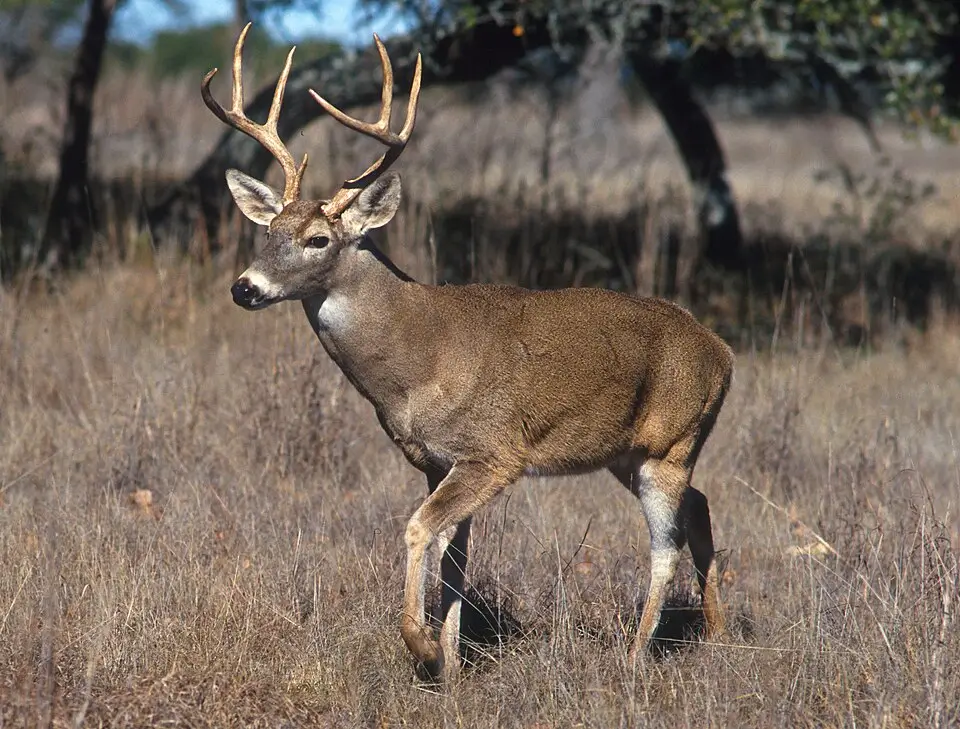
One of the most immediately recognizable features of the white-tailed deer is, of course, its tail. The underside of the tail is a bright, clean white, and when a deer is alarmed, it raises this tail like a flag — a behavior thought to serve as both a warning signal to nearby deer and a visual cue for fawns to follow their mother through dense cover. The upper body coat varies by season: a reddish-brown in summer that transitions to a grayer, thicker coat in winter, providing effective insulation against cold temperatures.
Bucks — the males of the species — are distinguished by their antlers, which are shed and regrown annually. Antlers begin growing in spring, covered in a blood-vessel-rich tissue called velvet that nourishes the developing bone. By late summer, the velvet dries and is rubbed off, revealing the hardened antler beneath. Antler size and configuration can vary enormously depending on genetics, age, and nutritional availability. Does — female deer — are typically smaller and lack antlers, though rare antlered does do occur.
White-tailed deer are ruminants, meaning they have a multi-chambered stomach that allows them to digest tough plant material. Their diet is highly varied and opportunistic, including grasses, sedges, forbs, agricultural crops, nuts (particularly acorns), and browse from woody shrubs and trees. This dietary flexibility is one of the key reasons the species thrives across such a wide geographic range.
The rut, or breeding season, is one of the most dramatic and well-documented periods in the white-tailed deer's annual cycle. Typically occurring in the fall — with peak activity often in November across much of North America — the rut sees bucks become increasingly active during daylight hours, sparring with rivals, making scrapes and rubs to communicate their presence, and pursuing does. This heightened activity and reduced caution makes the rut a particularly exciting and productive time for hunters and wildlife observers alike.
Fawns are born in late spring or early summer, typically in litters of one or two. They are born with white spots on their coats — a camouflage adaptation that helps them blend into dappled forest light — which fade as they mature. Does are attentive and protective mothers, and fawns grow rapidly, often weaning within a few months.
White-tailed deer have an impressive suite of sensory adaptations. Their large, mobile ears can rotate independently to pick up sounds from multiple directions simultaneously. Their eyes are positioned on the sides of their heads, giving them a wide field of view that helps detect predators. Their sense of smell is considered their most acute sense, capable of detecting human scent at great distances — a trait that any experienced deer hunter knows must be accounted for in the field.
Habitat & Range
The white-tailed deer boasts one of the broadest geographic ranges of any large North American mammal. The species is found from southern Canada through the continental United States, Mexico, Central America, and into parts of South America. Within the United States, it is present in virtually every state, making it a familiar presence across nearly every landscape.
White-tailed deer demonstrate remarkable habitat adaptability. They are commonly associated with forest edges, river bottoms, agricultural areas interspersed with woodlands, and brushy terrain. They tend to favor areas where diverse cover types intersect — places where they can find food, bedding areas, and escape routes in close proximity. Riparian corridors, creek bottoms, and areas with abundant shrubby vegetation are classic white-tailed deer habitats.
In Montana, the state's diverse geography creates a patchwork of ideal white-tailed deer country. Montana is the fourth-largest state by area, offering millions of acres of varied terrain including river valleys, mountain foothills, agricultural lands, and forested areas. White-tailed deer in Montana are most commonly associated with the river bottoms, coulees, and agricultural edges that characterize much of the eastern and central portions of the state, as well as the densely forested valleys of the western regions. The Flathead Valley, the Clark Fork River corridor, and the many river systems draining the eastern plains all provide prime habitat. Unlike mule deer, which tend to favor more open, elevated terrain, white-tails in Montana are frequently found in lower-elevation, brushy habitats with abundant edge cover.
Hunting Information
Hunting white-tailed deer is a deeply rooted tradition across North America, and Montana is no exception. The state's expansive wild lands and healthy deer populations make it a destination for both resident hunters and those traveling from out of state in search of a quality hunting experience.
Montana offers hunters a landscape of almost unmatched variety. Public land access — including national forests, Bureau of Land Management (BLM) lands, and state wildlife management areas — provides ample opportunity for hunters of all backgrounds to pursue white-tailed deer. The western portions of Montana, with their dense river bottom timber and agricultural fields, are particularly well-regarded for white-tailed deer hunting. Areas near the Flathead River, the Bitterroot Valley, and numerous other river corridors consistently produce quality deer.
Successful white-tailed deer hunting in Montana, as anywhere, rewards patience, preparation, and woodsmanship. Understanding deer movement patterns in relation to food sources, bedding areas, and travel corridors is essential. The rut period in the fall is widely considered the most exciting and productive window for hunting mature bucks, as their movement increases significantly and their natural caution diminishes. Stand hunting near active scrapes, rubs, and trails is a time-honored strategy, as is spot-and-stalk hunting across more open terrain.
Wind management is critical when hunting white-tailed deer, given the animal's extraordinary olfactory capabilities. Scent control practices — including clothing selection, playing the wind, and entry and exit route planning — can make the difference between a successful hunt and going home empty-handed. Calling and rattling antlers to simulate fighting bucks can also be highly effective during the rut.
Hunters pursuing white-tailed deer in Montana should always consult the Montana Fish, Wildlife & Parks (FWF) for the most current season dates, licensing requirements, and regulations, as these details are subject to change and vary by hunting district. Obtaining the proper licenses and understanding applicable regulations is both a legal requirement and an important part of being a responsible and ethical hunter.
Conservation
The story of the white-tailed deer in North America is, in many respects, a remarkable conservation success story. By the late 19th and early 20th centuries, unregulated market hunting and widespread habitat destruction had reduced white-tailed deer populations to critically low levels across much of their historic range. Conservation efforts, including the implementation of regulated hunting seasons, game laws, and habitat management programs, helped populations recover dramatically over the course of the 20th century.
Today, white-tailed deer are considered a species of least concern from a conservation standpoint. In many areas, deer populations are thriving and well-managed, thanks to the sustained collaboration between state wildlife agencies, conservation organizations, hunters, and landowners. Hunter-generated funding — through license fees and excise taxes on sporting goods collected through the Federal Aid in Wildlife Restoration Act (Pittman-Robertson Act) — has played an indispensable role in financing habitat conservation and wildlife management programs that benefit not just deer, but countless other species.
Deer populations are carefully managed to maintain a healthy balance with their habitat. Regulated hunting remains the primary and most effective tool for managing deer numbers, preventing overgrazing, and maintaining herd health. Thoughtful land management practices that maintain diverse, healthy habitat are equally important to the long-term sustainability of white-tailed deer populations.
The white-tailed deer's resilience and adaptability serve as an inspiring example of what science-based wildlife management and strong conservation ethics can achieve. As long as hunters, wildlife managers, and conservationists continue to work together, Odocoileus virginianus will remain a vital and thriving part of North America's natural heritage for generations to come.