Overview
Few creatures in the North American wilderness capture the imagination quite like the snowshoe hare (Lepus americanus). Known for its extraordinary ability to change the color of its coat with the turning of the seasons, this medium-sized lagomorph is one of the continent's most fascinating and ecologically significant mammals. From the boreal forests of Canada to the mountain ranges of the American West — including the rugged landscapes of Montana — the snowshoe hare plays a central role in forest ecosystems, serves as a cornerstone prey species for numerous predators, and provides exciting small game hunting opportunities for outdoor enthusiasts.
Whether you are a wildlife enthusiast hoping to spot this elusive creature along a forested trail, a biologist fascinated by population dynamics, or a small game hunter looking to pursue one of North America's most challenging quarry animals, the snowshoe hare has something to offer everyone who ventures into the wild. This guide explores the biology, habitat, behavior, hunting traditions, and conservation status of this remarkable animal, with particular attention to its presence in Big Sky Country.
Biological Traits
The snowshoe hare belongs to the family Leporidae and the order Lagomorpha, placing it alongside rabbits and pikas rather than rodents, despite some superficial similarities. The species name americanus reflects its broad distribution across the North American continent.
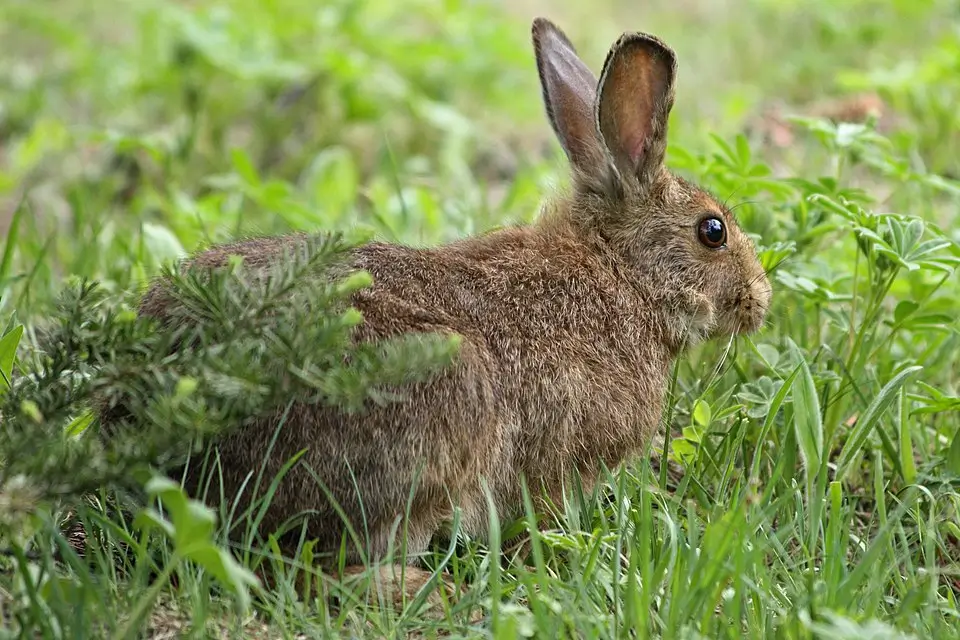
One of the snowshoe hare's most celebrated characteristics is its seasonal coat transformation. During the warmer months of spring and summer, the animal sports a rich brown coat that blends seamlessly with the forest floor, leaf litter, and underbrush. As autumn shortens the days and temperatures drop, the hare undergoes a dramatic molt, gradually replacing its brown fur with a coat of brilliant white. This white winter coat provides near-perfect camouflage against the snow-covered landscapes the animal inhabits, making it extraordinarily difficult for predators — and hunters — to detect. In spring, the process reverses, and patches of brown begin to appear as the snow retreats.
The "snowshoe" in the animal's common name refers not to its coat, but to its remarkably large hind feet. These oversized appendages act much like the human snowshoes they are named after, distributing the animal's weight across the surface of the snow and allowing it to move with surprising speed and agility in deep winter conditions where predators with smaller feet might flounder. This adaptation is a critical survival tool in northern and mountainous environments where deep snow is a fact of life for months at a time.
Snowshoe hares are relatively compact animals. Adults typically weigh between 3 and 4 pounds, though individuals can vary. Their bodies are well-muscled and built for explosive, evasive movement — a hare fleeing a predator can reach impressive speeds and tends to run in erratic, zigzagging patterns through dense cover, making pursuit extremely challenging.
Like all lagomorphs, snowshoe hares practice a behavior known as cecotrophy, in which they consume certain soft fecal pellets directly from the anus. While this may seem unusual, it is an essential nutritional strategy that allows the animal to extract maximum value from its plant-based diet by passing food through the digestive system twice. Their diet consists primarily of grasses, forbs, and herbaceous plants in summer, shifting to woody browse — including the twigs, bark, and buds of trees like willows, aspens, and birches — during the lean winter months.
Perhaps the most scientifically captivating aspect of snowshoe hare biology is their famous population cycle. Across much of their range, snowshoe hare populations undergo dramatic fluctuations on a roughly 8- to 11-year cycle. During peak years, hare densities can be extraordinarily high; populations then crash, often due to a combination of food depletion, disease, and intensified predation pressure. These population swings have cascading effects throughout the ecosystem, most famously driving corresponding cycles in the Canada lynx (Lynx canadensis) population. The hare-lynx cycle is one of the most widely studied examples of predator-prey dynamics in ecological science.
Snowshoe hares are primarily crepuscular and nocturnal, meaning they are most active during the hours of dusk, dawn, and nighttime. During daylight hours, they typically rest in forms — shallow depressions or sheltered spots beneath brush and low-hanging conifers — relying on their camouflage to avoid detection.
Reproduction is prolific. Female snowshoe hares, known as does, can produce multiple litters per year, with litter sizes generally ranging from one to eight leverets (young hares). Unlike rabbits, leverets are born fully furred, with open eyes, and are capable of independent movement relatively quickly — an adaptation that reduces their vulnerability to predation in the open boreal environment.
Habitat & Range
The snowshoe hare has one of the broadest distributions of any North American mammal, ranging from the treeline of Alaska and northern Canada south through the Rocky Mountains, the Great Lakes region, New England, and the Appalachian Mountains. The species thrives in dense coniferous and mixed forests, particularly those with abundant understory cover of young trees, shrubs, and brush piles that provide both food and shelter.
In Montana, the snowshoe hare finds ideal habitat in the state's extensive forested mountain ranges. Montana is the fourth-largest state by area and encompasses vast tracts of wilderness in its western and central regions, including portions of the Northern Rocky Mountains. The dense spruce-fir forests, lodgepole pine stands, and riparian willow thickets found throughout western Montana provide precisely the kind of thick, low-elevation to mid-elevation forest structure that snowshoe hares prefer. Elevation plays an important role as well — the species tends to favor mountain habitats where reliable winter snowpack is consistent.
Snowshoe hares tend to concentrate in areas with dense understory vegetation that offers both food and escape cover. Regenerating forest areas following timber harvesting or wildfire can temporarily support very high densities of hares, as young shrubs and tree sprouts provide an abundance of food. Forest edges, riparian corridors, and areas with dense stands of young conifers are particularly productive habitats to search when pursuing these animals.
Hunting Information
The snowshoe hare represents one of North America's most accessible and rewarding small game hunting experiences. Pursuing these animals requires patience, woodsmanship, and an understanding of hare behavior and habitat — making it a pursuit that rewards skillful hunters while remaining approachable for beginners and younger hunters looking to build foundational skills in the field.
Hunting snowshoe hares with beagles or other small hounds is a time-honored tradition across much of their range. When jumped from its form, a hare will typically run in a large loop through its home territory, eventually circling back — a predictable behavior that makes the combination of dogs and stationary hunters particularly effective. Still-hunting by slowly and quietly moving through suitable habitat and watching for the outline of a hare in its form is another productive method. In winter, tracking in fresh snow is a productive and educational approach that reveals a great deal about hare behavior and movement patterns.
Shotguns in small gauges — 20 gauge being a popular choice — loaded with small shot sizes are well-suited to snowshoe hare hunting. Some hunters prefer .22 rimfire rifles, particularly when still-hunting and shots at stationary animals are expected.
For hunters in Montana interested in pursuing snowshoe hares, it is strongly recommended to consult the Montana Fish, Wildlife & Parks (FWF) agency directly for the most current regulations, season dates, and licensing requirements, as this information is subject to change and was not available in the source data at the time of writing. Montana's vast public lands — including national forests, Bureau of Land Management tracts, and state wildlife management areas — offer tremendous access opportunities for small game hunters throughout the western portions of the state.
Conservation
The snowshoe hare is currently classified as a species of Least Concern by the International Union for Conservation of Nature (IUCN), reflecting its wide distribution and generally stable populations across the majority of its range. The species' prolific reproductive rate and broad habitat tolerance contribute to its resilience.
However, scientists are paying close attention to how climate change may affect snowshoe hares in the coming decades. The animal's seasonal coat molt is triggered by changes in day length rather than actual snow conditions — a distinction that could become problematic as climate patterns shift. In regions where snow cover arrives later or melts earlier, a white-coated hare may be left conspicuously visible against a snowless brown landscape, a phenomenon known as "coat color mismatch." Research has shown that mismatched hares face significantly elevated predation risk, raising questions about the long-term adaptability of populations in southern portions of the range or at lower elevations.
Habitat quality remains the most important factor in maintaining healthy snowshoe hare populations at the local level. Forest management practices that maintain diverse stand structures, promote understory development, and preserve dense riparian vegetation all benefit hare populations. In Montana and across the West, collaborative land management efforts on national forests and other public lands continue to support the diverse habitats upon which snowshoe hares and their associated predator communities depend.
Responsible hunting of snowshoe hares, conducted in compliance with state regulations, poses no meaningful conservation concern and serves as an important connection between hunters and the broader natural world. Small game hunters who pursue snowshoe hares contribute license and tag revenue that directly funds wildlife management and conservation programs in their home states.