Overview
Few animals capture the human imagination quite like the red fox. With its striking russet coat, bushy tail, and quick, intelligent eyes, the red fox (Vulpes vulpes) has inspired folklore, fables, and fascination for thousands of years across cultures spanning every inhabited continent. From the cunning trickster of Native American oral traditions to the wily protagonist of Aesop's fables, the red fox has earned a reputation as one of nature's most resourceful and adaptable creatures — and that reputation is entirely well-deserved.
The red fox holds the distinction of being the most widely distributed wild carnivore on Earth. Its remarkable range spans the Northern Hemisphere from the Arctic Circle to the subtropical regions of North Africa, Central America, and Southeast Asia. In North America, red foxes thrive from Alaska's tundra to the open plains of the American Midwest, from the dense forests of the Pacific Northwest to the sprawling mountain landscapes of states like Montana. Understanding this extraordinary animal — its biology, its behavior, and its role in the ecosystems it inhabits — offers a deeper appreciation for one of the continent's most iconic wildlife species.
Biological Traits
The red fox (Vulpes vulpes) belongs to the family Canidae, which also includes wolves, coyotes, domestic dogs, and other foxes. Within this family, the genus Vulpes represents the "true foxes," distinguished by their relatively slender builds, elongated muzzles, and distinctively large, upright ears. The red fox is the largest species within this genus.
Appearance
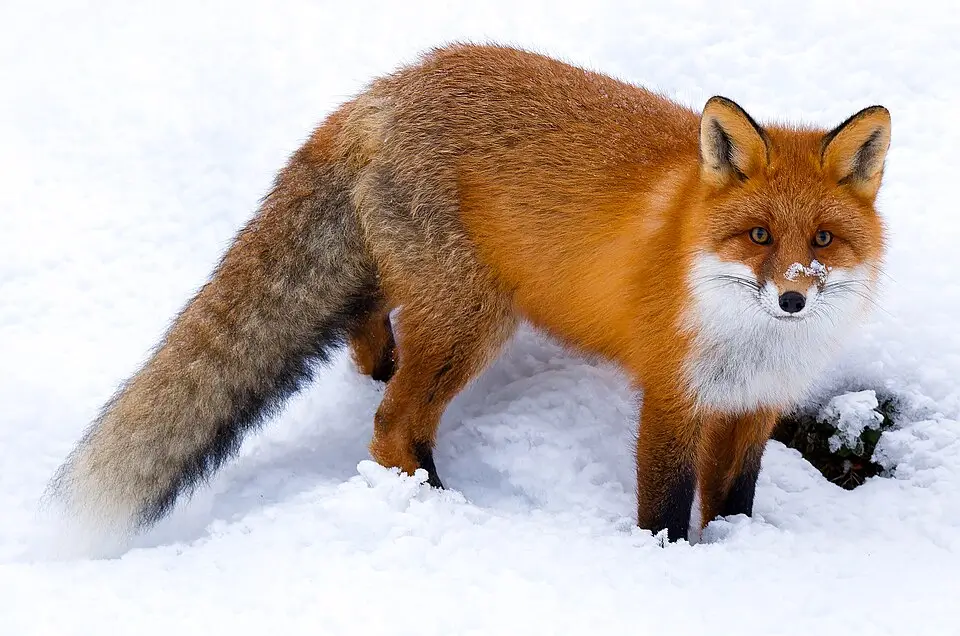
The red fox is instantly recognizable by its vivid coloration. The classic coat features a rich reddish-orange to russet fur across the back and sides, contrasted sharply by a white or cream-colored chest, belly, and chin. The legs and paws are often tipped in black, and the magnificent, full tail — commonly called a "brush" — typically ends in a white tip. This tail serves multiple purposes: it provides balance during agile movements, acts as a warm wrap during cold nights, and functions as a visual communication signal between individuals.
However, red foxes are not always red. Several natural color morphs exist within the same species. The "cross fox" displays a dark cross-shaped pattern across the shoulders and back. The "silver fox" is a melanistic variant with black fur tipped in silver. These color variations are not separate species or subspecies — they are simply different expressions of the same genetic diversity found within Vulpes vulpes.
Size and Physical Build
Red foxes are medium-sized carnivores, lean and agile in build. Their body structure reflects a life of quick pursuits, stealthy stalking, and remarkable endurance. They possess keen senses — their hearing is particularly acute, enabling them to detect the movement of small rodents beneath layers of snow or grass. Their vertical-slit pupils, similar to those of cats, give them excellent low-light vision, making them highly effective hunters during dawn and dusk.
Behavior and Intelligence
The red fox is famously intelligent. It is an opportunistic omnivore, meaning its diet is extraordinarily flexible. Red foxes consume small mammals such as mice, voles, and rabbits, but they also eat birds, eggs, insects, fruits, berries, and carrion. This dietary versatility is a key factor in their success across such a wide range of environments.
Red foxes are primarily solitary hunters, though they form loose family groups during the breeding season. They are largely crepuscular and nocturnal, meaning most of their activity occurs around dawn, dusk, and throughout the night. They are territorial animals that mark their home ranges with scent markings and vocalizations. Their communication repertoire is surprisingly varied — red foxes produce more than 40 different vocalizations, including the distinctive, eerie scream often heard during the winter mating season.
Reproduction
Red foxes typically breed once per year, with mating occurring in late winter. After a gestation period of approximately 51 to 53 days, the vixen (female fox) gives birth to a litter of cubs, commonly ranging from four to six pups, though litter sizes can vary. Cubs are born blind and dependent, and both parents play a role in raising the young. By late summer or early autumn, the cubs are fully independent and begin to disperse to establish their own territories.
Lifespan
In the wild, red foxes typically live two to four years, though they can survive considerably longer in captivity. Predation, disease, and vehicle collisions are the most common causes of mortality in wild populations.
Habitat & Range
The red fox's habitat flexibility is one of its most defining characteristics. It thrives in an extraordinary variety of environments — mixed forests, open grasslands, agricultural fields, mountain meadows, wetland margins, suburban neighborhoods, and even urban parks. This adaptability has allowed Vulpes vulpes to colonize areas that many other predators cannot tolerate.
In the western United States, and particularly in Montana, red foxes occupy a diverse range of habitats. Montana's varied landscape — encompassing the Rocky Mountain ranges to the west, vast river valleys, open prairies to the east, and high alpine meadows — provides excellent habitat for red foxes throughout much of the state. The transition zones between forests and open areas, known as "edge habitats," are particularly favored, as they offer both cover for denning and open ground for hunting.
Montana is the fourth-largest state by area, covering an enormous variety of ecosystems. The western half of the state is dominated by the Rocky Mountains and associated ranges, while the eastern half opens into the sweeping grasslands and badlands of the Great Plains. Red foxes are present in both regions, demonstrating the species' remarkable ecological range. They are often found near agricultural areas, where the presence of grain fields and livestock operations attracts abundant populations of small rodents — a key food source.
At higher elevations in Montana's mountain ranges, red foxes may overlap in range with other predators such as coyotes, wolves, and mountain lions, though foxes typically occupy different ecological niches and avoid direct competition where possible. Coyotes in particular can be a significant source of pressure on local fox populations, often displacing foxes from prime territories.
Hunting Information
The red fox has a long and storied history as a game animal. Fox hunting with hounds is among the oldest formalized hunting traditions in Western culture, and the pursuit of red foxes — whether by hound, rifle, or trap — remains a meaningful outdoor tradition for many hunters and trappers across North America.
In Montana, specific season dates, bag limits, and licensing requirements for red fox hunting and trapping are managed by Montana Fish, Wildlife & Parks (MFWP). Because hunting and trapping regulations can change from year to year, all hunters and trappers interested in pursuing red foxes in Montana are strongly encouraged to consult the most current MFWP regulations and licensing information directly at the official Montana Fish, Wildlife & Parks website before heading afield. At the time of this writing, specific season dates and license details were not available in the source data for this article.
Red fox hunting and trapping in Montana is typically conducted during the fall and winter months when fur quality is at its peak. Winter pelts are thicker, denser, and more valuable than summer coats, making late-season hunting particularly appealing to trappers and fur hunters. Common methods for pursuing red foxes include predator calling — using electronic or mouth-blown calls that mimic the distress sounds of rabbits or other prey animals — as well as rifle hunting from blinds or elevated positions near known fox travel corridors.
Red fox fur has traditionally been valued in the fur trade, and Montana's wide-open landscapes and healthy fox populations make it a worthwhile destination for those interested in furbearer pursuits. As with any hunting or trapping activity in Montana, ethical practices, respect for private landowner rights, and strict adherence to current state regulations are paramount.
Conservation
The red fox (Vulpes vulpes) is currently classified as a species of Least Concern by the International Union for Conservation of Nature (IUCN), reflecting its wide distribution, large global population, and demonstrated adaptability to changing environments. The species does not face significant conservation threats at a global level.
In fact, the red fox's story is in many ways a conservation success story — an animal that has not only survived but actively flourished in the face of significant habitat change, agricultural development, and urbanization. In some regions, fox populations are actively managed to balance their impact on ground-nesting bird populations and other prey species.
In Montana, the native red fox populations that inhabit higher elevations — sometimes referred to as the "mountain red fox" or "Sierra Nevada red fox" — are of particular interest to wildlife biologists, as these high-elevation populations are genetically distinct from lowland populations and face more specific habitat pressures. Ongoing research continues to refine our understanding of red fox ecology and population dynamics in the western United States.
Montana's commitment to science-based wildlife management through MFWP ensures that red fox populations are monitored and that any harvest activities are sustainable. Hunters and trappers who pursue red foxes in Montana are participating in a regulated, conservation-minded tradition that contributes to the long-term stewardship of the species.
Conclusion
The red fox is, in every sense, a remarkable animal. Its intelligence, adaptability, and wide-ranging presence across the landscapes of Montana and the broader world make it one of the most fascinating subjects in wildlife biology and outdoor recreation alike. Whether encountered on a crisp winter morning crossing a snowy field in the Bitterroot Valley, heard screaming on a moonlit night in the Missouri River Breaks, or pursued as part of Montana's proud hunting and trapping heritage, the red fox never fails to inspire wonder.
For hunters, trappers, wildlife observers, and conservationists alike, the red fox represents the enduring wildness of the American landscape — clever, resilient, and unmistakably alive.